


With every client meeting there is a chance to build trust, solve a problem, or move a deal forward. Yet plenty of meetings end with no clear decision, no action items, and no real next step.
The difference usually isn’t what got discussed. It’s how well the meeting was prepared, run, and followed up on. This guide breaks down 15 tips for running more effective client meetings, along with the common mistakes that quietly undermine otherwise good meetings and a checklist you can reuse before every client call.
Why Effective Client Meetings Matter
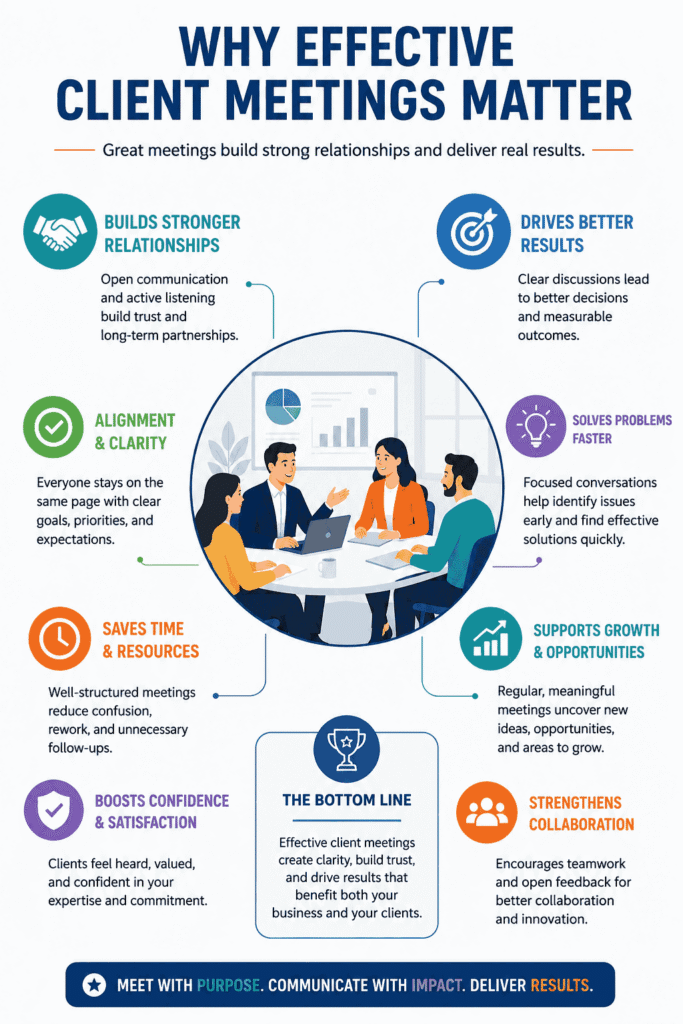
A well-run client meeting does more than fill a calendar slot. It shapes how the entire relationship feels from that point forward. Here’s what’s actually at stake:
- Stronger client relationships – Clients remember how a meeting felt, not just what was said.
- Faster decision-making – A focused meeting gets to a yes, a no, or a next step instead of circling the topic.
- Better project outcomes – Clear direction in the meeting room means fewer misunderstandings once work begins.
- Increased client confidence – Organized meetings signal that your business runs the same way.
- Higher customer retention – Clients stay with businesses that make working together easy.
- More referrals and repeat business – A good meeting experience is one of the easiest things for a client to mention to someone else.
Common Challenges That Make Client Meetings Less Productive
Most businesses already know their meetings could run better. The trouble is usually one of these recurring problems.
- No clear agenda – Without one, the conversation drifts wherever the loudest voice takes it.
- Meetings that run too long – Extra time rarely produces extra value once the core topics are covered.
- Poor communication – Talking past each other instead of confirming shared understanding.
- Technical issues – A frozen screen share or dropped call can derail ten minutes of a thirty-minute meeting.
- Frequent interruptions – Side conversations and notifications break the client’s train of thought.
- Lack of follow-up – Decisions made in the room disappear if nobody writes them down.
- Meeting in noisy public places – Background noise undercuts even a strong presentation.
Recognizing which of these shows up most often in your own meetings is the first step. The tips below address each one directly.
Also Read: Best Coworking Spaces in Washington DC, USA (2025) – Flexible Shared Office Spaces for Professionals
15 Tips for More Effective Client Meetings
1. Define a Clear Meeting Objective
Every meeting should have one primary goal, not five loosely related ones. Before you send a calendar invite, finish this sentence: “By the end of this meeting, we need to have decided.”
If you can’t complete that sentence, the meeting could probably be an email instead. A meeting without a clear objective tends to drift, and a drifting meeting is the fastest way to burn a client’s patience.
Note: If you can’t finish that sentence clearly, the meeting probably isn’t ready to be scheduled yet.
2. Send an Agenda in Advance
An agenda sent a day or two ahead gives your client time to prepare instead of reacting on the spot. Keep it simple:
The topics you’ll cover
- What outcome you’re aiming for on each one
- How much time each item will take
3. Research Your Client Before the Meeting
A few minutes reviewing your client’s recent business updates, past conversations, and known pain points changes the entire tone of a meeting. It shows you’ve been paying attention, not just showing up.
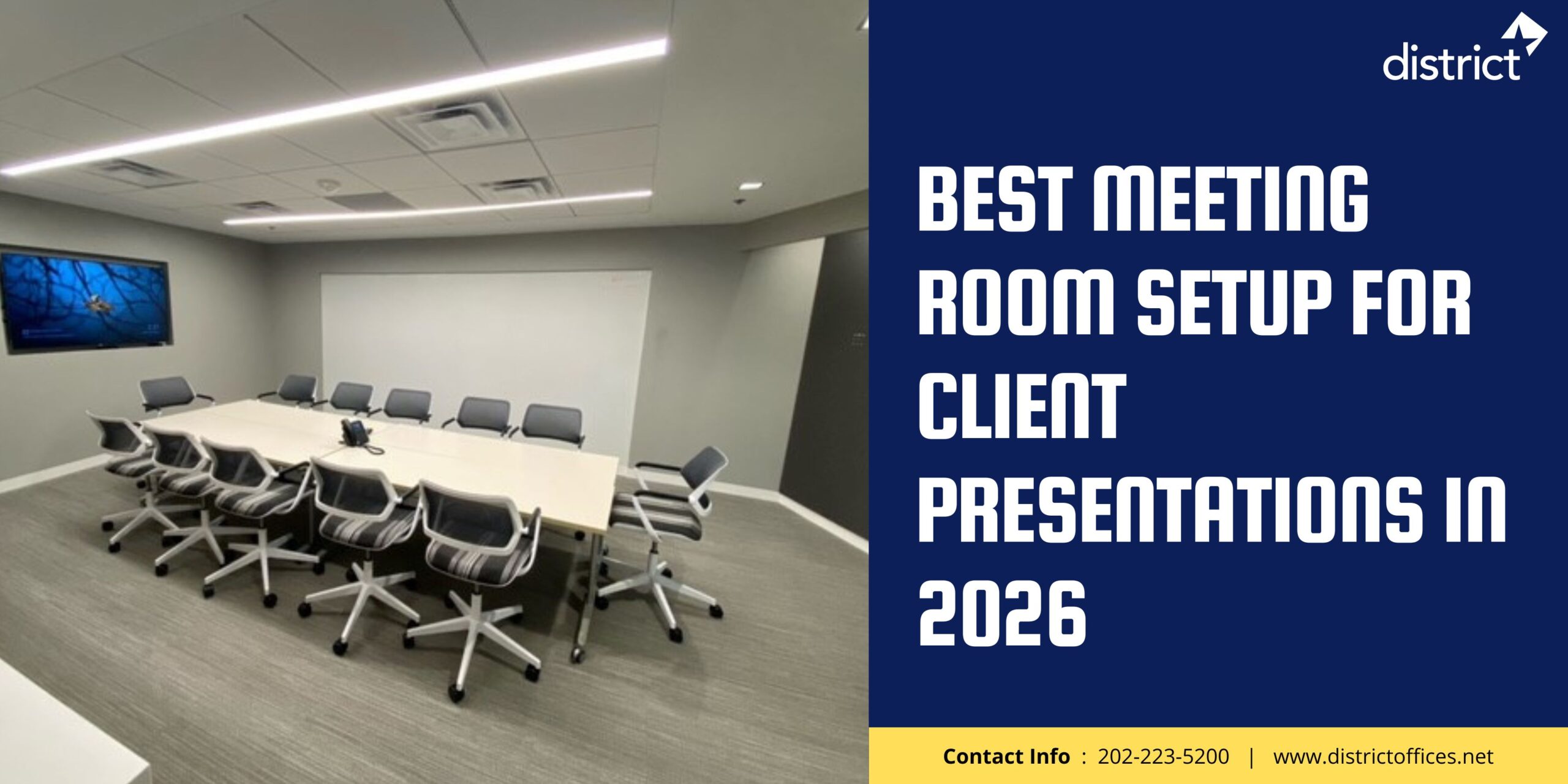
4. Choose the Right Meeting Space
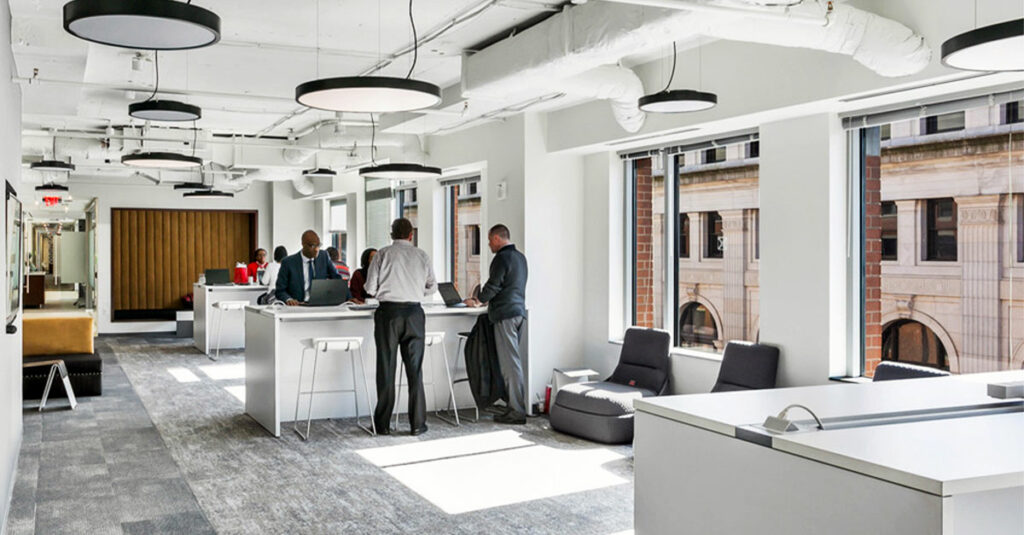
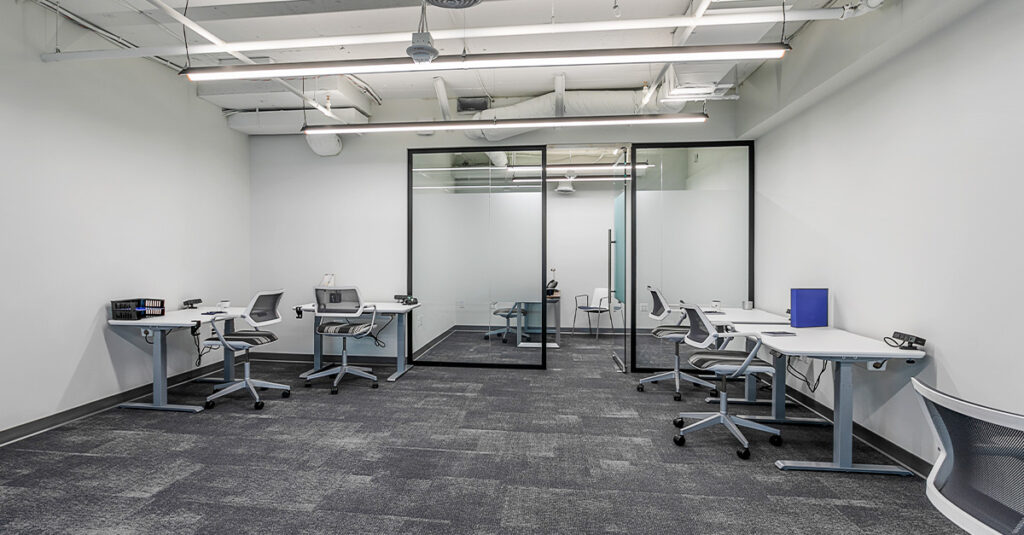
The space you meet in says something about your business before you say a word. A private, professional room signals stability and focus. A noisy coffee shop or a hotel lobby signals the opposite, even if your preparation is flawless.
Look for a space with:
Real privacy, not a shared table near strangers
- A professional, well-maintained appearance
- Comfortable seating for the length of the meeting
- Working technology for calls, screen sharing, or presentations
- Easy accessibility for your client, including parking or transit options
Pro Tip: If you don’t have a dedicated office, a bookable executive meeting room removes this problem entirely, without requiring a long-term lease.
5. Arrive Early and Test Your Technology
Nothing undercuts a polished pitch like fumbling with a HDMI cable while your client waits. Arrive at least ten minutes early to confirm Wi-Fi, video conferencing, screen displays, and audio quality before anyone walks in.
6. Start With Rapport Before Business
A minute or two of genuine, unscripted conversation before diving into the agenda builds trust without wasting time. Ask about something specific to their business, not a generic icebreaker.
7. Listen More Than You Talk
The instinct in a client meeting is often to fill the silence with information. Resist it. Ask open-ended questions, let the client finish their thought, and clarify anything that sounds like a concern before moving on.
Note: A good rule of thumb is to aim for the client talking at least as much as you do, especially in early-stage meetings.
8. Keep the Discussion Focused
Productive tangents are fine. Unproductive ones aren’t. If a conversation drifts too far from the agenda, acknowledge it, note it for a follow-up, and steer back to the topic at hand.
9. Present Solutions, Not Just Information
Clients don’t need a data dump. They need to see how the information connects to a
decision they’re trying to make. Frame updates and findings around what they mean for the client’s next step, not just what happened.
10. Encourage Collaboration
Bring the client into the problem-solving process instead of presenting a finished solution and waiting for approval. Asking “What would make this work better for your team?” often surfaces details you’d otherwise miss.
11. Respect the Client’s Time
Start on time, even if someone is running a few minutes behind. End on time, even if you haven’t covered every item. A reputation for punctuality is one of the easiest ways to build trust.
12. Summarize Key Decisions Before Ending
In the last five minutes, recap what was agreed on, who owns each action item, and what the deadlines are. This single habit prevents more misunderstandings than almost anything else on this list.
13. Send a Follow-Up Email Within 24 Hours
A prompt follow-up email should include:
A short summary of what was discussed
- The action items and who owns them
- The date of the next meeting, if one is scheduled
- Any documents or resources you promised to share
Pro Tip: Send the follow-up even if it feels redundant. It creates a written record both sides can point back to later.
14. Gather Feedback
A short, simple question like “Was this meeting useful for you?” gives you real signal on what to keep doing and what to adjust, especially with long-term clients.
15. Continuously Improve Your Meeting Process
After a few weeks, look back at your meetings as a pattern instead of one-off events. Which formats led to faster decisions? Which agendas kept things on track? Treat your meeting process as something you refine, not something you set once and forget.
Why the Right Meeting Space Makes a Difference
The tips above cover preparation and communication, but the room itself does quiet work of its own throughout the meeting.
- Better first impressions – A clean, professional space signals that your business is organized before the meeting even starts.
- Greater privacy – Sensitive topics like pricing, contracts, or personnel need a closed door, not a shared table.
- Reliable technology – A meeting room built for business calls removes the risk of a dropped connection mid-pitch.
- Fewer distractions – No background noise, no passersby, no competing conversations.
- Improved collaboration – Whiteboards, screens, and proper seating make brainstorming and workshopping actually work.
- Flexible room sizes – The right room for a two-person negotiation looks different from the right room for a ten-person workshop.
- Professional reception services – A warm, organized welcome sets the tone before your meeting even begins.
When to Choose a Professional Meeting Room
Not every client conversation needs a dedicated room, but several situations call for one specifically.
- First client meetings – First impressions are hard to redo, so this is not the moment to improvise.
- Sales presentations – Screens, seating, and quiet all support a stronger pitch.
- Contract negotiations – Privacy matters when terms and numbers are on the table.
- Team workshops – Whiteboard space and proper seating support real collaboration.
- Investor meetings – The setting is part of how investors judge the seriousness of your business.
- Interview sessions – Candidates read the room just as clients do.
- Hybrid meetings – Remote attendees need a room built for clear audio and video, not an improvised setup.
Why Businesses Choose District Offices for Client Meetings
If you’re weighing whether to book a professional meeting room for your next client conversation, it helps to know what a strong option looks like.
Here’s what businesses tend to point to:
- Prime Washington, DC locations, giving clients an easy, professional address to reach
- Fully equipped meeting rooms, ready to use without setup delays
- High-speed internet, built to handle video calls and large file sharing without lag
- Video conferencing support, useful for hybrid meetings with remote attendees
- Flexible hourly bookings, so you only pay for the time your meeting needs
- Professional reception services, so your client is greeted properly from the moment they arrive
- Comfortable executive spaces, suited to everything from a two-person negotiation to a larger workshop
- Easy Metro access, removing one more reason for a client to arrive stressed or late
For businesses that don’t have a dedicated office, or whose office doesn’t quite match the impression they want to make, this is the kind of setup worth having on hand for client-
facing meetings.
Common Client Meeting Mistakes to Avoid
Even experienced teams fall into a few repeat mistakes.
- Talking more than listening – A one-sided meeting rarely builds trust.
- No agenda – Winging it usually means missing at least one important topic.
- Poor preparation – Not knowing basic details about the client’s business erodes confidence quickly.
- Ignoring time limits – Running long doesn’t show dedication, it shows a lack of planning.
- Meeting in noisy environments – Background noise distracts from even the strongest content.
- Forgetting follow-up – Decisions without documentation tend to quietly disappear.
- Not involving decision-makers – A meeting without the right people in the room often just means a second meeting later.
Frequently Asked Questions
Running an effective client meeting starts with a clear objective, a shared agenda sent in advance, and a professional, distraction-free setting. During the meeting, focus on active listening, keep the discussion on track, and close by summarizing decisions and next steps.
A client meeting agenda should include the topics to be discussed, the desired outcome for each topic, and a rough time allocation for each item. Keeping it to four or five key points helps the meeting stay focused instead of running long.
Most client meetings work best between 30 and 60 minutes, depending on the complexity of the topics. Shorter, focused meetings tend to produce clearer decisions than longer ones that lose momentum halfway through.
After a client meeting, send a follow-up email within 24 hours that summarizes what was discussed, lists action items and owners, and confirms the next meeting date. This keeps both sides aligned and creates a written record of what was agreed.
The meeting location shapes the client’s first impression and affects how focused the conversation can be. A private, professional space with reliable technology supports better communication than a noisy public setting like a café or hotel lobby.
To make virtual client meetings more productive, test your video and audio setup in advance, share the agenda before the call, and use a quiet, well-lit space with a stable internet connection. Assigning a note-taker also helps capture action items accurately.
It’s worth booking a professional meeting room for first client meetings, sales presentations, contract negotiations, investor meetings, and any conversation involving sensitive or confidential information. These situations benefit most from privacy and a polished setting.
Useful questions during a client meeting include open-ended prompts like “What does success look like for this project?” and “What concerns do you have about this approach?” These questions encourage the client to share information you might not get from a yes-or-no question.
Wrapping Up
Successful client meetings start well before anyone sits down. Clear objectives, a shared agenda, and a bit of research on your client set the stage for a conversation that actually moves forward instead of circling itself.
Active listening, focused discussion, and a prompt follow-up strengthen the relationship long after the meeting ends. And the environment you meet in plays a bigger role than most businesses give it credit for. If you want your next client meeting to reflect the same level of preparation you put into the conversation itself, it’s worth reserving a professional meeting room at District Offices.