

Reducing office overhead through flexible office spaces has become a strategic priority. Companies are moving toward flexible workspace solutions that lower costs without sacrificing quality. This guide explains how flexible office spaces work and when flexibility delivers the greatest return.
Table of Contents
ToggleWhat Flexible Office Spaces Mean in the Modern Business Context
Flexible office spaces are professionally managed work environments designed to adapt to changing business needs. They include private offices, coworking spaces, shared offices, serviced offices, and managed office solutions.
What sets flexible workspaces apart isn’t just shorter agreements—it’s the operating model. Space, infrastructure, and services are bundled into a single predictable cost. Rent, internet, utilities, maintenance, cleaning, security, meeting rooms, and shared amenities are typically included.
Instead of managing real estate, businesses access workspace as a service—designed to evolve with them.
Also Read: How On-Demand Meeting Rooms Support Hybrid and Remote Teams
How Flexible Office Spaces Reduce Overhead Costs at a Structural Level
Flexible offices lower costs at a structural level in several keyways.
1. Turning Fixed Costs into Variable Expenses
Flexible offices follow a pay-for-what-you-use model. Space scales up or down with headcount, preventing payment for unused square footage and supporting long-term cost control.
2. Eliminating Long-Term Lease Risk
Flexible offices offer shorter commitments, protecting cash flow and reducing liabilities—especially valuable in uncertain markets.
3. Bundled Services Reduce Hidden Costs
Flexible offices consolidate infrastructure and services into one fee. Businesses avoid managing multiple vendors, and predictable costs improve budgeting accuracy while lowering operational overhead.
4. Avoiding Capital-Heavy Office Setup
Flexible offices are plug-and-play, freeing capital for growth initiatives like hiring, marketing, or technology.
Also Read: Where to Find Last-Minute Meeting Rooms in Georgetown and Farragut Square
When Flexible Office Spaces Make the Most Sense
Flexible offices aren’t right for every situation—but they fit most modern businesses.
1. Startups and Early-Stage Companies
For startups, flexible offices preserve capital and eliminate long-term risk. Teams can start small, scale as they grow, and move without penalties. Beyond cost savings, coworking environments also offer valuable networking and shared resources.
2. High-Growth Companies
Fast-growing teams need space that expands as quickly as they do. Flexible offices allow businesses to add or reduce desks in weeks rather than months, supporting growth.
3. Hybrid and Remote-First Organizations
Hybrid teams don’t need a desk for every employee. Flexible offices support collaboration through meeting rooms, touchdown spaces, and shared areas—often reducing physical footprint by 40–60% and lowering cost per employee.
4. Mid-Size Businesses
Mid-size companies benefit from operational efficiency and adaptability. Teams can be distributed across locations that suit their function—sales near clients, engineering near talent—while maintaining consistent quality and branding.
5. Companies Entering New Markets
Flexible offices allow businesses to test new cities. Teams establish a presence quickly, validate demand, and make informed decisions about permanent space later.
Also Read: Dedicated Offices: The Key to Privacy, Security, and Focus at Work
Can Flexible Offices Maintain Professional Quality?
Yes. Early coworking models created mixed perceptions, but today’s flexible offices meet corporate standards.
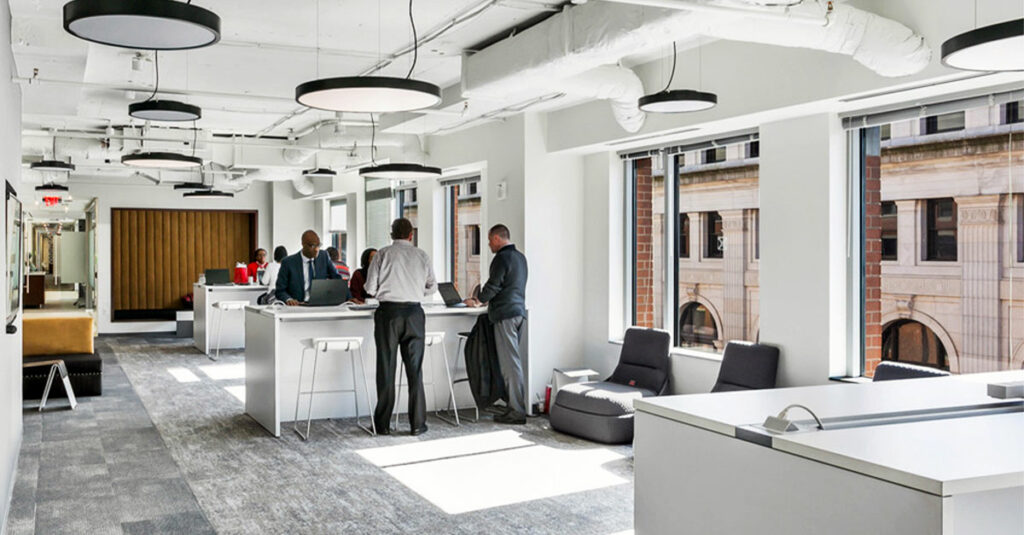
Modern spaces offer private offices, secure access, soundproof meeting rooms, enterprise-grade internet, professional reception services, and prime locations. These environments support client meetings, investor discussions, and daily operations without compromising brand credibility.
Quality is no longer defined by lease length—it’s defined by service, design, and reliability.
Benefits of Flexible Office Spaces for Businesses
Flexible offices help businesses operate leaner and adapt faster by:
- Reducing overhead
- Providing fully equipped, professional work environments
- Delivering predictable monthly costs for easier planning
- Supporting growth without increasing real estate risk
Instead of forcing the business to fit the office, flexible workspaces adapt to the organization—enabling sustainable growth and stronger operational control.
Who Should Choose Flexible Office Spaces?
Flexible offices are a strong fit for organizations with:
- Rapid or unpredictable growth
- Hybrid or remote-first teams
- Expansion into new markets
- Short-term projects or specialized teams
Startups often choose coworking or small private offices. Mid-size businesses benefit from private flexible offices with shared amenities. Enterprises use flexible spaces for satellite teams or regional hubs.
When Flexibility Becomes a Strategic Advantage
Flexible office spaces deliver the most value during periods of change—growth, uncertainty, or transition. They allow businesses to move quickly, control costs, and adapt space as needs evolve.
In these scenarios, flexibility isn’t a compromise. It’s a competitive advantage.
How to Choose the Right Flexible Office Provider
The right provider matters as much as the space itself. Key factors to evaluate include:
- Location and accessibility
- Transparent, all-inclusive pricing
- Scalability options
- Consistent quality and service
A strong provider delivers a business-ready workspace that supports current operations while remaining adaptable for what comes next—without adding complexity.
Frequently Asked Questions:
A: They reduce costs by eliminating long-term leases, bundling services, minimizing unused space, and avoiding significant upfront investments.
A: In many cases, yes. When the total cost of ownership is considered, flexible offices often result in lower overall cost.
A: Yes. Modern flexible offices are designed to meet corporate standards, offering privacy, security, and premium office amenities.
A: Yes. Mid-size companies often benefit significantly due to fluctuating team sizes and the need for adaptability.
A: For businesses seeking premium flexible office spaces in Washington, DC, District Offices offers a strong balance of flexibility, professionalism, and cost efficiency.
District Offices provides private offices and coworking spaces in prime DC locations, including Georgetown, Farragut Square, Pennsylvania Avenue, and Capitol Hill. These locations combine modern design, flexible terms, and a professional environment built for productivity.
By choosing District Offices, businesses gain access to scalable workspace solutions that help reduce office overhead costs while maintaining quality, credibility, and long-term value.