

Your workspace is either working for you or quietly working against you. Most people do not realize how many common workspace problems are draining productivity every single day. According to Gallup’s State of the Global Workplace 2024 Report, employees who are not engaged or are actively disengaged cost the world $8.8 trillion in lost productivity each year. That is equal to 9% of global GDP.
The root cause is often not a lack of talent or effort. It is a poorly designed workspace environment. Whether teams work in a traditional office, a hybrid setting, or a coworking space, specific workspace problems consistently reduce employee productivity. Understanding these problems and knowing how to solve them are among the highest-value actions any business leader can take.
Here is a detailed look at the most common workspace problems that hurt productivity, backed by research, and practical guidance on what to do about each one.
Table of Contents
Toggle1. Constant Interruptions and Noise Distractions
Interruptions are among the most damaging productivity killers in any workplace. According to Gloria Mark, a professor of informatics at the University of California, Irvine, as cited by EBSCO Research, workers are interrupted or self-interrupted every three minutes, and it can take up to 23 minutes to fully regain focus after each disruption.
Multiple sources confirm this. TeamStage’s workplace distraction research reports that it takes an average of 23 minutes and 15 seconds to recover focus after a distraction, and 98% of the workforce reports being interrupted at least three to four times a day. That means, at a minimum, workers are losing over an hour each day just to regain focus.
The solution involves both design and culture. Private offices and phone booths allow employees to do focused, deep work without background noise. Clear team communication norms, such as designated focus hours or status indicators that signal when someone is unavailable, also reduce unnecessary interruptions. When your workspace is designed with noise control in mind, deep work becomes possible.
2. Poor Ergonomics and Uncomfortable Work Environments
Most people underestimate how strongly physical discomfort affects cognitive performance. When your back hurts, your neck is stiff, or your eyes are strained, your brain diverts attention to managing that discomfort. The result is reduced concentration, more errors, and lower output.
The evidence is compelling. A study by the University of Leicester found that ergonomic office designs could increase productivity by up to 40%. Additionally, the Washington State Department of Labor and Industries, in a meta-analysis of 250 case studies, found that businesses implementing ergonomic programs saw a 25% increase in productivity, a 48% reduction in employee turnover, and a 58% reduction in absenteeism.
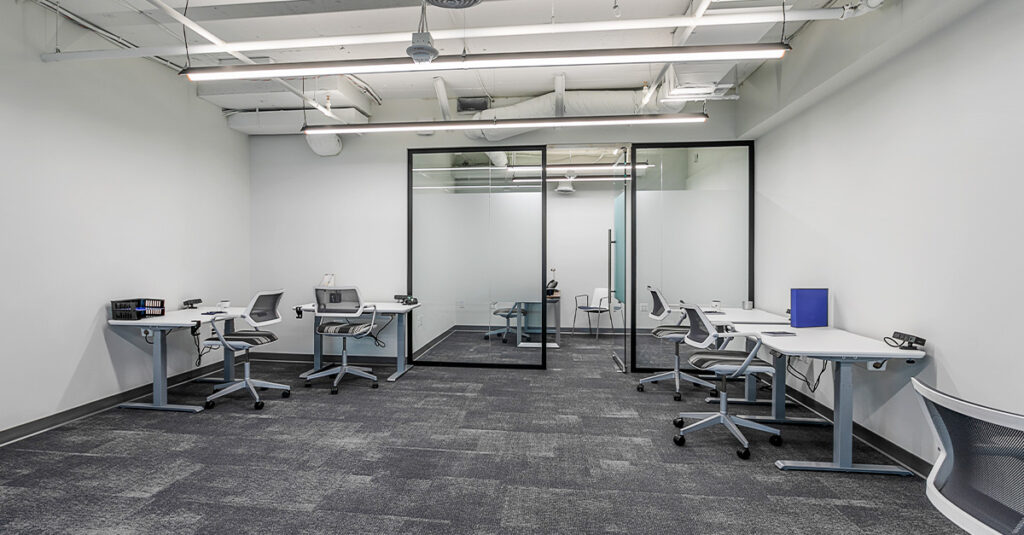
Despite this, many offices still rely on standard chairs with little lumbar support, desks at the wrong height, and monitor placements that force awkward postures. Addressing the physical environment is one of the most straightforward ways to reduce lost output and improve employee well-being.
3. Poor Lighting Conditions
Lighting has a direct impact on alertness, mood, and eye strain. Workspaces that rely on harsh overhead fluorescent lighting or dimly lit rooms create conditions that drain employees’ energy over time.
Natural light is consistently the best option for employee well-being and focus. Workspaces positioned near windows, or designed to maximize daylight exposure, report better mood, lower absenteeism, and improved output. When natural light is not available, high-quality adjustable task lighting that allows employees to control brightness and color temperature makes a real difference.
Poor lighting causes eye strain, triggers headaches, and generates fatigue that sets in before the workday is halfway through. Addressing lighting conditions is a low-cost change that has a noticeable impact on how people feel and perform throughout a full workday.
4. Lack of Privacy for Focused Work
Open-plan offices became popular on the theory that shared space encourages collaboration. In practice, the research tells a more complicated story. While open layouts can support casual communication, they consistently hurt deep, focused work.
Only about 26% of employees strongly agree that their current workplace helps them do their best work, according to Gensler’s Global Workplace Survey 2025. This is a striking finding. Despite billions of dollars invested in office design, most workers do not feel their physical environment supports peak performance.
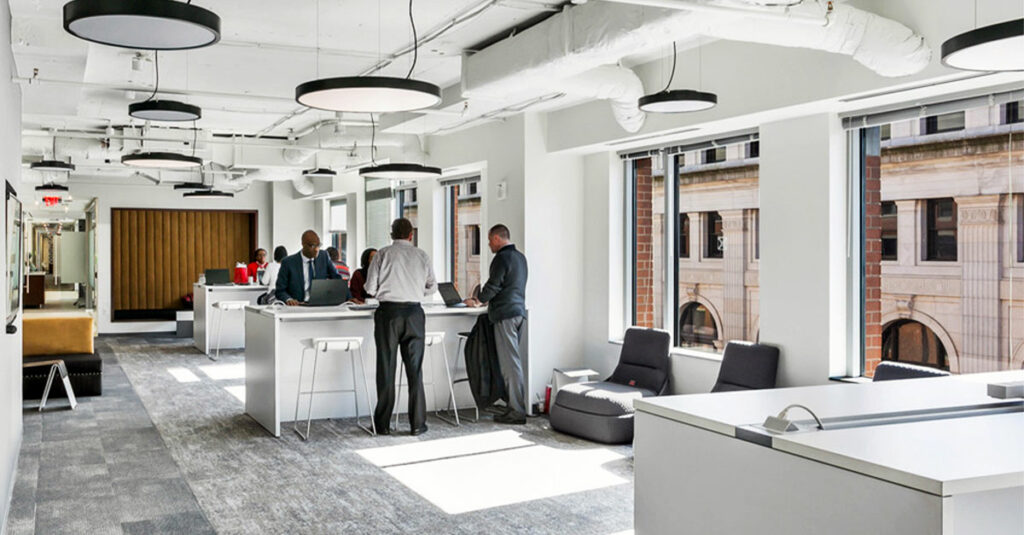
The solution is not to abandon open spaces, but to offer variety. Employees need access to both collaborative areas for teamwork and private, quiet zones for focused individual work. Private offices, phone booths, and bookable quiet rooms address this directly. When people can choose an environment that matches the type of work they are doing, productivity improves.
5. Unreliable Technology and Poor Internet Connectivity
Few things derail a productive workday faster than technology that does not work. Unreliable internet, outdated software, slow computers, and technical failures during meetings all create friction that reduces output and raises frustration levels.
According to productivity statistics reported by Electroiq, around 24 billion hours are wasted each year globally due to unproductive meetings, many of which suffer from technical failures. When employees spend time troubleshooting connectivity problems, navigating clunky systems, or waiting for files to load, that time is simply lost. Technical failures during client calls and presentations are not just frustrating. They damage credibility.
The answer is reliable, well-integrated technology infrastructure paired with consistent support to resolve issues quickly. Meeting spaces need plug-and-play equipment that works every time, without setup delays or technical roadblocks mid-presentation.
6. Cluttered and Disorganized Spaces
A disorganized workspace is a cognitive burden. When your physical or digital environment is cluttered, your brain processes more irrelevant information, depleting focus and increasing mental fatigue.
According to McKinsey research reported by Crown Records Management, employees spend an average of 1.8 hours each day just searching for information. That is almost 25% of the working day simply lost to disorganization. Poor document search and clutter compound each other, creating a hidden drain on daily productivity that most organizations never formally measure.
Regular cleaning and maintenance, organized storage solutions, and clear desk policies all contribute to a workspace that supports focus. Daily professional cleaning, in particular, is something employees notice and appreciate. It signals that the organization values its environment and, by extension, its well-being.
7. Poor Air Quality and Lack of Natural Elements
Beyond standard lighting, the quality of the air in a workspace has a measurable impact on employee performance. Poor ventilation, stale air, and high carbon dioxide levels cause fatigue, reduced alertness, and cognitive slowdown.
Adding plants to a workspace improves air quality, reduces stress markers, and provides visual variety that gives the eyes a natural break from screens. Studies confirm that even a small plant in a workspace can improve mood and focus. Access to windows with views of natural elements has also been linked to lower stress and better sustained attention throughout a workday.
Air conditioning and ventilation systems that maintain a comfortable, consistent temperature also matter. A workspace that is too warm leads to fatigue. One that is too cold creates discomfort that disrupts concentration. Getting these environmental variables right is what separates a workspace that merely exists from one that actively supports people.
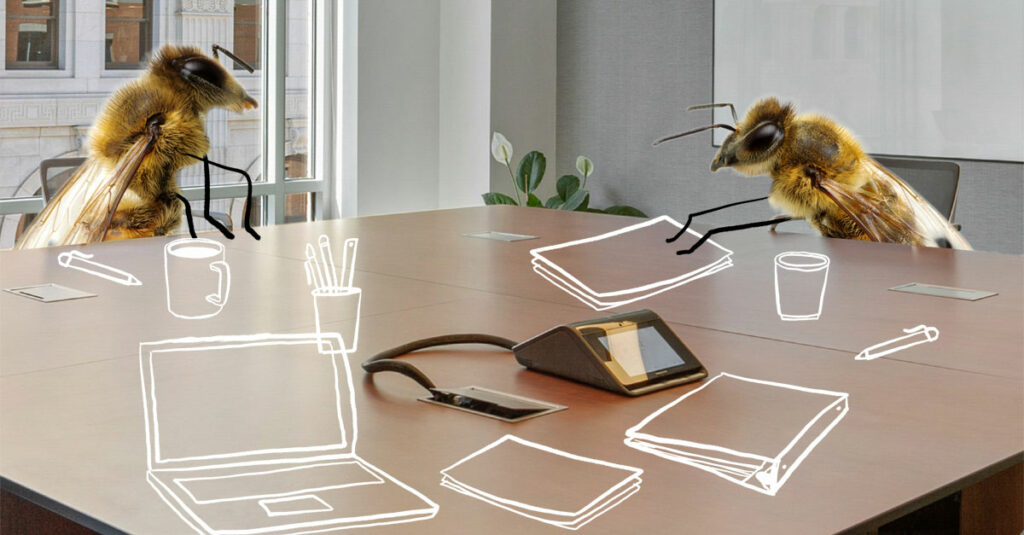
8. Too Many Unproductive Meetings
Unproductive meetings are one of the most well-documented productivity killers in modern workplaces. According to Electroiq’s workplace productivity research, approximately 24 billion hours are wasted each year globally due to unproductive meetings. And Passion Secrets reports that 92% of employees consider meetings costly and unproductive, a number that reflects how poorly most meetings are structured.
The problem compounds when meetings take place in spaces not set up for effective communication. A room with poor acoustics, unreliable AV equipment, limited seating, or no presentation tools creates friction that makes a difficult meeting even harder.
The solution involves both better meeting habits and better-equipped meeting spaces. Meetings should have clear purposes, defined end times, and only the right participants in the room. The space itself should support the type of meeting being held, with reliable technology and a layout that matches the group size.
9. Employee Disengagement and Lack of Belonging
Not all productivity problems are physical. Employee disengagement is one of the costliest and most widespread challenges in modern workplaces. Gallup’s 2024 State of the Global Workplace report, based on surveys of more than 128,000 individuals across 160 countries, found that 62% of employees globally are not engaged, meaning they are doing the minimum required and are detached from their job. Another 15% are actively disengaged.
The financial impact is significant. Disengaged employees cost the global economy $8.9 trillion annually, according to Gallup’s updated 2024 figures. But engagement also has a measurable productivity component. Research reported by Vantage Circle shows that highly engaged teams are 23% more profitable than average and 14% more productive in measurable output.
Workspaces that host community events, encourage informal interaction, and create common areas where people can connect during the day all contribute to a stronger sense of belonging. When employees feel engaged, they perform better, stay longer, and contribute at a higher level.
10. No Flexibility in How and Where Work Happens
The final common workspace problem is rigidity. Employees increasingly expect the ability to choose how and where they do their best work. According to Robert Half’s 2026 analysis of U.S. job postings, 55% of job seekers rank hybrid as their top preference, and only 16% say their top choice is a fully in-office role. Rigid office policies that force all work into a single type of environment actively reduce output.
The data on retention is equally clear. Founder reports’ return-to-office research found that 64% of remote workers say they would quit or start searching for a new job if their employer stopped allowing remote or hybrid work. Organizations that offer flexibility are better positioned to attract and retain top talent in an increasingly competitive market.
This does not mean that offices are no longer needed. It means that the best workspaces offer options: private offices, shared coworking areas, bookable meeting rooms, and virtual office solutions that give employees the flexibility to match their environment to their work.
How District Offices Solves These Workspace Challenges in Washington, D.C.
If you recognize any of these workspace problems in your current setup, District Offices in Washington, DC, has been helping businesses and professionals overcome exactly these challenges for over 30 years.
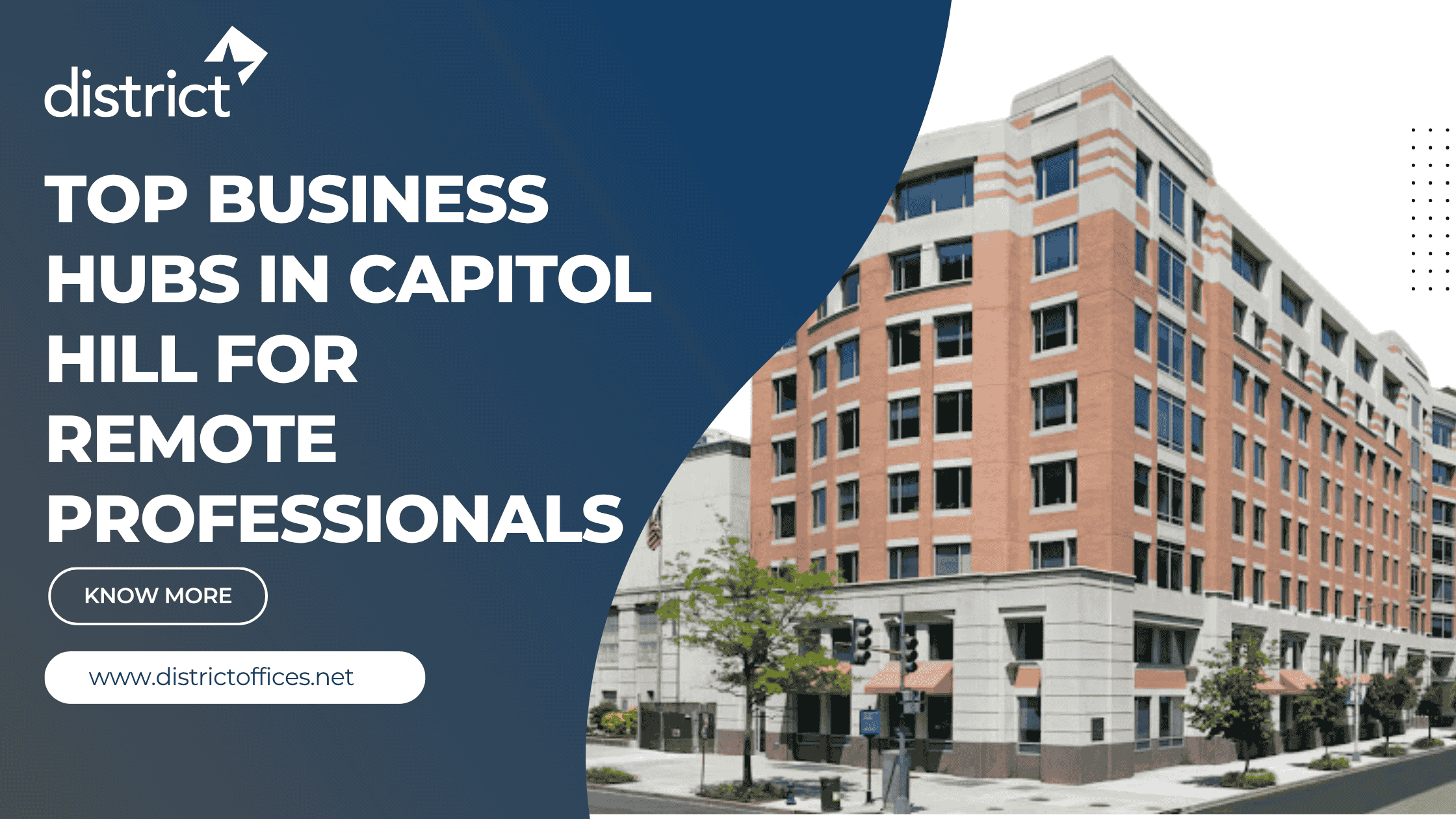
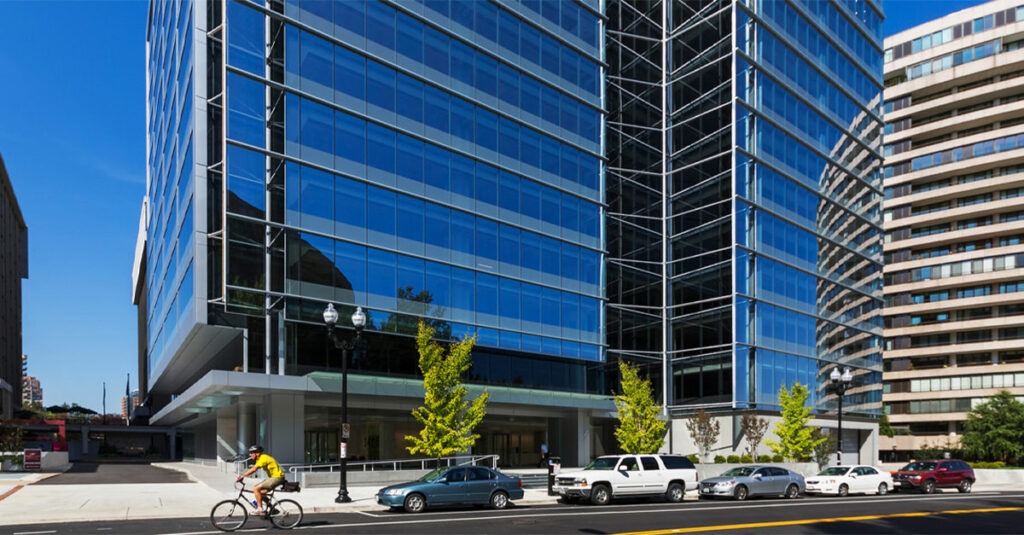
As a family-owned business with a 5-star industry reputation, District Offices provides private offices, coworking spaces, virtual offices, hybrid workspace solutions, and professional meeting rooms across four iconic DC locations: Georgetown, Farragut Square, Pennsylvania Avenue, and Capitol Hill.
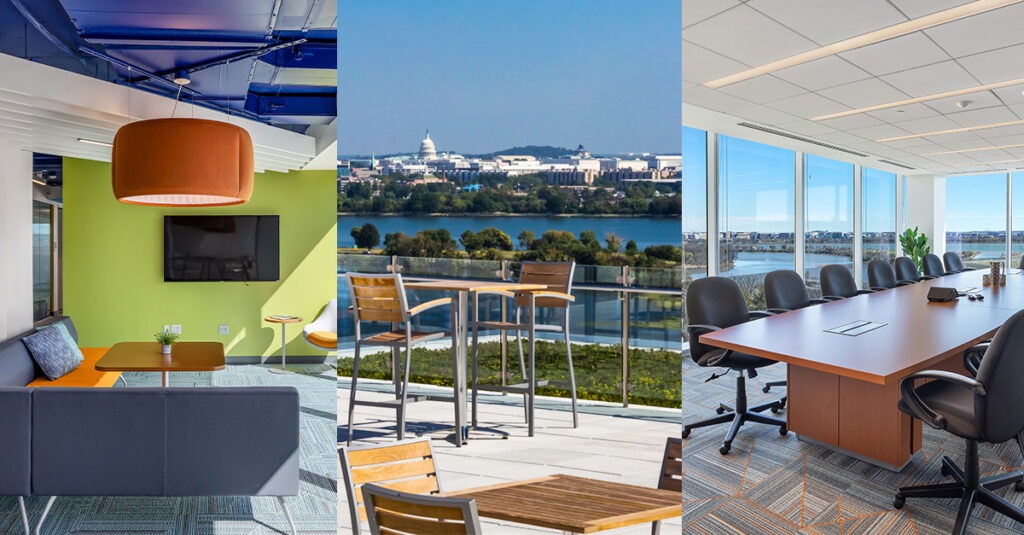
Every workspace is fully furnished, professionally maintained with daily cleaning, equipped with high-speed, secure Wi-Fi, and designed to eliminate common productivity barriers. Phone booths give employees the privacy they need for focused calls. Ergonomically designed spaces reduce physical strain. Reliable plug-and-play technology means meetings run smoothly every time.
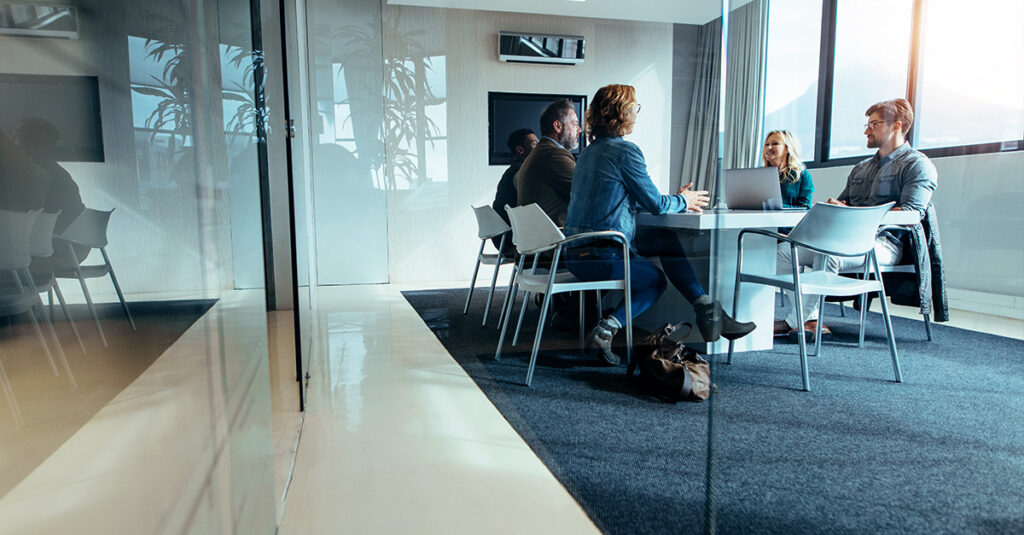
Their meeting rooms are particularly well-suited for teams looking to address unproductive meetings. Each room is equipped with HDMI and Thunderbolt connections, presentation tools, conference phones, and catering options. Rooms are available by the hour to both members and non-members, with capacity options from private one-on-one sessions to boardroom gatherings of up to 88 guests.
For teams seeking the benefits of a professional workspace without a traditional long-term office lease, District Offices offers the ideal combination of flexibility, a professional environment, and community. Monthly networking events, dedicated on-site staff, mail and package services, and complimentary coffee and tea complete the picture. Contact District Offices today at districtoffices.net or call 202.223.5200.
Frequently Asked Questions
The most common workspace problems that hurt productivity are constant interruptions and noise distractions, poor ergonomics, lack of privacy for focused work, unreliable technology, cluttered or disorganized environments, and poor lighting and air quality. Beyond the physical environment, employee disengagement and too many unproductive meetings are also significant contributors. Workers lose over an hour each day just regaining focus after interruptions, according to research by Gloria Mark at UC Irvine. Gallup’s 2024 Workplace Report estimates disengagement alone costs the global economy $8.8 trillion annually. Addressing even two or three of these issues can produce a measurable improvement in daily output.
Employee disengagement is one of the most expensive problems in the modern workplace. Gallup’s State of the Global Workplace 2024 Report estimates that disengaged employees cost the global economy $8.8 trillion in lost productivity each year, equal to 9% of global GDP. In practical terms, disengaged employees produce less, collaborate less effectively, and leave organizations at a much higher rate, driving up recruitment and training costs. Research by Vantage Circle shows that highly engaged teams are 23% more profitable and 14% more productive, illustrating the direct business case for investing in a workspace environment that fosters belonging and engagement. (Sources: gallup.com, vantagecircle.com)
Poor office design affects productivity in several measurable ways. Gensler’s 2025 Global Workplace Survey found that only 26% of employees strongly agree their workplace helps them do their best work. Specifically, open-plan layouts without quiet zones prevent deep, focused work. Inadequate lighting causes eye strain and fatigue. Poor ergonomics creates physical discomfort that reduces concentration. Research by the University of Leicester found that ergonomic design improvements can increase productivity by up to 40%. The takeaway is clear: the physical workspace is not a neutral backdrop. It is an active variable in how well your team performs every single day.
The most effective approach is to address both the physical and cultural environments. On the physical side, invest in ergonomic furniture, create private zones for focused work, improve lighting, and ensure technology is reliable and up to date. On the cultural side, establish communication norms that protect focused work time, restructure meetings to be shorter and more purposeful, and create opportunities for employees to build community. For organizations seeking a ready-made professional environment without a long-term lease commitment, flexible workspace solutions, such as those offered by District Offices in Washington, D.C., eliminate most of these problems from day one. Visit districtoffices.net or call 202.223.5200 to book a tour.