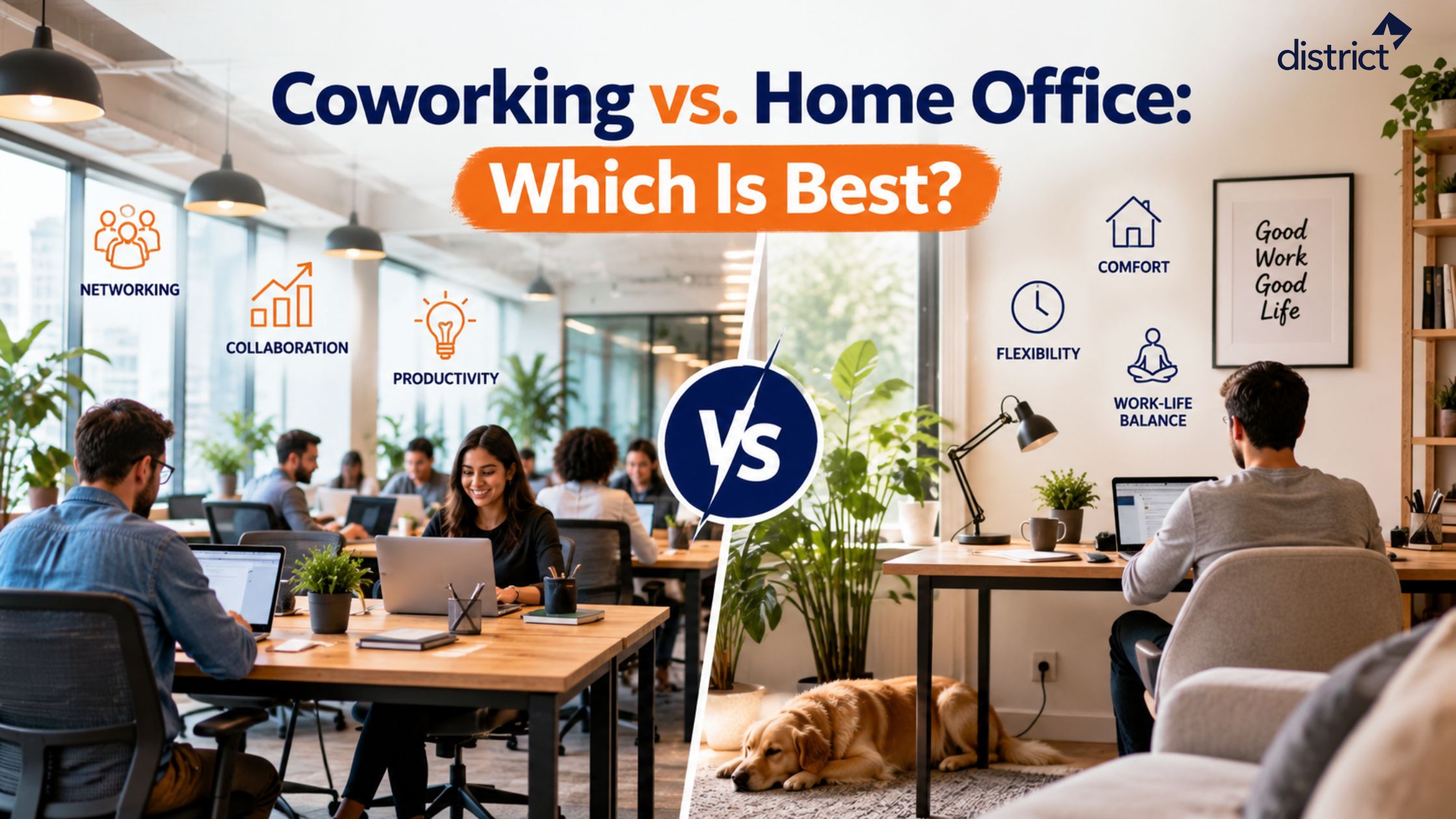


The conversation around remote work and office work is still ongoing, and many people are trying to figure out what works best for them. While working from home has its perks, working from an office has benefits that go beyond those of working from home. In this blog, we will cover the key advantages of in-person work, what the research says, and why so many professionals are choosing dedicated office spaces today.
When it first became an option, the idea of working from home felt like a dream to most people. There was no long commute, no dress code, and a lot more flexibility in how the day looked. For a while, it genuinely worked well for many people.
However, over time, things began to shift. Now, teams find it harder to stay connected, and new employees struggle to settle without being around experienced colleagues. Moreover, the important conversations kept getting lost in email threads, and the line between work and personal life quietly disappeared for many professionals.
That is exactly the point where working from an office starts to make a real difference.
Table of Contents
ToggleWhat Does “Working From an Office” Mean Today?
The idea of office work has changed quite a bit in recent years. Working from an office today does not always mean a traditional nine-to-five setup in a large corporate building. Many professionals now use shared office spaces, coworking hubs, or serviced business centers a few days a week.
This flexible approach to office-based working gives the structure of a professional setting without locking them into a rigid schedule. So, the workplace setup makes practical sense for small businesses, freelancers, startups, and remote-based teams.
The point is not where the office is, but rather, what the office environment provides, and why that matters for your work, your team, and your growth.
Key Benefits of Working from an Office
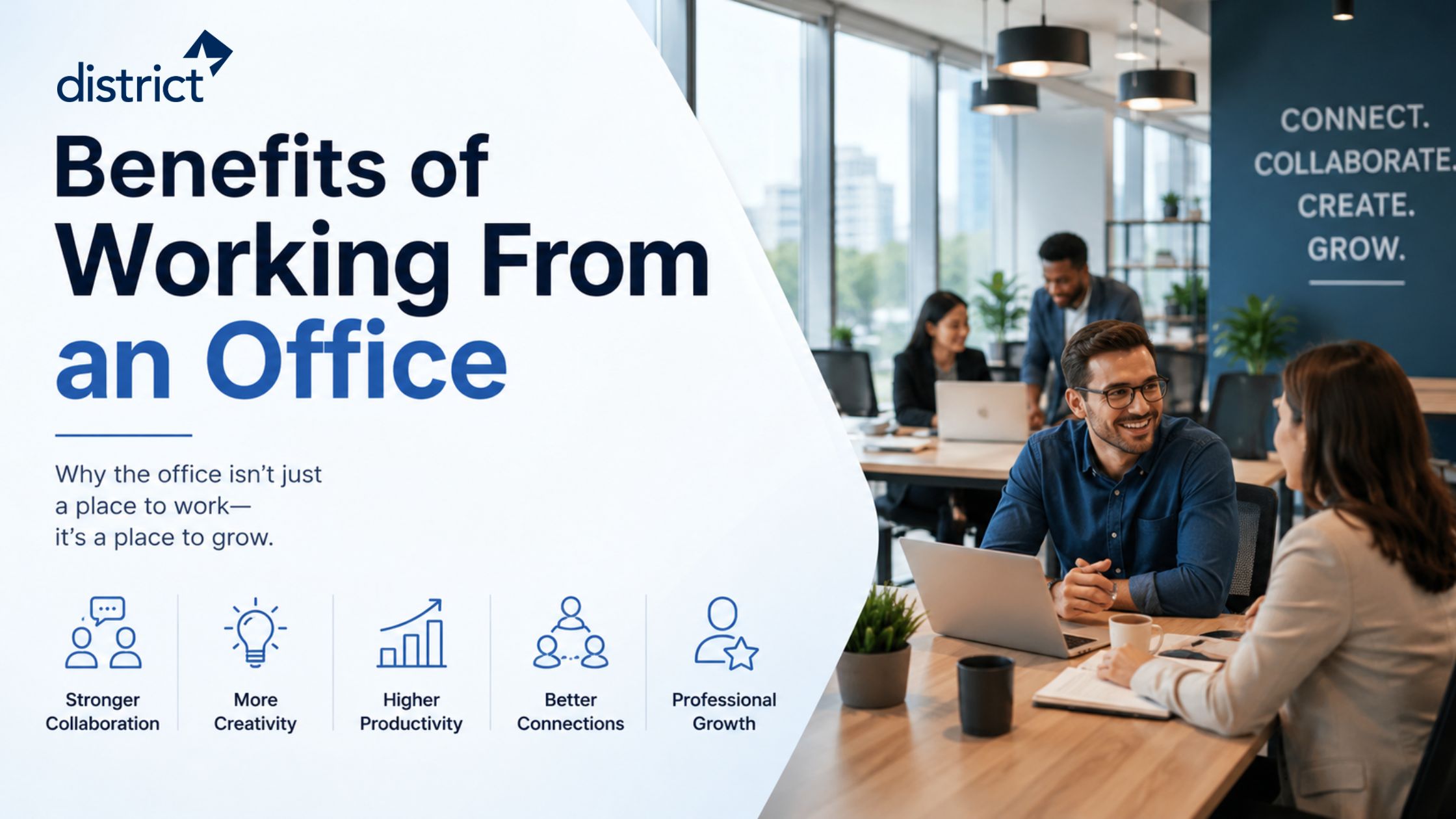
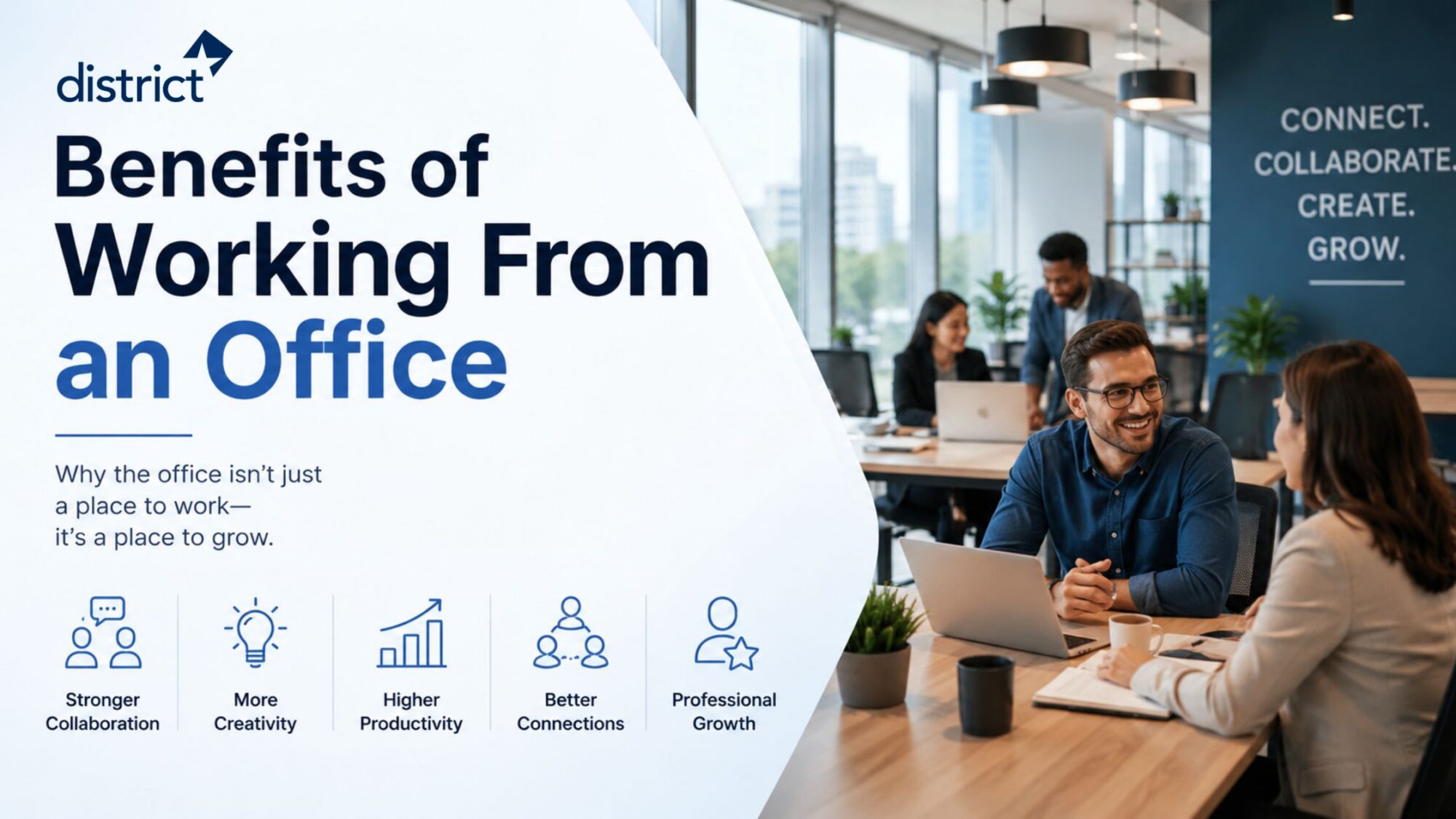
Working from an office gives you access to things that are genuinely difficult to replicate at home. From better collaboration and faster learning to clearer boundaries and stronger relationships, the advantages are real and well-documented. Below, we have covered each one in simple terms so you can understand exactly what you gain by choosing to work from a dedicated office space.
1. Team Collaboration Gets Much Easier
One of the most well-documented benefits of working from an office is the improvement it brings to team collaboration. When people share the same space, they can walk over to a colleague, discuss an idea on the spot, or make a quick decision without scheduling a call.
Research shows that office workers spend about 52% more time collaborating than those working from home. Also, that extra interaction does not just happen in formal meetings. It happens in the in-between moments, the quick questions, the whiteboard sessions, and the hallway chats.
These small moments add up. Therefore, teams in an office tend to make faster decisions, generate stronger ideas, and function much more effectively together.
Why this matters for your work:
- Decisions happen faster with no waiting for message replies
- Problems get solved in real time rather than dragging on for days
- Ideas grow stronger through back-and-forth conversation
2. New Employees Learn and Settle In Faster
If you are new to a job, working from an office makes a significant difference in how quickly you find your feet. Being physically present allows new hires to observe how experienced colleagues handle situations, ask questions as they arise, and absorb the company’s culture naturally.
In contrast, remote onboarding takes much longer and requires a lot more planned effort. Without the organic learning that happens in a shared workplace, new employees often feel disconnected for months. However, in an office environment, that gap closes much faster. As a result, people start contributing to the team and become more productive sooner.
3. Work and Personal Life Stay Separate
This is one benefit many people do not think about until they have been working from home for a while. Then it hits them all at once.
When your home is in your office, it is very difficult to switch it off truly. A study by the American Psychiatric Association found that more than two-thirds of remote and hybrid employees struggle to disconnect from work at the end of the day. As a result, work often extends into evenings, weekends, and personal time.
Working from an office changes that completely. When you leave the building at the end of your workday, there is a clear boundary. You walk out, and work stays behind. Moreover, that separation is genuinely good for your mental health, your personal relationships, and your ability to show up refreshed the next morning. For many people, this alone is worth choosing an office setup.
4. Your Day Has More Structure and Focus
When it comes to working from an office, it offers benefits that are hard for workers to get when working from home. At the office, there is a clear start time, a dedicated workspace, and a shared expectation that everyone is there to get things done with ease.
At home, there are constant low-level distractions that are easy to underestimate. Household tasks pull your attention, family members move around in the background, and personal responsibilities creep into what should be work time. The blurring of work and home life happens gradually. However, the office removes most of those distractions by design.
As a result, many professionals find they are more consistent, more focused, and better at keeping a steady rhythm when they work from a dedicated space.
5. You Build Stronger Professional Relationships
For better relationships at work, you have to share everyday moments, such as a quick conversation at coffee break, a laugh after a meeting, or a colleague checking in when you get stressed. However, these interactions may feel small, but they are essential to build real trust between people.
Trust in teammates directly affects how well people communicate, how willing they are to ask for help, and how effectively they work through complicated scenarios together. Moreover, when teams interact or communicate only through screens, those moments rarely occur; people stay professional but remain distant.
In an office, those bonds form naturally. Also, when people trust each other, they genuinely do better work together.
6. Your Career Growth Gets a Real Boost
Visibility matters in any professional environment, and working from an office creates it in ways remote work simply does not.
If you are in the office, managers and senior leaders observe your work, attitude, and your capability to handle situations. This leads to visibility and directly shapes the opportunities that come your way. Also, research shows that employees who work from the office are considered for promotions more frequently than fully remote employees.
Besides this, the office gives you daily chances to learn from people above you. For example, you can see how a senior manager handles a difficult meeting or how a colleague works through a tough client call. That kind of learning through proximity is hard to replicate over video calls, and it is one of the most underrated advantages of in-person work.
7. You Feel Like Part of Something Bigger
Working toward a shared goal alongside people who care about it too is a genuinely different experience. This is one of the more important benefits of working from an office, often going unnoticed at first.
Employees or teams experience almost everything together when they share a physical workspace. They celebrate wins together, work through setbacks side by side, and build a company culture that gives people a real reason to care. Moreover, a 2025 Gartner study found that employees who feel connected to their workplace are more engaged, perform better, and are more likely to stay with their organization. In other words, it directly impacts employees’ retention and performance.
8. You Get Access to Professional Tools and Resources
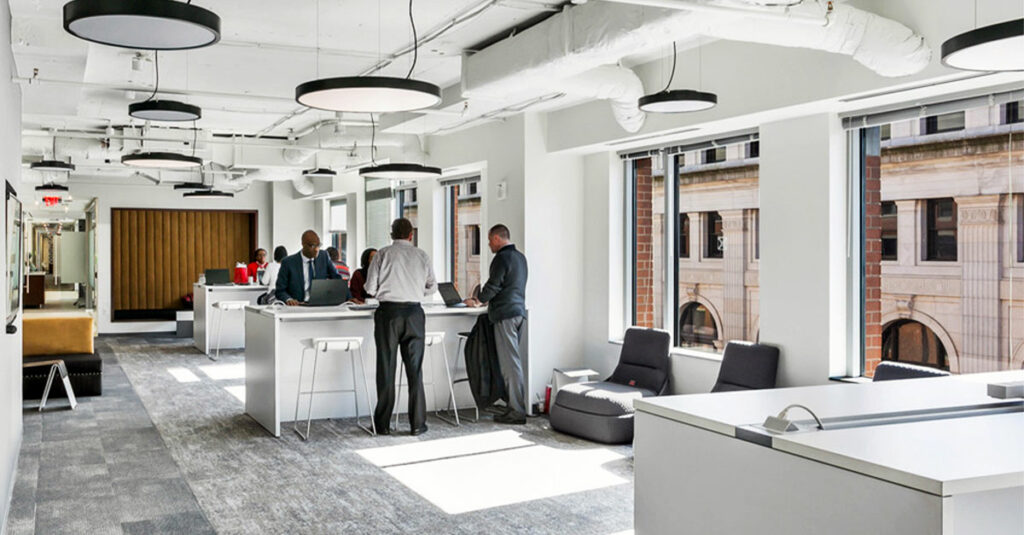
Most office environments are set up to support professional work properly. When you work from an office, the infrastructure is already in place. You do not have to troubleshoot your own internet connection or make do with a small laptop screen on a kitchen table.
A well-equipped office workspace typically provides:
- Reliable high-speed internet that does not drop during important calls
- Proper workstations with monitors and comfortable seating
- Dedicated meeting rooms for client calls and team sessions
- Printing facilities and on-site IT support when issues come up
Working from home means relying on your own setup, and that varies enormously from person to person. An unreliable connection or a noisy household can affect the quality of your work in ways that are easy to underestimate. Therefore, having access to a properly equipped office removes that uncertainty entirely.
Office Work and Hybrid Working: Finding the Right Balance
Choosing to work from an office does not have to mean giving up all flexibility. For most professionals today, the right answer is a combination of both approaches.
Currently, most businesses plan their office days around activities that benefit from person-to-person work, such as team collaboration, onboarding new employees, and client meetings. However, remote days are planned for individual tasks that require fewer interruptions. This hybrid work model allows teams to take full advantage of office-based working employees without cutting the flexibility of employees’ values.
The key is intentionality. When office time is used for the right activities, it delivers far more value than simply showing up out of habit.
District Offices: Professional Office Spaces in Washington, DC
Once you decide that office-based work is the right move, the next question is simple: where do you go?
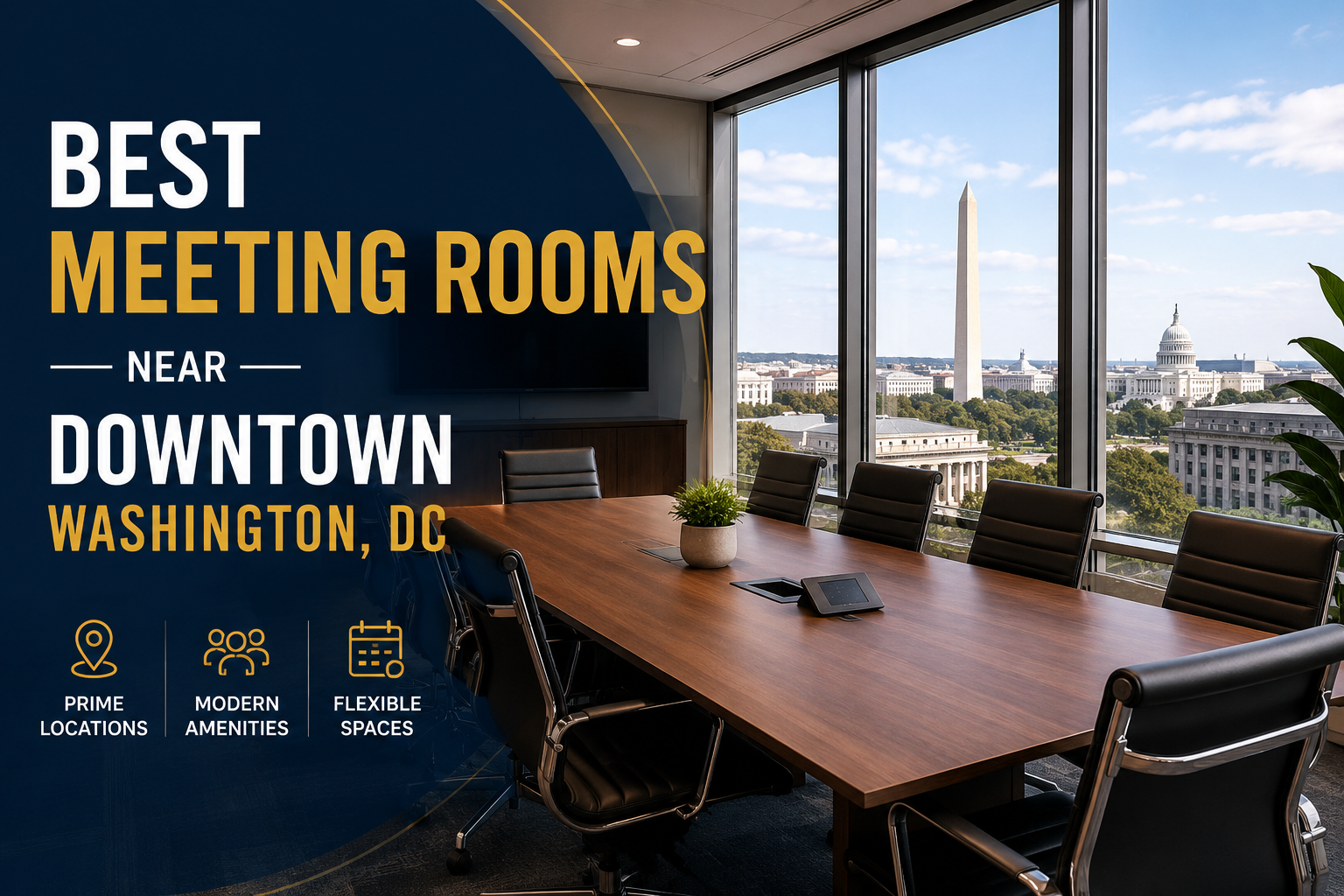
For businesses and professionals in Washington, DC, the answer is District Offices. With four prime locations across the city, it provides fully equipped, move-in-ready workspaces designed around how people work today. Whether you are a solo entrepreneur, a growing startup, or an established business, there is a solution that fits.
- Georgetown: 1101 30th Street NW, Fifth Floor, Washington, DC 20007. Steps from the Four Seasons Hotel and Washington Harbor, overlooking the C&O Canal. Offers conference rooms, a fitness center with private showers, a parking garage, and 24/7 security.
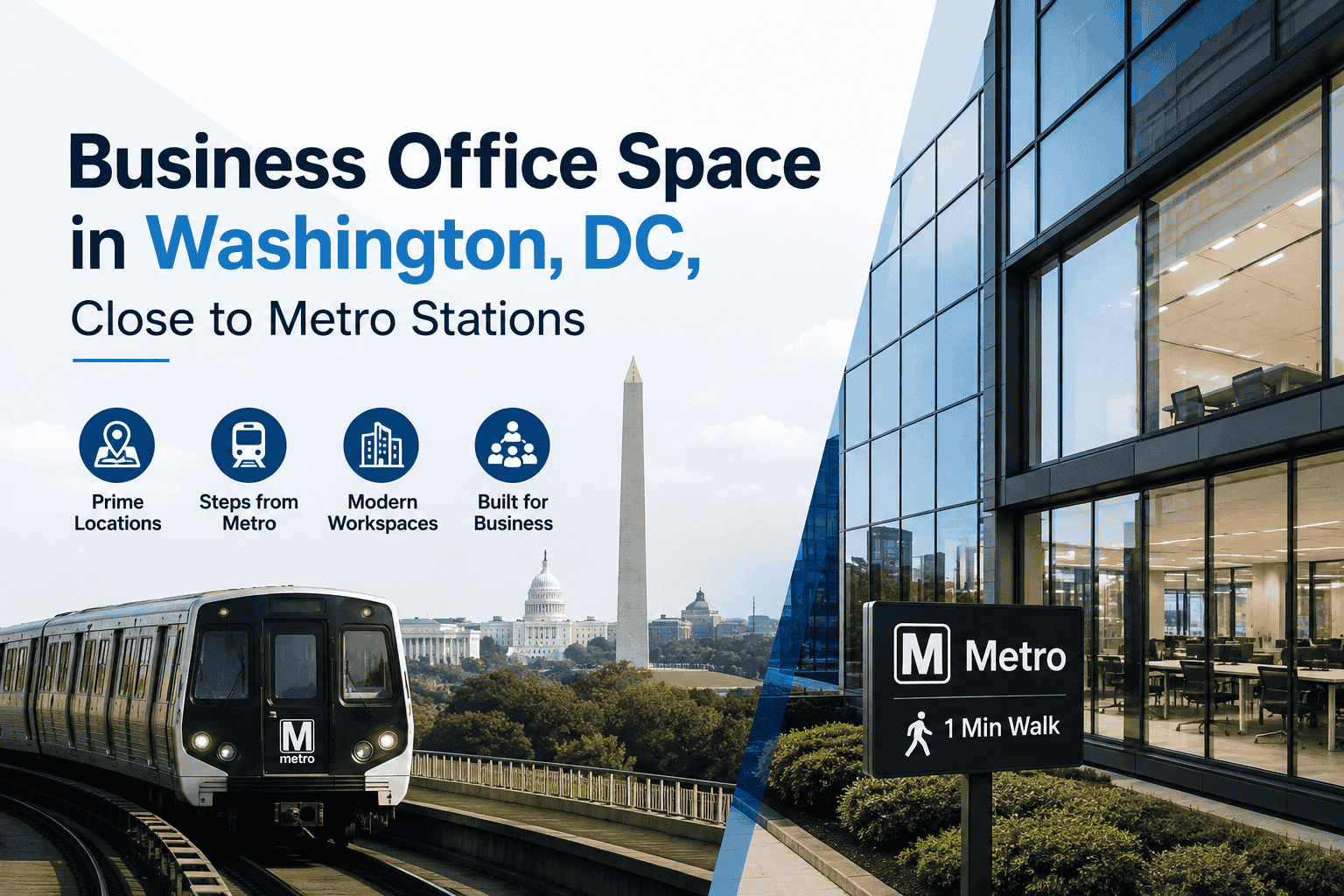
- Farragut Square: 1025 Connecticut Avenue NW, Suite 1000, Washington, DC 20036. At the heart of DC’s Central Business District, three blocks from the White House and a one-minute walk from two Metro lines. Features a 25-person training room, eight conference rooms, and electric car charging stations.
- Pennsylvania Avenue: Ronald Reagan Building, 1300 Pennsylvania Avenue NW, Suite 700, Washington, DC 20004. One of DC’s most prestigious addresses, three blocks from the White House. The Federal Triangle Metro entrance is inside the building, with a 66-person training room and a food court with over 20 dining options.
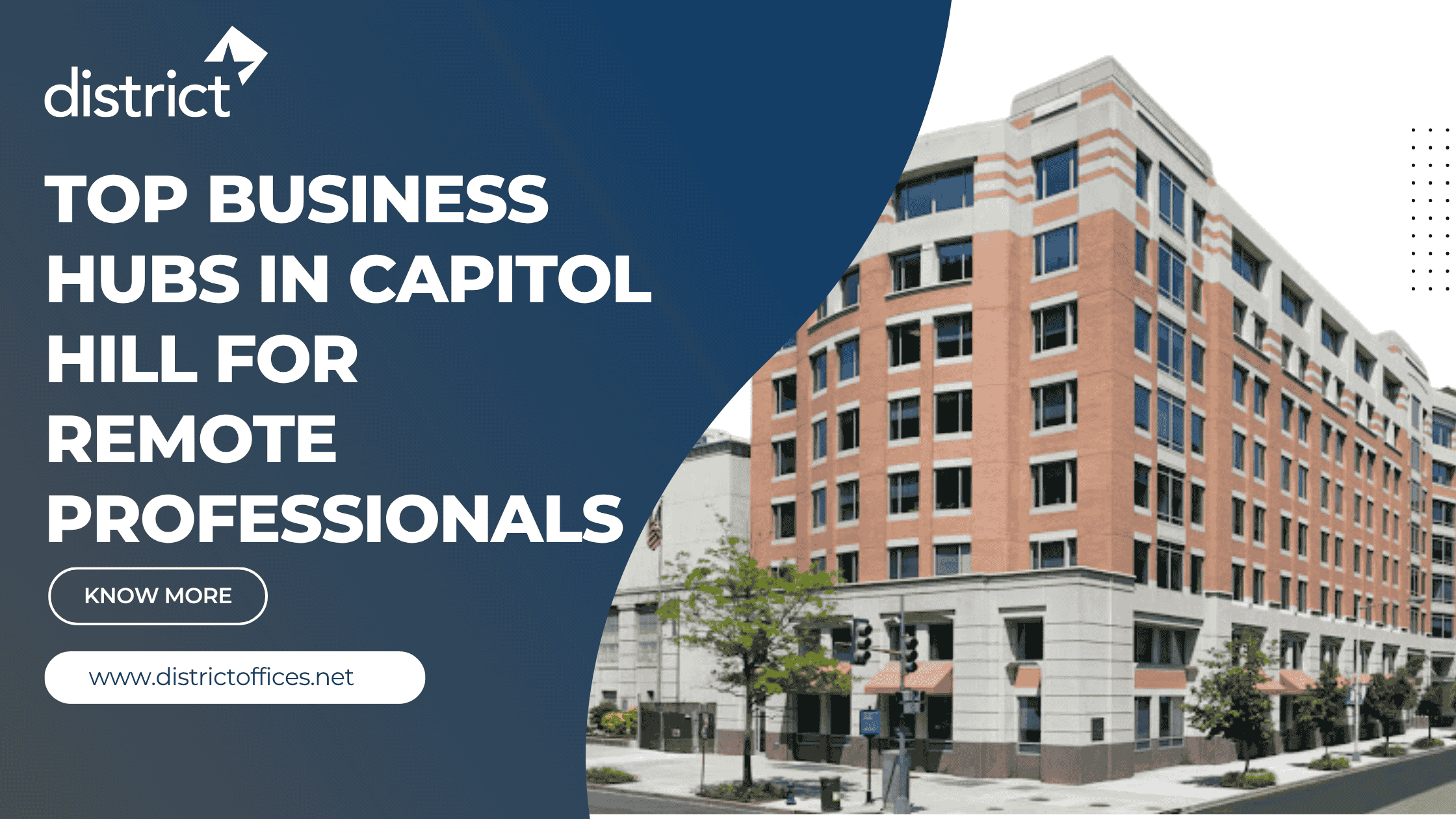
- Capitol Hill: 10 G Street NE, Suite 600, Washington, DC 20002. Just 300 steps from Union Station, with direct access to Amtrak, Metro, and commuter rail. Features include a rooftop lounge, an 88-person training room, and an on-site gym.
Therefore, no matter which part of DC your business operates in, District Offices has a workspace that puts you exactly where you need to be.
Why Choose District Offices?
District Offices provides businesses in Washington, DC, access to a full range of professional workspace solutions, all in prime locations across the city.
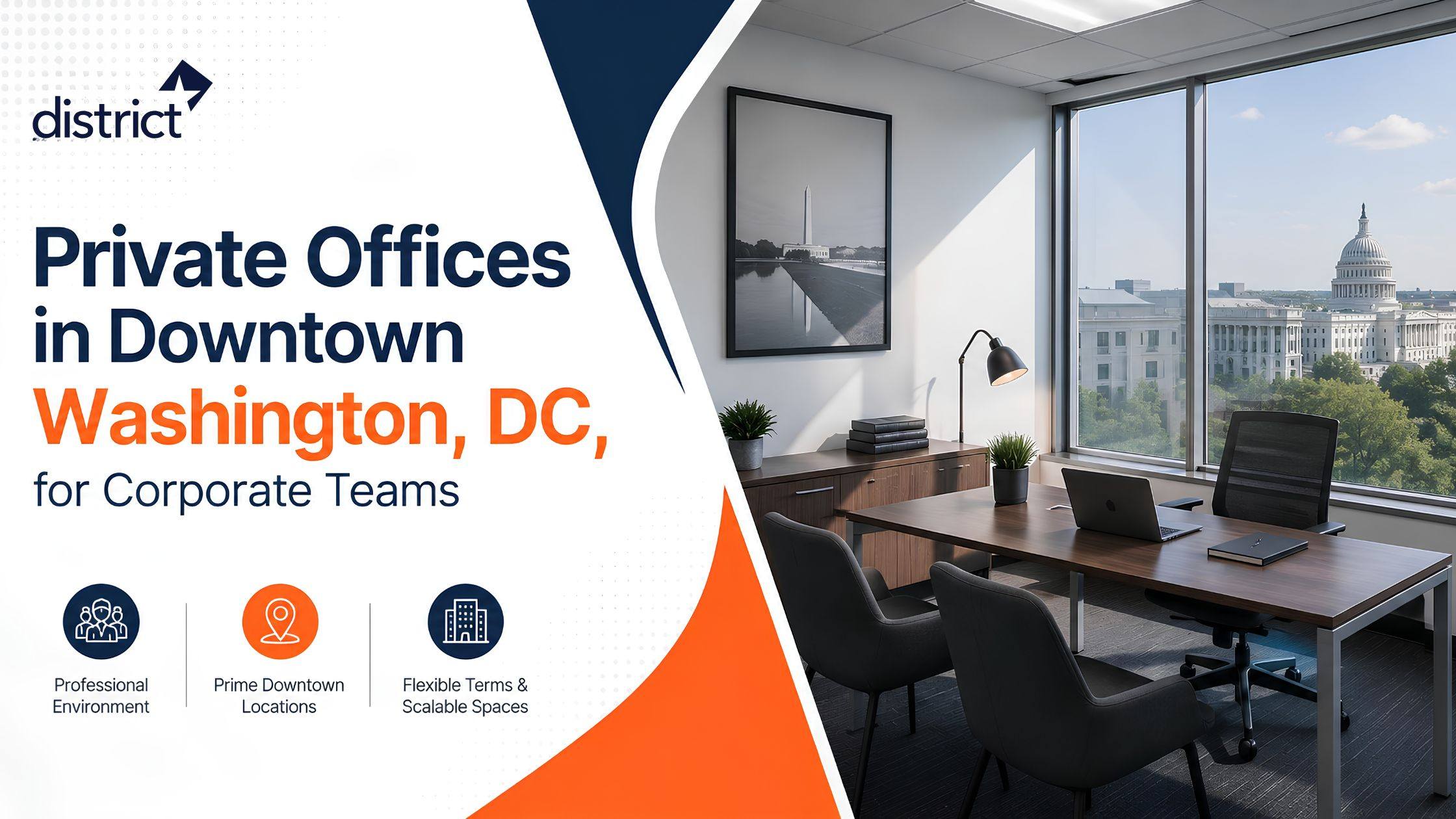
- Private Offices are fully furnished, move-in ready, and include 24/7 building access, administrative support, high-speed Wi-Fi, and access to conference rooms. So, your team can get started from day one without any setup.
- Coworking Spaces offer hot desks, lounges, phone booths, and a community café, giving professionals a flexible yet professional daily work environment during business hours.
- Virtual Offices provide a prestigious DC mailing address, a live receptionist, and mail handling and forwarding services. In addition, you get on-demand access to meeting rooms whenever you need them.
- Hybrid Office Spaces are built for teams that split time between remote and in-person work, with 24-hour access, fully equipped meeting rooms, and reliable infrastructure throughout.
- Meeting Rooms and Event Spaces are available by the hour or day for both members and non-members, accommodating 3 to 88 people, with plug-and-play technology and catering options available.
Why the Quality of Your Office Space Matters
Choosing to work from an office is only part of the answer. The quality of that workspace matters just as much.
A good office environment should support the kind of work you actually do. That means reliable technology, professional meeting spaces, a quiet area for focused work, and an easy-to-get location. If getting to the office feels like a logistical challenge every time, it starts working against the benefits rather than reinforcing them.
This is why flexible and serviced office spaces have become a popular choice for businesses of all sizes. They provide a fully professional working environment without the overhead of setting up your own space. Also, for small businesses, growing teams, and freelancers who want the genuine benefits of in-person work without a long-term lease commitment, a well-equipped coworking or private office space is often the most sensible option.
District Offices provides professional office spaces designed around how people actually work today. Whether you need a private office, a dedicated desk, or a meeting room a few days a week, having access to a proper workplace makes a measurable difference in how you perform and how your team works together.
Wrapping Up
Working from the office doesn’t mean returning to the traditional way. In addition, it is about understanding what office-based, in-person work offers. And allowing one to make a deliberate choice to use it where it matters most.
The benefits of working from an office are concrete and well-documented. In a home setup, outcomes, such as faster learning, better collaboration, stronger relationships, and clearer work-life balance, are harder to achieve. So whether you use office space every day or just a few times a week, the right workplace environment supports better work and a healthier professional life for everyone in it.
Frequently Asked Questions
A: The main benefits include better team collaboration, faster onboarding for new employees, a clear separation between work and personal life, stronger professional relationships, improved career visibility, and a greater sense of belonging. Being in the same space as your colleagues removes much of the friction that slows work in remote settings.
A: Productivity depends on the type of work. If you are working on tasks that need quick decisions, collaboration, or learning from others, working from the office supports higher productivity. For deep individual work, working from home is more effective. Besides this, most professionals prefer a hybrid approach that gives them the best of both environments.
A: Being visible in the office puts you in front of the people who influence your career. Managers and senior leaders can observe your work, your initiative, and how you handle situations. That visibility translates into recognition and promotions. In addition, the office gives you more chances to learn from experienced colleagues just by being around them.
A: Neither option is better in every situation. Office work is better for collaboration, relationship building, and career development. Working from home offers more flexibility for focused individual tasks. The most effective approach for many professionals is a combination of both, used based on what the work requires.
A: A good office space offers high-speed Wi-Fi, a quiet environment, private and shared meeting spaces, and comfortable and professional workstations. For businesses that don’t want to invest in setting up their own space, a serviced workspace is the best without a long-term commitment.