

The modern workplace has permanently changed. Teams are no longer tied to a single office—and most professionals prefer it that way. Hybrid and remote work are now the norm, not the exception. This shift, however, presents a new challenge: enabling effective collaboration across locations.
On-demand meeting rooms play a critical role in solving this problem. These flexible, bookable spaces give teams access to professional meeting environments exactly when and where they’re needed. Rather than forcing modern teams into outdated office models, on-demand meeting rooms align with how work actually happens today.
This guide explains how on-demand meeting rooms support hybrid and remote teams, the challenges they solve, and why they’ve become essential infrastructure for distributed workforces.
Understanding the Hybrid and Remote Work Landscape
Hybrid and remote work are no longer experimental. Most professionals now expect flexibility in where they work, and organizations are adjusting. Yet many companies still rely on office infrastructure designed for fully in-person teams.
As a result, distributed teams often face:
- Misaligned meetings across locations
- Poor video and audio quality during hybrid calls
- Limited space for in-person collaboration
- High costs tied to underused offices
At the same time, traditional offices often sit empty for days. This mismatch creates friction, wasted spend, and frustrated teams.
On-demand meeting rooms close this gap by replacing fixed office capacity with flexible access. Teams use professional meeting spaces only when needed, improving collaboration while reducing unnecessary real estate costs.
Also Read: Where to Find Last-Minute Meeting Rooms in Georgetown and Farragut Square
What Are On-Demand Meeting Rooms?
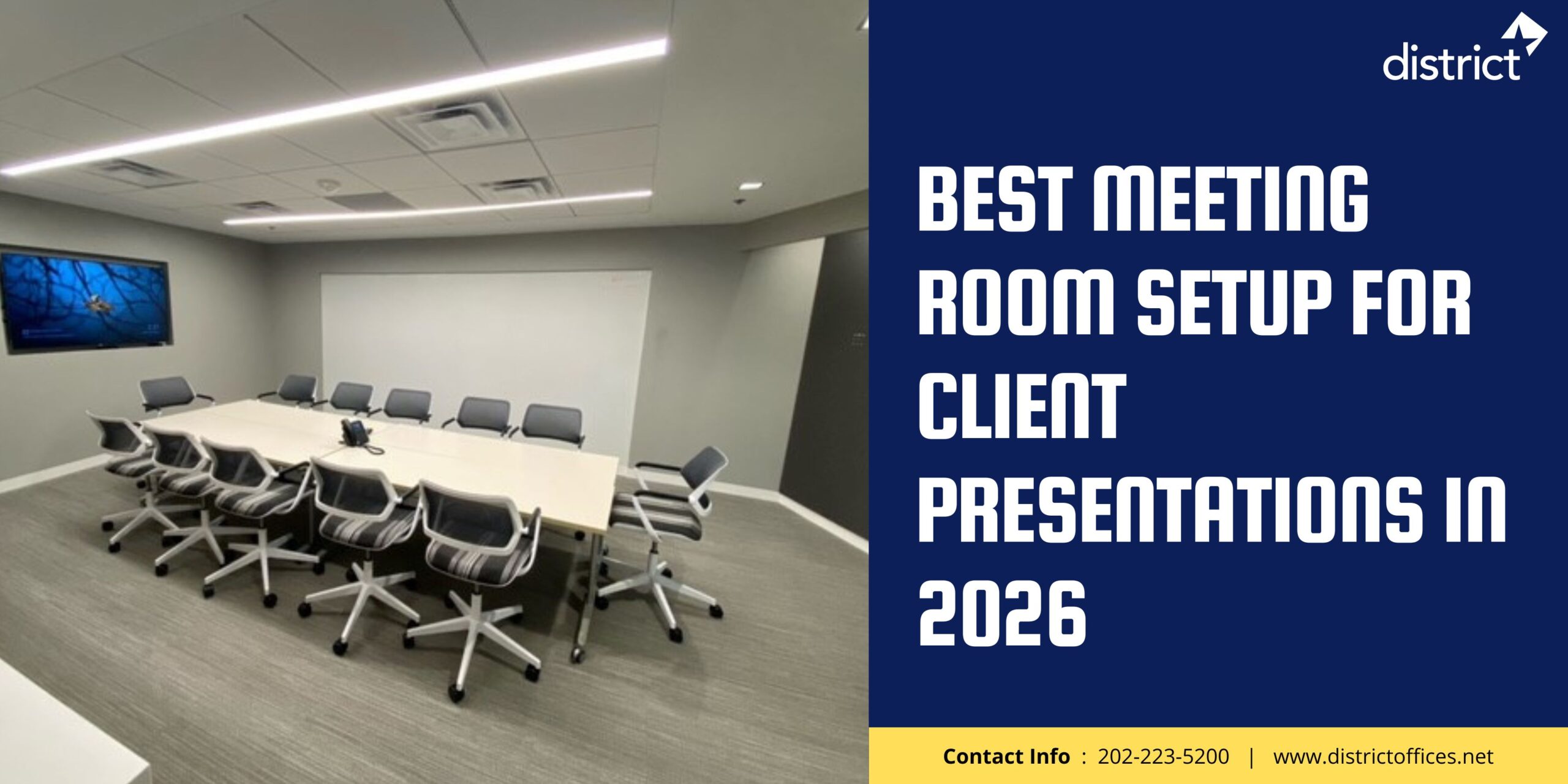
On-demand meeting rooms are professional spaces that can be booked by the hour or day, with no long-term commitments. You pay only when you use them.
These rooms are designed for modern work and typically include:
- Video conferencing–ready setups
- High-speed internet
- Screens, whiteboards, and collaboration tools
- Professional reception and on-site support
Why Hybrid Teams Need Flexible Meeting Rooms
Traditional meeting rooms assume everyone is in the same place. That assumption no longer holds.
Hybrid teams need spaces that support both in-person and remote participants. Without the right setup, remote employees feel disconnected, and in-office staff struggle with unreliable technology.
Hybrid teams don’t meet every day—but when they do, those meetings matter.
Supporting intentional in-person collaboration: Teams come together for planning, training, client presentations, and decision-making. Flexible meeting rooms make these moments possible without paying for unused office space.
Reducing friction between remote and in-office staff: Hybrid work fails when one group feels secondary. Purpose-built meeting rooms ensure equal access to space, technology, and presence.
Matching space to real usage: On-demand rooms allow teams to scale up or down instantly, supporting agility and cost control.
Because these spaces are designed for hybrid work, meetings run smoothly and participation stays balanced—regardless of location.
How On-Demand Meeting Rooms Improve Remote Collaboration

Effective remote work depends on seamless collaboration. On-demand meeting rooms remove many common barriers for distributed teams.
1. Stronger hybrid collaboration
Video calls alone can’t replace in-person connection. On-demand meeting rooms provide a neutral, professional space for teams to reconnect, build trust, and make decisions that stick.
2. Easier distributed team meetings
Meeting room networks allow teams to meet near clients, partners, or transit hubs—reducing travel time and keeping meetings productive.
3. Reliable technology for hybrid calls
Poor audio and video quickly derail meetings. Professional meeting rooms are built for mixed attendance and typically include:
- Enterprise-grade video conferencing
- Acoustic design for clear audio
- Simple, plug-and-play setups
This enables hybrid collaboration without constant IT support.
4. Cost-effective meeting room access
On-demand rooms offer pay-as-you-use access that aligns spending with actual activity, supporting office optimization and budget flexibility.
Key Benefits of On-Demand Meeting Rooms for Hybrid Teams
Organizations that adopt on-demand meeting rooms consistently see these advantages:
- Cost efficiency: Pay only for space you use, turning real estate into a variable expense.
- Reliable technology: Fully equipped, professionally maintained rooms eliminate setup issues.
- Scalability: Instantly scale usage as team size or project needs to change—no leases required.
- Professional presence: Remote employees gain access to polished environments for client meetings and presentations.
Also Read: Why District Offices Is the Perfect Corporate Event Space in Washington, DC
Common Meeting Challenges in Hybrid Work Environments
Hybrid work introduces new challenges to businesses:
- Scheduling conflicts: Solved with transparent, centralized booking systems.
- Inconsistent room quality: Addressed by choosing trusted providers with standardized spaces.
- Cultural resistance: Overcome through clear policies and leadership support.
On-demand meeting room networks help by offering consistent experiences, reliable technology, and broad geographic access.
What to Look for in Hybrid Meeting Room Solutions
The most effective on-demand platforms share a few essentials:
- Simple, intuitive booking systems
- Professional-grade technology compatible with major video platforms
- Multiple locations to reduce travel time
- Flexible pricing for occasional or recurring use
When these elements work together, meeting room access becomes seamless rather than a logistical burden.
Building a Hybrid Workplace that Actually Works
Supporting hybrid work requires more than flexible policies—it requires flexible infrastructure.
Modern workplace strategies treat meeting rooms as shared, on-demand resources rather than fixed assets. Teams access collaboration spaces when needed, close to where they live or work.
Seamless integration with calendars and video tools ensures scheduling feels natural and frictionless. When technology fades into the background, collaboration improves—and hybrid work actually works.
Key Questions About On-Demand Meeting Rooms
A: On-demand meeting rooms give hybrid teams access to professional spaces for planned collaboration without requiring daily office attendance or long-term leases.
A: Remote teams benefit from high-quality meeting environments, reliable technology, and client-ready spaces that improve collaboration when in-person meetings are needed.
A: Hybrid schedules change frequently. Flexible meeting rooms adapt to real usage patterns, reduce unused office space, and help control operating costs.
A: The best solutions combine convenient locations, reliable video conferencing technology, and simple, on-demand booking systems.
A: On-demand meeting rooms cost less, scale faster, and align better with hybrid work models than fixed office meeting rooms.
A: Common challenges include scheduling conflicts, inconsistent technology, and low adoption. Choosing the right provider helps minimize these issues.