A great meeting can move a deal forward. Pick the wrong room, though, and even a strong pitch can fall flat. This is why the venue you choose matters just as much as what you say once you’re in it.
Here, we will list the best places to hold professional meetings in Washington, DC, organised by meeting type instead of a random list of addresses. You will learn what makes a meeting space work for business, which DC neighbourhoods suit which kind of meeting, and how to pick the right room for your next client call, interview, or board discussion.
Table of Contents
ToggleWhy Your Meeting Location Matters
Your meeting space says something about your business before anyone speaks a word.
A clean, private room with working technology tells a client you’re organized and serious. A noisy table in the corner of a café tells them something else, even if that’s not your intent.
Here’s what a well-chosen venue delivers:
- A strong first impression – Clients and partners form judgments fast, often before the meeting starts.
- Real privacy – Sensitive discussions, legal terms, or salary negotiations need a closed door, not a shared table.
- Working technology – A dropped video call or a screen that won’t connect wastes everyone’s time.
- Easy access – A location near Metro or with nearby parking removes friction before people even arrive.
- Fewer distractions – Quiet rooms help people focus and actually get through the agenda.
- Client confidence – A professional setting reassures the other side that you’re a stable, capable business to work with.
Think of it this way: the room is part of your pitch, whether you planned it that way or not.
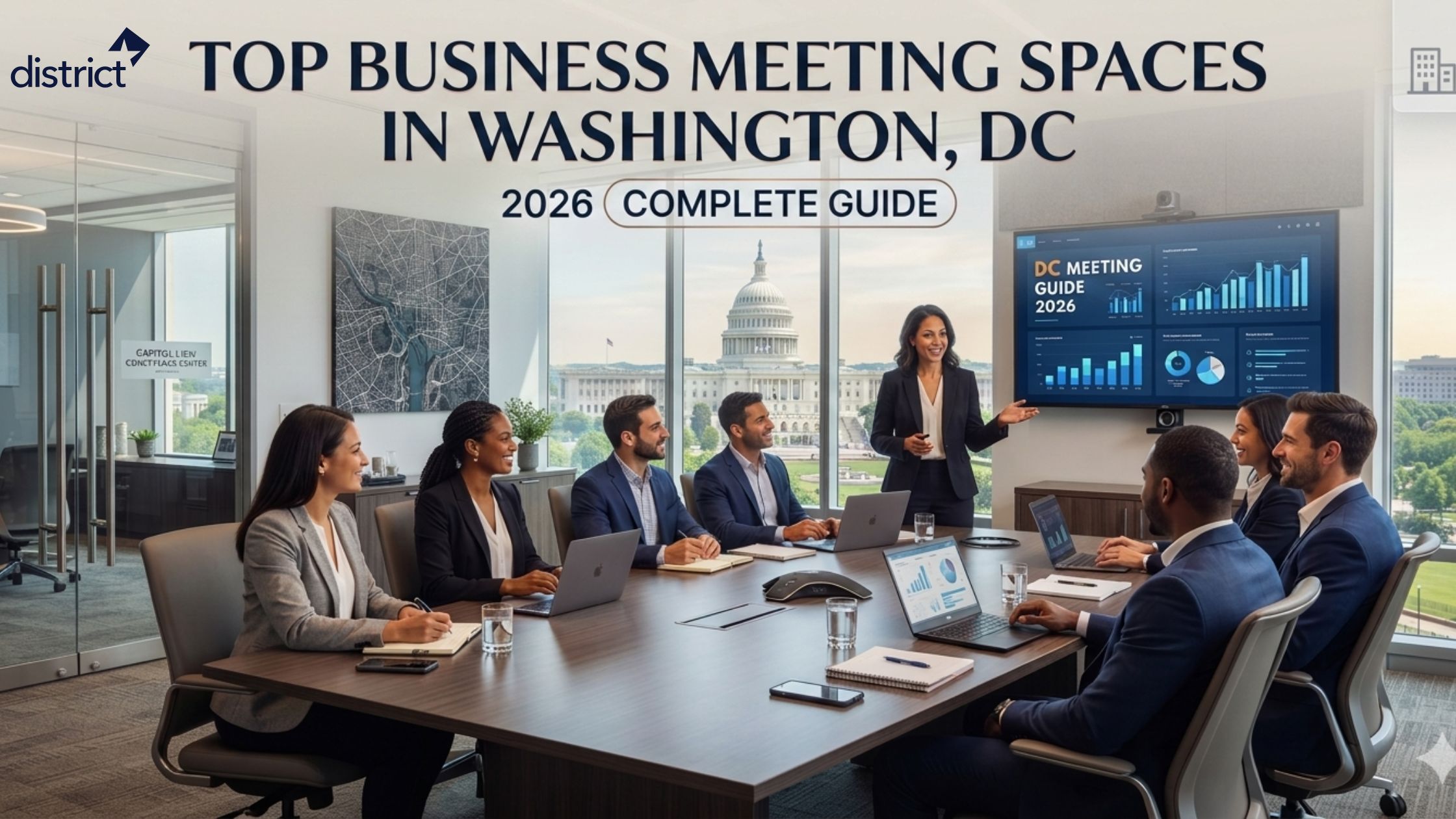
Also Read: Top Business Meeting Spaces in Washington, DC (2026 Complete Guide)
What Makes a Great Professional Meeting Space
Before comparing venues, it helps to know what to look for. Not every meeting room is built the same way, and small gaps in setup can turn a good meeting into an awkward one.
Look for these basics:
- A convenient location – Ideally walkable from Metro or with nearby parking.
- Reliable Wi-Fi – Slow or spotty internet derails presentations fast.
- Video conferencing equipment – Camera, microphone, and screen that actually work together.
- Comfortable seating – Especially important for meetings over 45 minutes.
- A private, closed environment – No open floor plans for anything confidential.
- Flexible booking – Hourly or half-day options, not just full-day rentals.
- Metro or parking access – This alone can make or break attendance for out-of-town guests.
- Reception or front desk support – Someone to greet your guests professionally.
- Catering options – Coffee and light snacks go a long way for longer sessions.
- ADA accessibility – A basic requirement, not an extra.
Note: If a venue is missing even two or three of these, it’s worth asking more questions before you book.
Also Read: Professional Meeting Space Requirements for Businesses in 2026
Best Places to Hold Professional Meetings in Washington, DC
Rather than listing venues one after another, it helps to group them by what kind of meeting you’re having. A board discussion and a first-round interview don’t need the same room.
Executive Meeting Rooms
Executive meeting rooms are built for the conversations that carry the most weight. This means board meetings, investor pitches, legal discussions, and confidential negotiations.
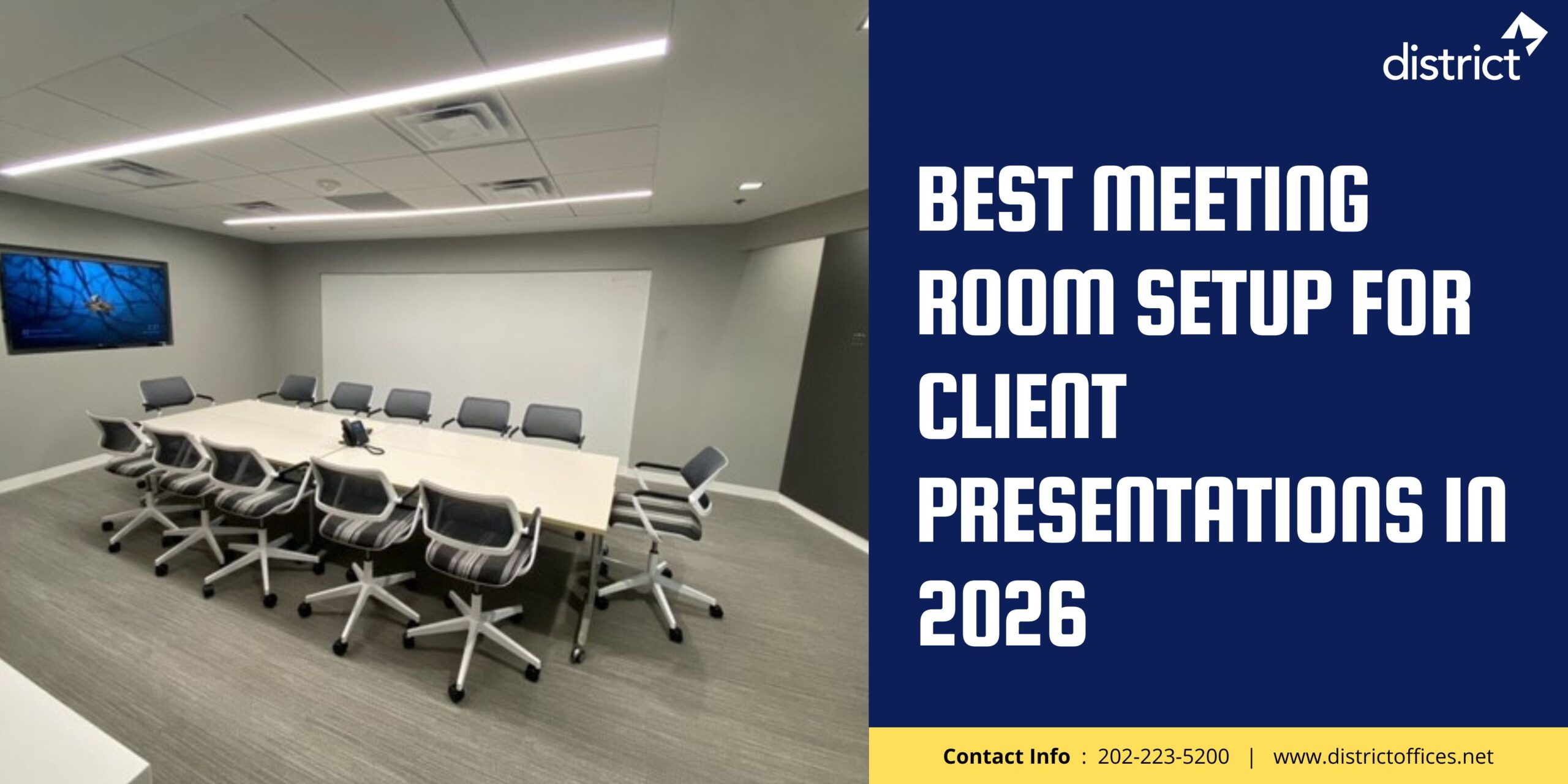
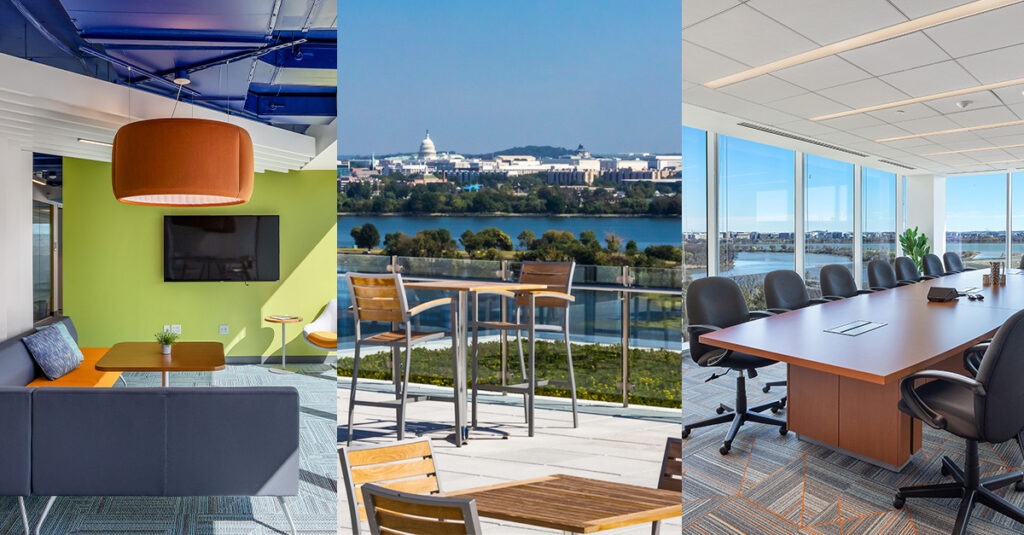
These rooms typically include a private, soundproofed setting, a proper conference table, and video conferencing tools that work without a technician standing by. They give you a level of privacy and polish that a restaurant table simply cannot match.
Pro Tip: For any meeting involving contracts, financials, or personnel matters, an executive meeting room is worth the small extra cost. Privacy problems are hard to undo once they happen.
Coworking Spaces
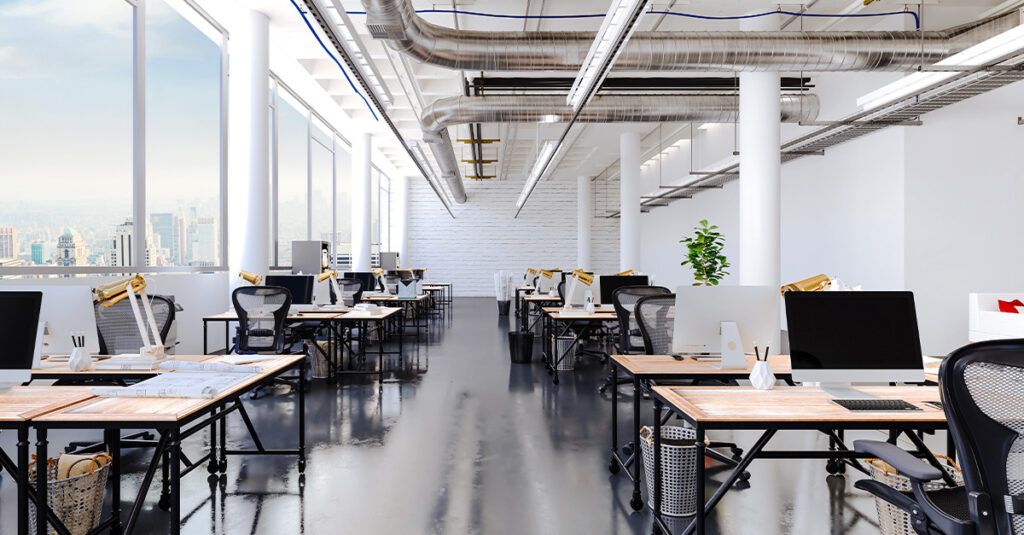
Coworking spaces have become a go-to option for businesses that need a professional room without committing to a full office lease. This is why they’ve grown so popular for one-off meetings and recurring client calls alike.
Community feedback and local comparison guides consistently point to flexible coworking operators such as District Offices, Industrious, Regus, Spaces, and WeWork for business meetings across DC. Each offers bookable rooms, front desk support, and the technology most meetings need.
They tend to work best for:
- Client meetings that need a polished setting without a long-term lease
- Team check-ins or planning sessions
- Interviews where you want a professional space but not a large room
Note: Pricing and room availability vary by location and time of day, so it’s worth checking a few options before you commit to one provider.
Hotel Meeting Rooms
Hotel meeting rooms make sense when you’re hosting out-of-town clients, running a multi-day conference, or presenting to a larger group. Properties like Marriott, Hyatt, Hilton, and the Ritz-Carlton offer dedicated meeting and event space alongside full-service amenities.
The advantage here is convenience. Guests can stay and meet in the same building, which removes travel time and simplifies logistics for anyone flying in.
These rooms tend to come with a higher price tag than coworking spaces, so they make the most sense for events that genuinely need the scale or the hospitality services attached.
Conference Centers
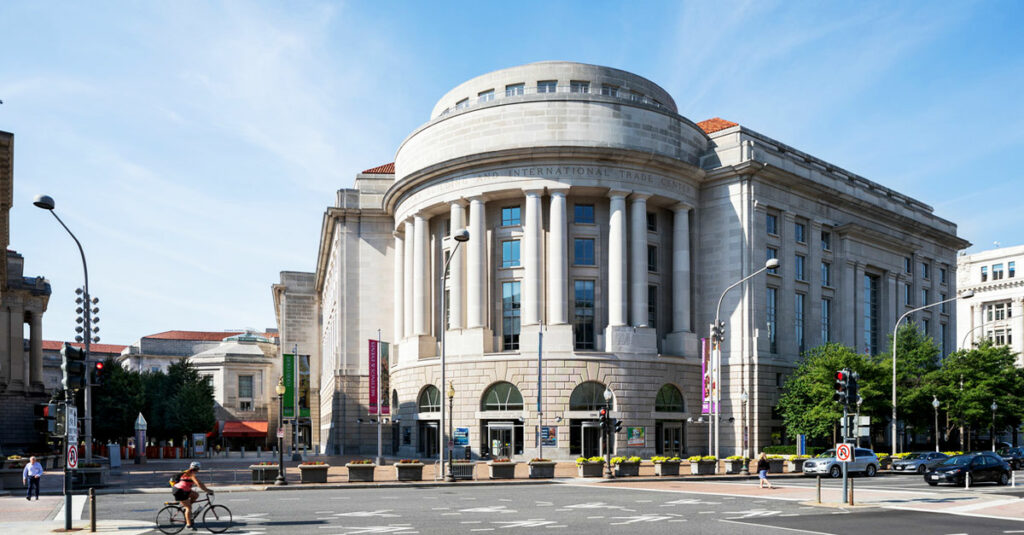
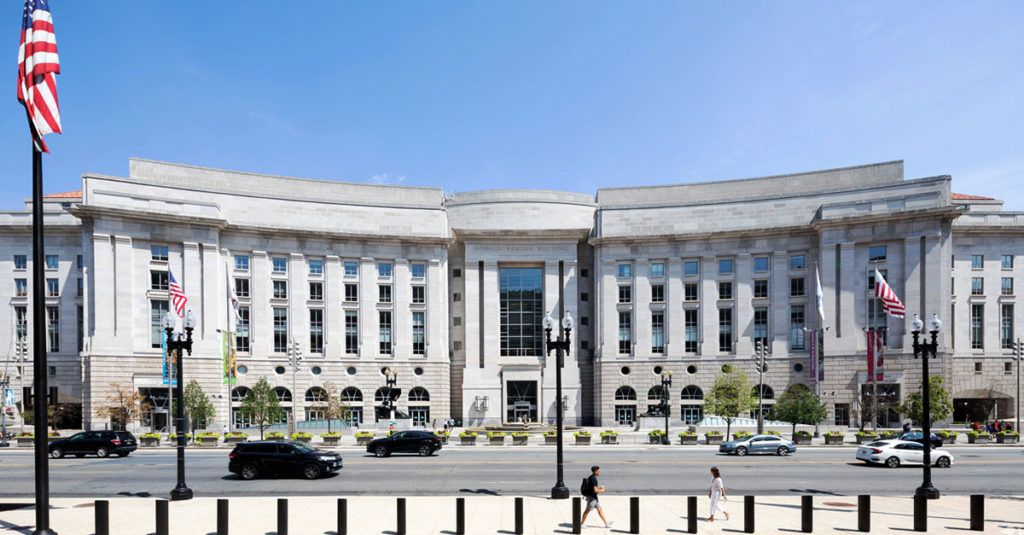
For larger meetings, seminars, or full-day workshops, conference centers offer the space and infrastructure that smaller rooms simply can’t. Washington, DC’s official meetings guide highlights major venues such as the Ronald Reagan Building and the National Press Club as go-to options for conferences and corporate events in the city.
These venues typically handle everything from breakout rooms to catering and audiovisual support, which is useful if you’re managing an agenda for 50 or more attendees.
Libraries and Public Spaces
Public libraries and shared community spaces can work for informal meetings, study sessions, or budget-conscious teams. Many branches across DC offer bookable meeting rooms at little to no cost.
Where they fall short is privacy and reliability. You can’t control noise levels, guarantee Wi-Fi speed, or count on the room being available on short notice. For anything involving sensitive information or client-facing work, these spaces are usually a backup option rather than a first choice.
Also Read: Best Coworking and Shared Office Spaces in Washington, DC (2026)
Why Restaurants and Coffee Shops Often Fall Short
Meeting over coffee feels casual and easy, but it comes with real trade-offs once the conversation gets serious.
Here’s what tends to go wrong:
- Background noise – Espresso machines and nearby conversations make focused discussion harder than it needs to be.
- No real privacy – Sensitive topics shouldn’t be discussed within earshot of strangers.
- Limited seating – Larger groups often can’t find a table together, especially during busy hours.
- Unreliable Wi-Fi – Public networks are often slow or require constant reconnection.
- Distracting music – Background music competes with conversation and calls alike.
- No presentation equipment – You can’t display a screen or share visuals the way a meeting room allows.
This is why dedicated meeting rooms remain the better choice whenever the stakes are higher than a casual catch-up. A coffee shop is fine for a quick informal chat. It’s rarely the right call for a client pitch or a hiring decision.
How to Choose the Right Meeting Space
The fastest way to narrow your options is to match the venue type to the meeting itself.
| Meeting Type | Best Venue |
| Client Meeting | Executive Meeting Room |
| Job Interview | Private Office |
| Team Workshop | Conference Room |
| Sales Presentation | Boardroom |
| Training Session | Conference Center |
| Hybrid Meeting | Tech-Enabled Meeting Room |
Note: When in doubt, book a slightly bigger room than you think you need. A cramped meeting room is far more distracting than an empty chair.
Best Neighbourhoods for Business Meetings in DC
Location shapes convenience just as much as the room itself. Here’s how the major business districts compare.
- Downtown DC – Central and walkable, with the highest concentration of meeting spaces and easy Metro access from nearly anywhere in the city.
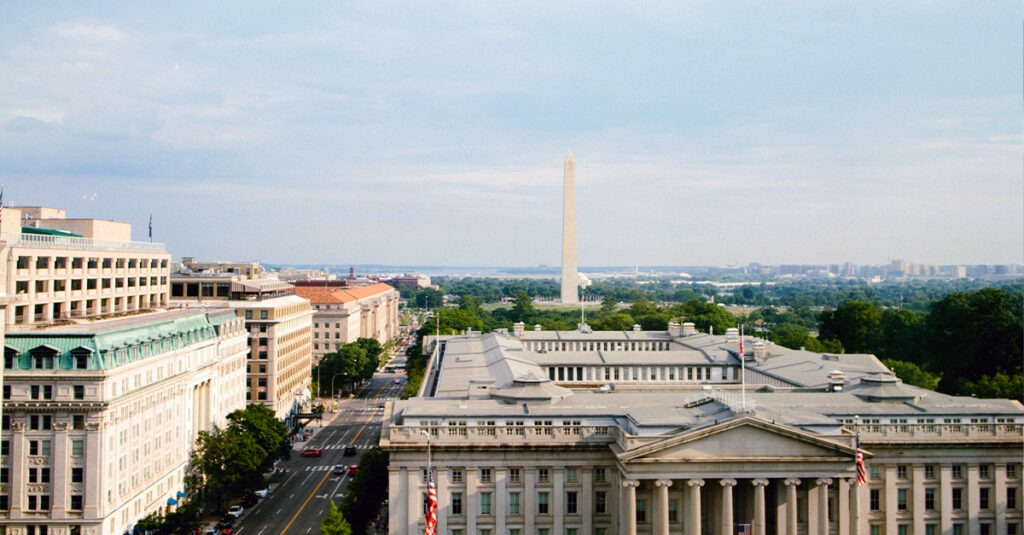
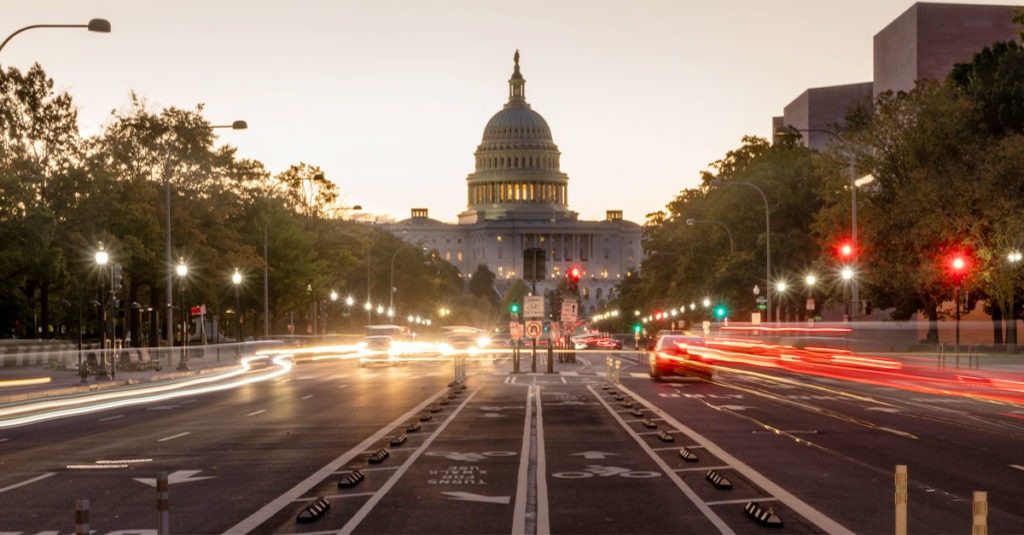
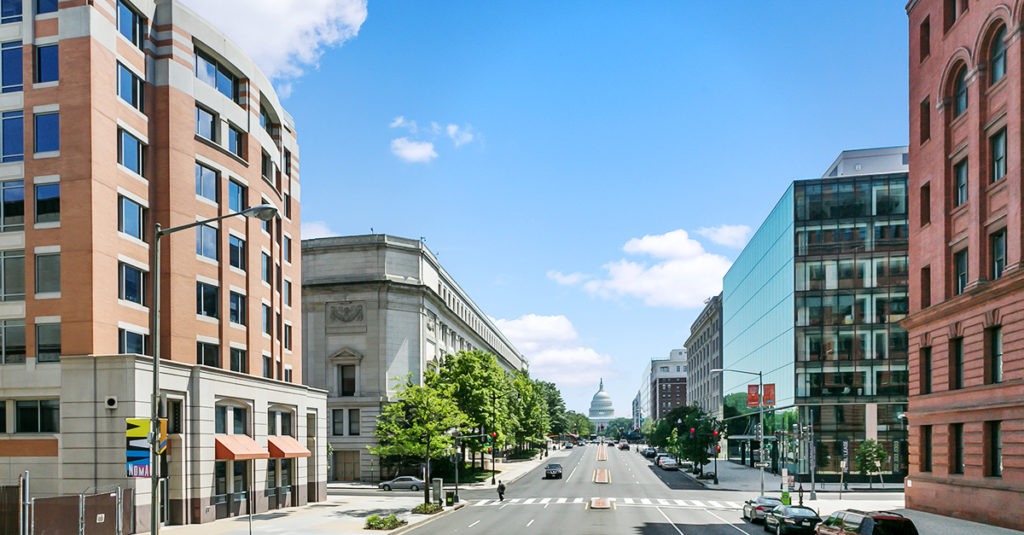
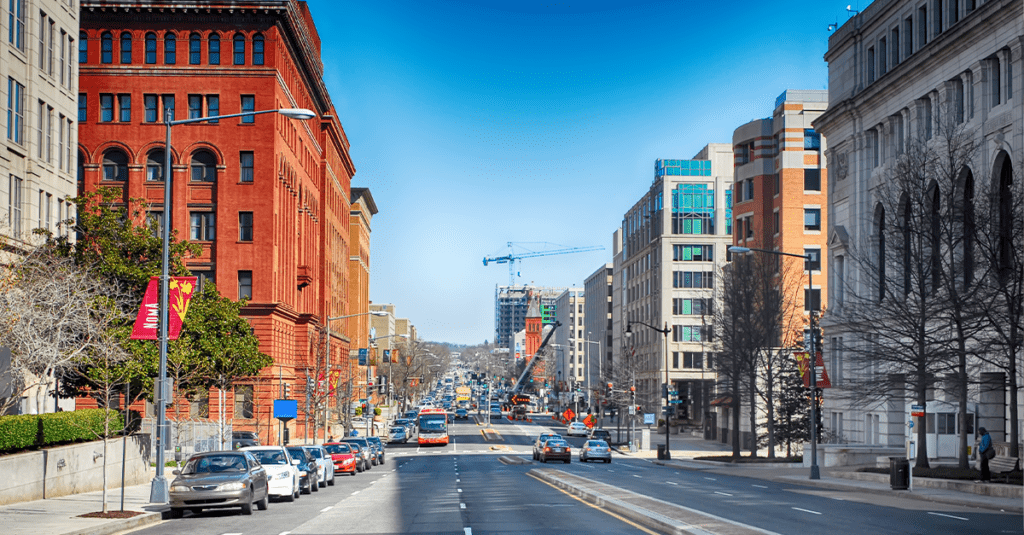
- Pennsylvania Avenue – A prestigious corridor close to federal buildings, ideal for meetings with government-adjacent clients or partners.
- Farragut Square – Dense with office buildings and coworking spaces, making it a practical hub for weekday business meetings.
- Dupont Circle – A mix of hotels, boutique offices, and coworking spots, popular for client meetings that also call for a nearby lunch spot.
- Capitol Hill – A natural fit for meetings tied to policy, advocacy, or government relations work.
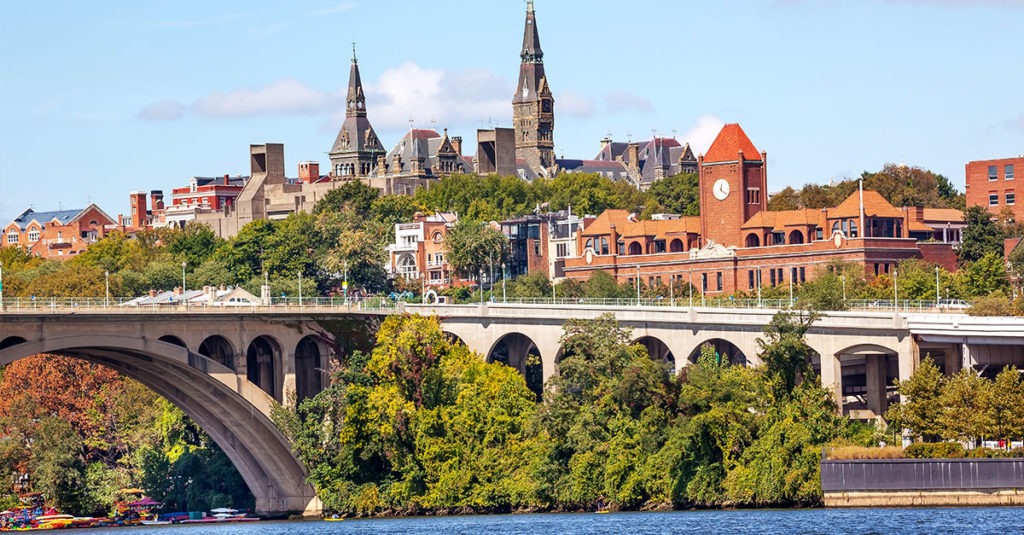
- Georgetown – A more relaxed, upscale setting, often chosen for client meetings that blend business with hospitality.
Why Businesses Choose District Offices
Among the coworking and meeting space options across DC, District Offices comes up often for a simple reason: it covers the fundamentals well, in one of the city’s most convenient locations.
Here’s what businesses tend to point to:
- A prime Pennsylvania Avenue location, close to major government and business districts
- A short, walkable distance from Metro
- Fully furnished meeting rooms ready to use without setup delays
- Reception support to greet clients and guests professionally
- High-speed Wi-Fi built for video calls and file sharing
- Presentation displays for pitches and screen sharing
- Flexible hourly bookings instead of rigid full-day minimums
- Catering options for longer sessions
- A private office option for teams that need more than a single room
For businesses that want a professional setting without the overhead of a full office lease, this combination of location, flexibility, and reliable infrastructure is exactly what makes coworking meeting rooms worth considering.
Tips for Running a Successful Business Meeting
Even the right room won’t save a poorly run meeting. A few simple habits make a bigger difference than most people expect.
- Send the agenda beforehand – Give attendees time to prepare instead of walking in cold. Even a three-line email listing what you’ll cover helps people show up ready to contribute.
- Arrive early – Ten minutes is usually enough to settle in, test the room, and greet guests calmly instead of rushing in right behind them.
- Test presentation equipment – Check the screen, Wi-Fi, and video call setup before anyone else arrives. A frozen screen share in front of a client is hard to gracefully recover from.
- Offer refreshments – Coffee and water are small gestures, but they signal that you thought about your guest’s comfort, not just your own agenda.
- Keep meetings on time – Starting and ending when you said you would shows respect for everyone’s schedule, and it’s one of the easiest ways to build a reputation for being easy to work with.
- Reserve the right room size – A room that’s too large feels empty and impersonal, while one that’s too small feels cramped and distracting. Match the room to your actual headcount.
- Confirm guest access ahead of time – Send clear check-in instructions in advance so your visitors aren’t stuck calling you from the lobby, especially in shared or coworking buildings.
Frequently Asked Questions
You can hold a professional meeting in coworking spaces, hotel meeting rooms, conference centers, and executive meeting suites across DC. Coworking spaces like District Offices, Industrious, Regus, Spaces, and WeWork are popular for their flexible hourly bookings and central locations.
Meeting room rental in DC typically runs from around $50 to $150 per hour, depending on the room size, location, and included amenities. Larger boardrooms and hotel event spaces tend to cost more, especially in prime downtown locations.
Coworking meeting rooms are generally a better choice for professional meetings because they offer privacy, reliable Wi-Fi, and presentation technology that coffee shops can’t guarantee. Coffee shops work fine for casual, informal conversations but fall short for confidential or client-facing discussions.
Can I rent meeting rooms by the hour in Washington, DC?
Yes. Most coworking spaces and several hotels in DC offer hourly meeting room bookings, which makes them a practical option for short client calls, interviews, or team check-ins without committing to a full day.
Downtown DC and Pennsylvania Avenue are among the best locations for client meetings because of their central position, Metro accessibility, and concentration of professional meeting spaces. Both areas make it easy for clients coming from other parts of the city or from out of town.
Most professional meeting rooms and coworking spaces in DC include video conferencing equipment such as screens, cameras, and microphones. It’s still worth confirming the exact setup when booking, since equipment quality can vary between locations.
Wrapping Up
Every meeting deserves a space that matches its purpose. A confidential negotiation needs privacy. A team workshop needs room to spread out. A client pitch needs technology that works the first time.
When you match the venue to the goal, prioritizing privacy, convenience, and reliable technology along the way, you set the meeting up to succeed before anyone even sits down.
If you’re looking for a professional, flexible meeting space in the heart of DC, it’s worth taking a look at what District Offices has available on Pennsylvania Avenue.