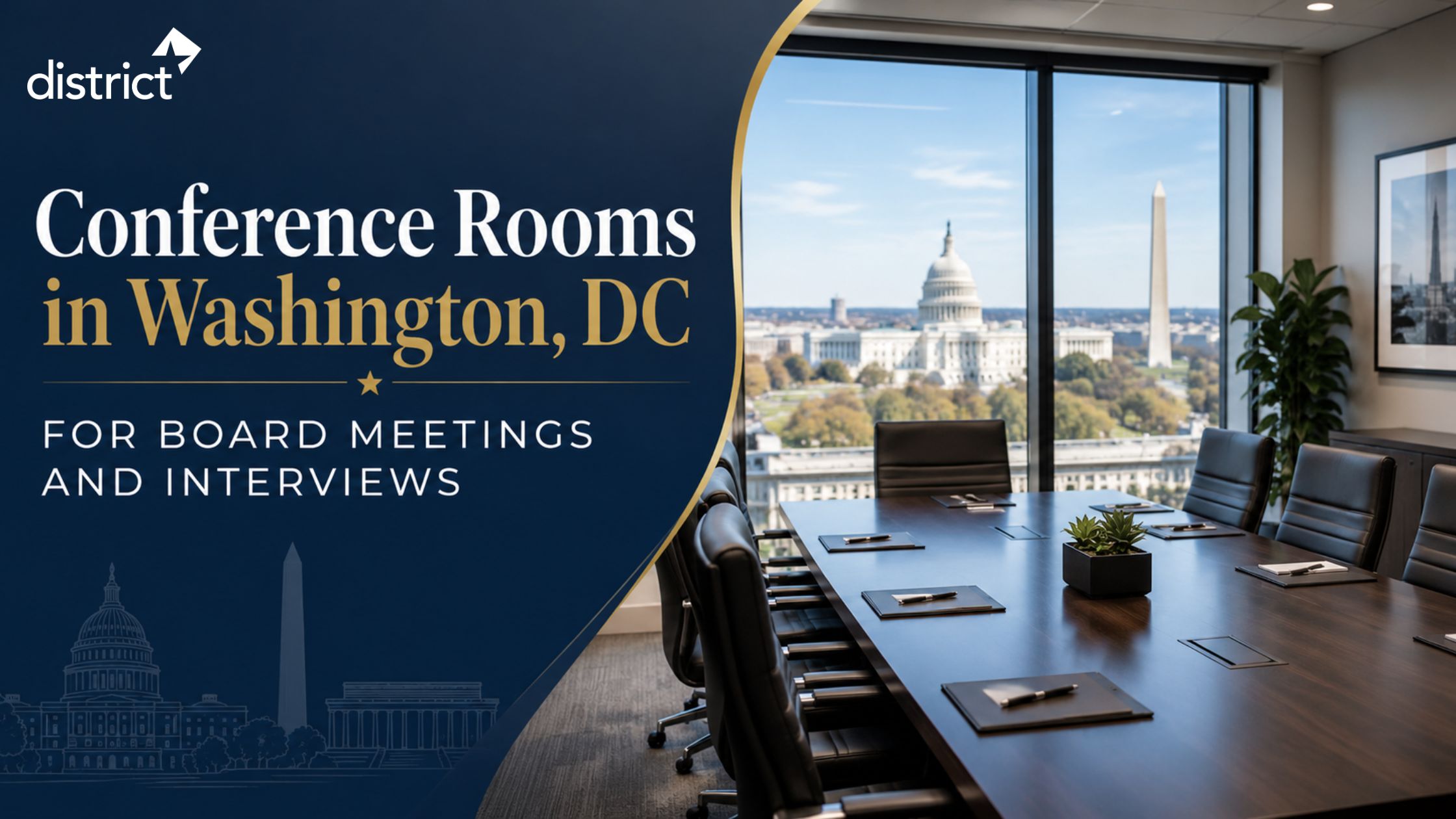


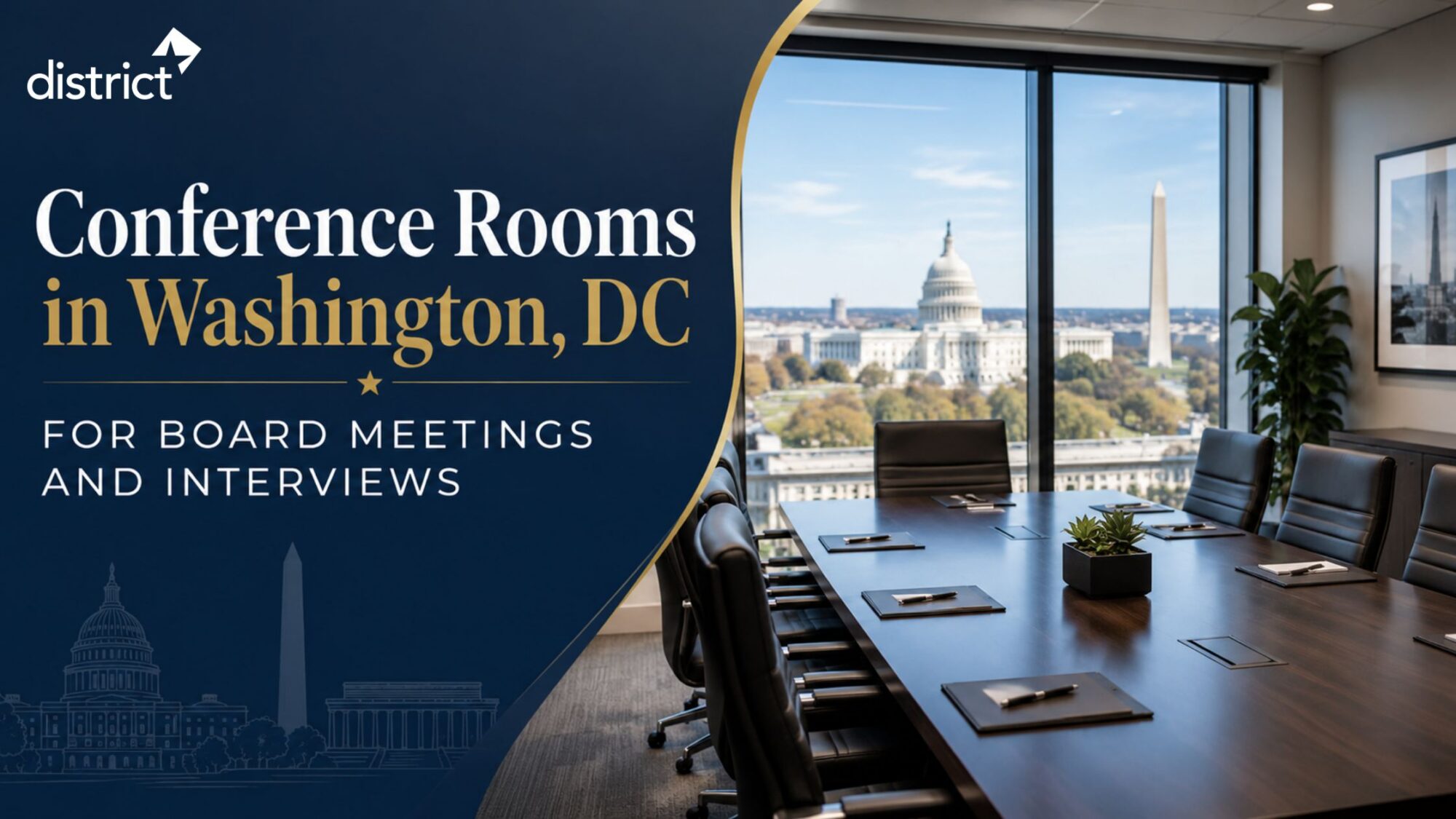
Conference rooms in Washington, DC for board meetings and interviews need privacy, professional presentation, reliable AV technology, and a location that reinforces your organization’s credibility. This guide covers what to look for, how each use case differs, and what to confirm before you book.
Why the Right Conference Room Changes the Outcome
A board meeting held in a noisy, poorly equipped room sends a message you did not intend to send. So does an interview conducted across a cluttered table with people walking past the glass. The physical environment shapes how participants feel, how focused they stay, and how seriously they take the conversation. This is why choosing the right conference rooms in Washington, DC matters as much as preparing the agenda.
Conference rooms in Washington, DC serve two of the most high-stakes meeting formats in any organization: board meetings where strategic decisions get made, and interviews where hiring decisions get made. Both demand privacy, professional setup, and a space that gives every person in the room confidence that the organization behind the meeting takes things seriously.
This guide walks through what each format needs, how conference rooms in Washington, DC should differ between use cases, and exactly what to confirm before booking.
Also Read: Where Can you Rent a Conference Room by the Hour in Washington DC?
What a Board Meeting Needs from a Conference Room
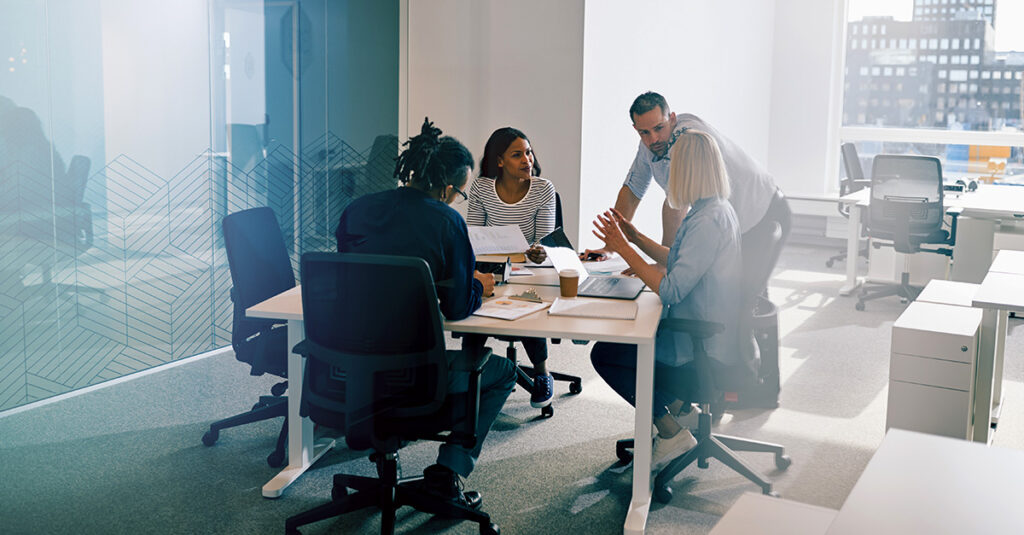
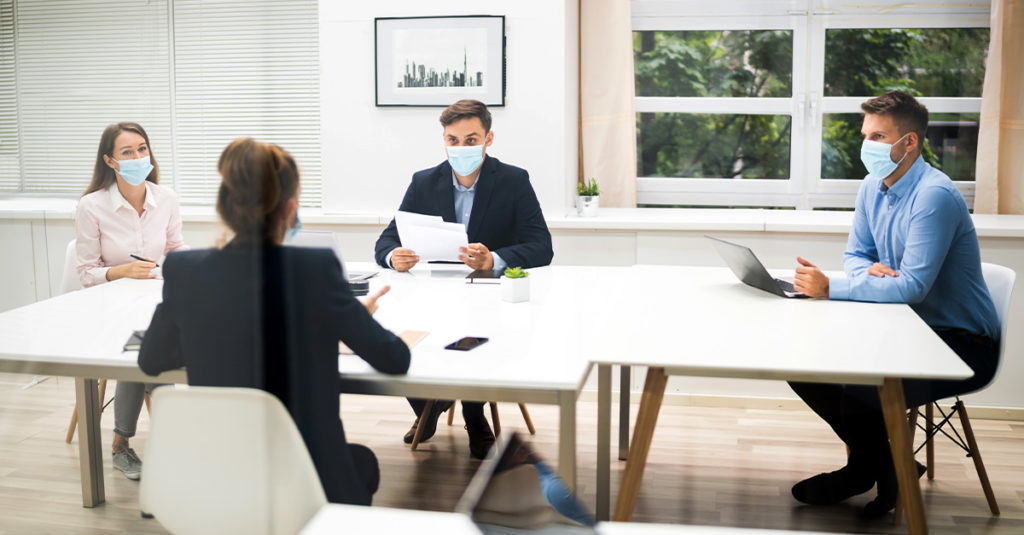
When you book conference rooms in Washington, DC for a board meeting, you are arranging space for decisions that carry real consequences. It brings together senior decision-makers, sometimes including external board members, investors, or legal advisors. The room needs to support focused deliberation and reflect the weight of the discussions taking place inside it.
The Right Size and Seating Layout
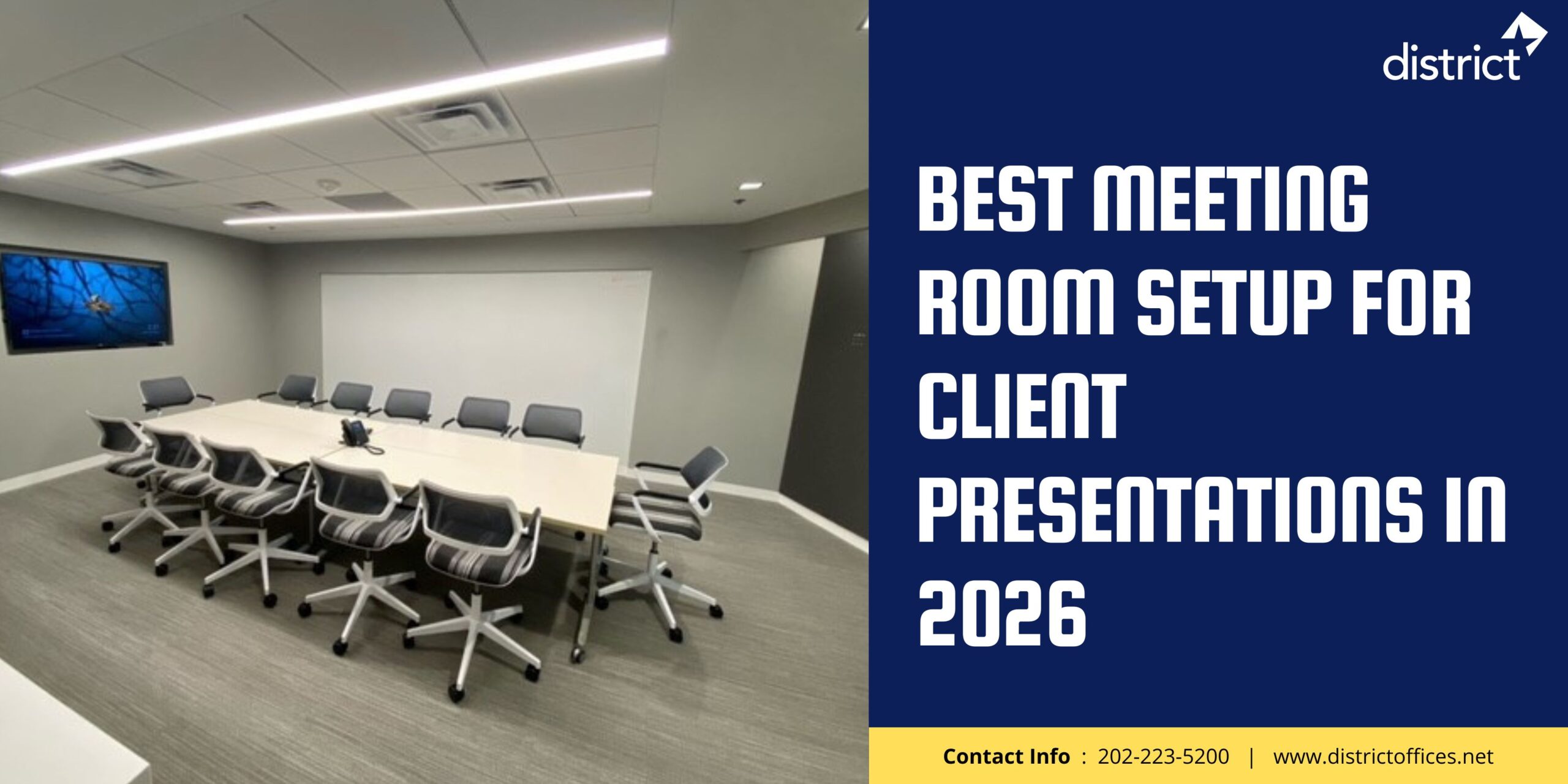
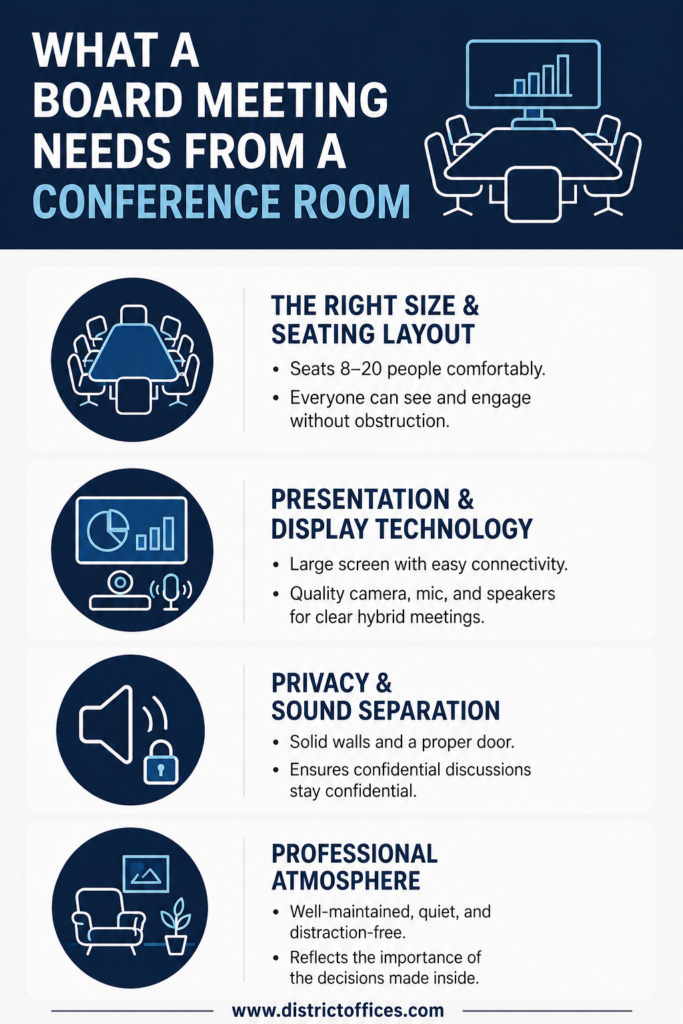
Board meetings work best in rooms where every participant can see every other participant without turning or craning. A rectangular or oval table with chairs arranged around it creates the visual equality that board-level discussions require. Everyone faces the center. No one sits behind someone else.
For most organizations:
- A board meeting room should seat 8 to 20 people.
- Each person needs table space for a laptop, materials, and a drink without crowding the person beside them.
- Booking based on maximum listed capacity often leads to a cramped setup that affects how freely people speak.
Presentation and Display Technology
Most board meetings involve at least one screen presentation, whether that is a financial report, a strategy deck, or a progress update. The room should have a large display screen or projector visible from every seat, with simple cable or wireless connectivity. Fumbling with cables or adapters at the start of a board meeting is a poor introduction to a serious agenda.
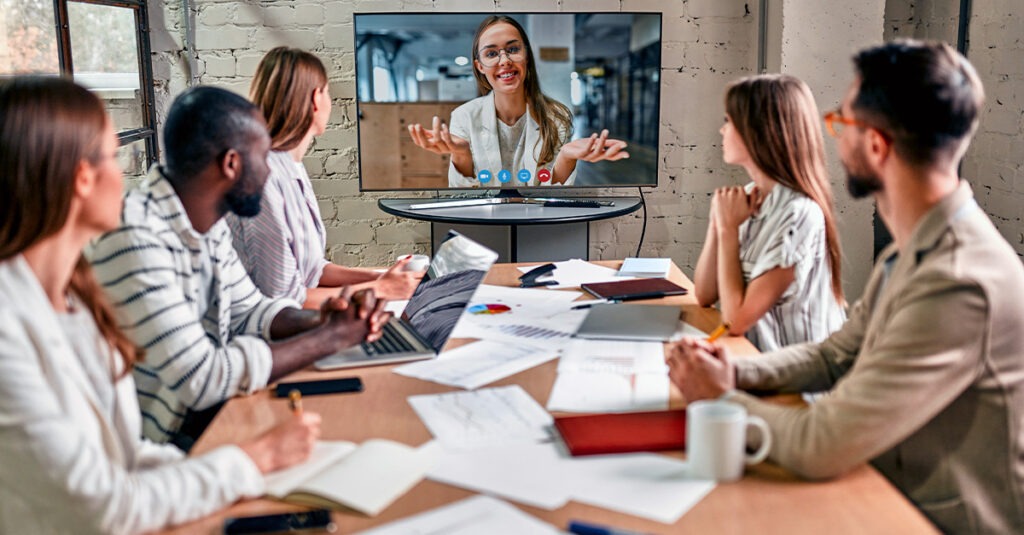
If any board members are joining remotely:
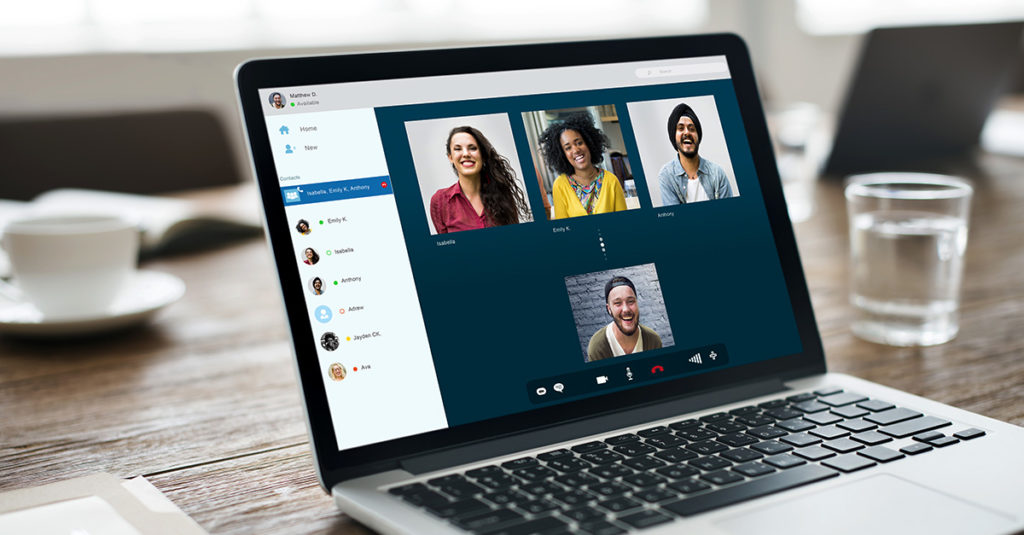
- The room needs a dedicated camera, ceiling or table microphone, and a reliable speakerphone.
- A screen that displays remote participants clearly, and a microphone that picks up in-room speakers without distortion, is what separates a functional hybrid board meeting from a frustrating one.
Privacy and Sound Separation
Board meetings often cover sensitive topics including financial performance, personnel matters, legal issues, and strategic plans that are not intended for general circulation. The conference room must offer genuine sound separation from adjacent spaces. A glass-walled room in the middle of an open coworking floor is not appropriate for a board meeting, regardless of how modern it looks.
Solid walls, a door that closes properly, and a room away from high-traffic areas are the baseline. Some organizations also ask for rooms where no shared wall faces another meeting space.
Professional Atmosphere
The room should not require an apology. Worn furniture, flickering lights, a broken whiteboard, or a window that opens onto a busy kitchen area all undermine the credibility of the meeting before a single agenda item is discussed. For board-level meetings, the physical environment is part of the signal your organization sends to everyone in the room.
What an Interview Needs from a Conference Room
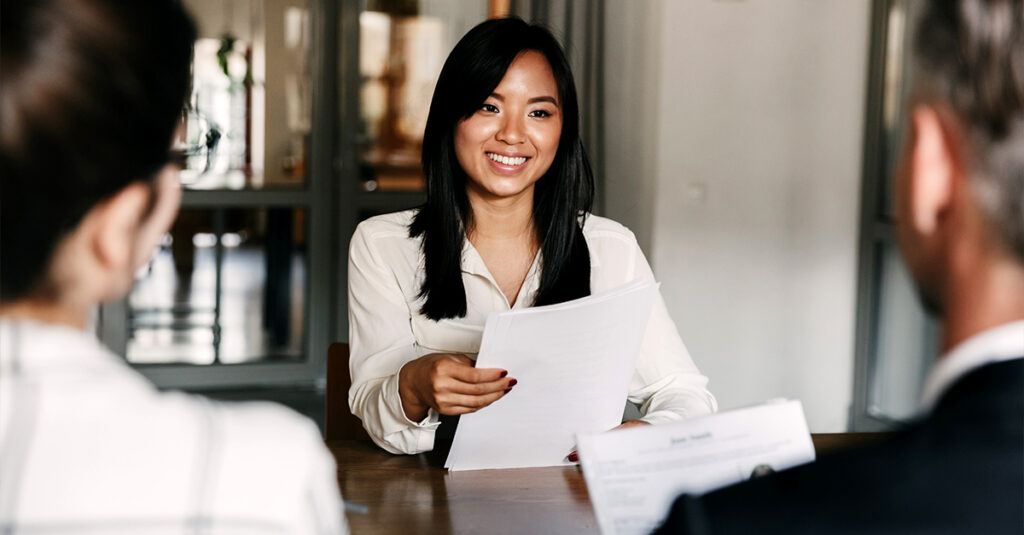
Booking conference rooms in Washington, DC for interviews means thinking about the candidate experience from the moment they walk in. The candidate is evaluating your organization at the same time you are evaluating them. A professional, private, well-organized room tells a candidate that your organization is thoughtful and structured. A chaotic or poorly equipped space suggests the opposite.
Privacy Comes First
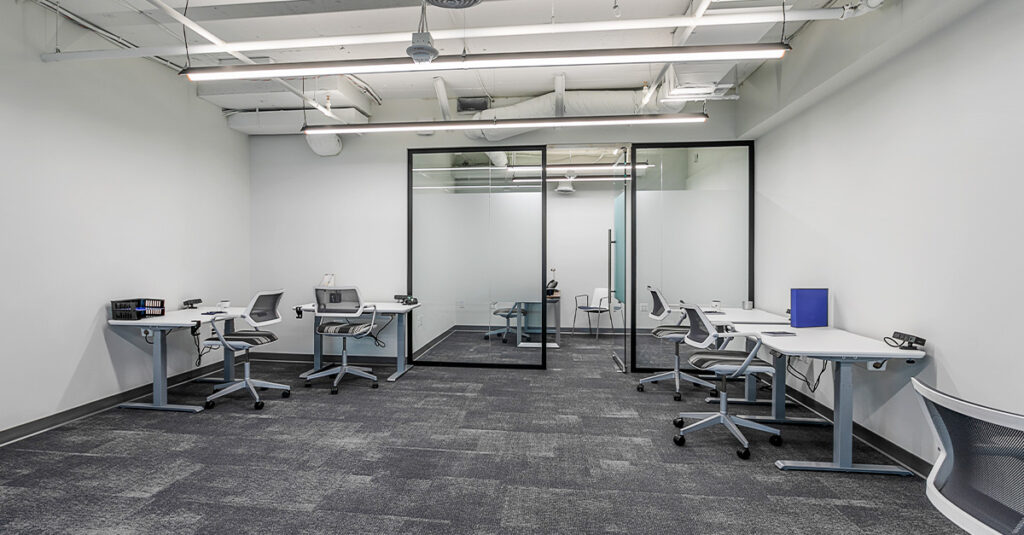
The most important factor for an interview room is privacy. A candidate should be able to answer questions without worrying about being overheard. This means a fully enclosed room with a closed door, not an open booth or partitioned area in a shared space.
Privacy also applies to what the candidate can see. If they are seated facing a busy corridor or an open workspace, their attention is divided and their comfort level drops. The room should feel like a contained, focused space where the conversation has everyone’s full attention.
Appropriate Room Size
An interview between two or three people does not need a boardroom. A small conference room seating four to six people is the right fit. Placing a single candidate across a large boardroom table from a panel of interviewers creates an unnecessary power imbalance that works against honest conversation.
The table should be large enough to lay out a resume or portfolio if needed, but small enough that the conversation feels like a human interaction rather than a formal tribunal.
A Comfortable and Neutral Environment
Candidates who are uncomfortable give poorer interviews, and poor interviews produce less useful information. A room with good temperature control, adequate lighting, and comfortable seating produces better conversations. Bring water and make the setup feel considered, not improvised.
If the interview includes a practical task such as a writing sample, a case study, or a presentation, confirm the room has the equipment required. A candidate who cannot complete a task because the room lacks the right technology will not be able to demonstrate their abilities accurately.
A Professional Location
Where the interview takes place communicates something about the organization. A candidate coming to a recognized DC address in a well-maintained building with a staffed reception forms a different first impression than someone arriving at an unmarked floor in a building with no lobby presence. For senior roles or external candidates relocating from another city, this matters more than organizations sometimes realize.
Book A Conference Room IN Washington DC
Board Meeting vs. Interview Room: Key Differences
Both formats need privacy and a professional setup, but they have different priorities. Understanding the distinction helps you book the right room rather than defaulting to the largest available space.
| Factor | Board Meeting | Interview |
| Room size | 8 to 20 people | 2 to 6 people |
| Table layout | Oval or rectangular, all facing center | Small table, face to face |
| AV requirements | Large display, hybrid video setup | Basic screen, optional only |
| Privacy level | High, sensitive topics | High, candidate comfort |
| Location signal | Prestige and authority | Professionalism and organization |
| Booking lead time | 2 to 4 weeks for larger groups | Often same-week or same-day |
The most common mistake is booking a large boardroom for a two-person interview because it was available. A candidate sitting across a 16-person conference table from one interviewer does not produce a natural conversation. Match the room to the format, not to what is convenient.
What to Check Before Booking a Conference Room in DC
Before confirming any conference rooms in Washington, DC for a board meeting or interview series, work through these questions.
Is the room fully enclosed? For both board meetings and interviews, open or glass-walled rooms in shared spaces are not suitable. Confirm the room has solid walls and a proper door.
What AV technology is included? For board meetings, confirm the display screen size and whether hybrid video conferencing is built in. For interviews, check whether a screen is available if any part of the process requires one.
What is the cancellation policy? Interview schedules change. A candidate cancels, a hiring manager gets pulled into another commitment. Confirm how much notice is required for cancellation or rescheduling without a penalty charge.
Is reception support available? For board meetings with external attendees or interviews with candidates visiting for the first time, a staffed front desk makes a practical difference. Guests who are greeted by name and directed to the right room arrive in a better state than those who wander a building looking for a suite number.
How close is it to public transit? External board members and job candidates both need straightforward access. Rooms near Metro stations reduce the chance of late arrivals caused by parking problems or unfamiliar bus routes.
Pro Tip: For board meetings with remote participants, test the video conferencing setup at least 30 minutes before the meeting starts. Remote board members who cannot hear the room discussion or see the presentation will disengage quickly, and fixing technical issues in front of a board is an avoidable distraction.
How Location Affects Your Meeting’s Credibility
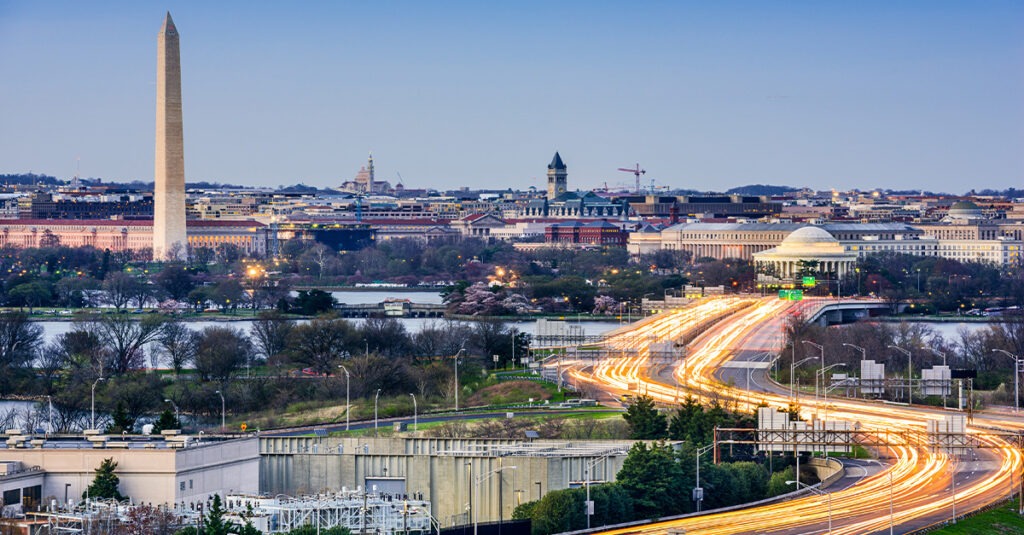
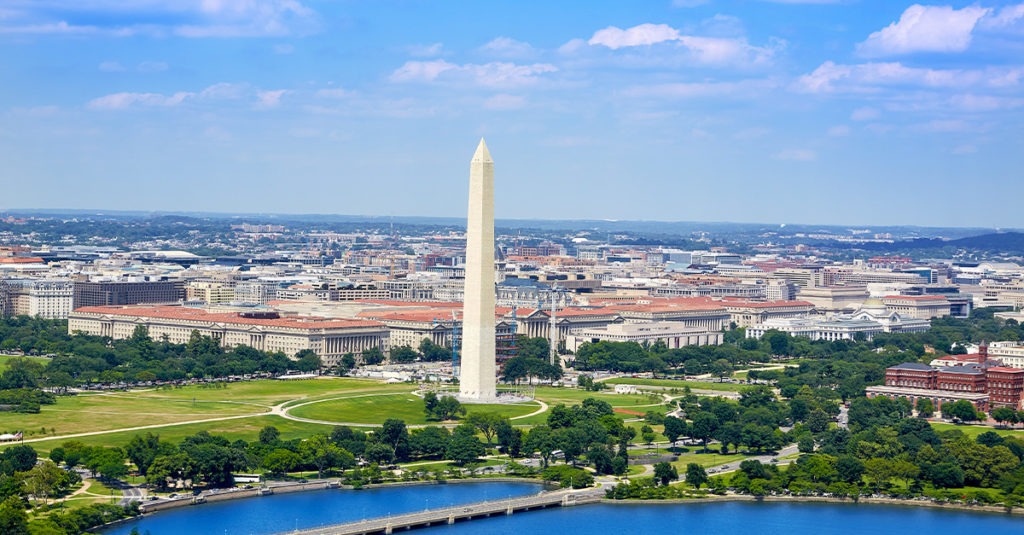
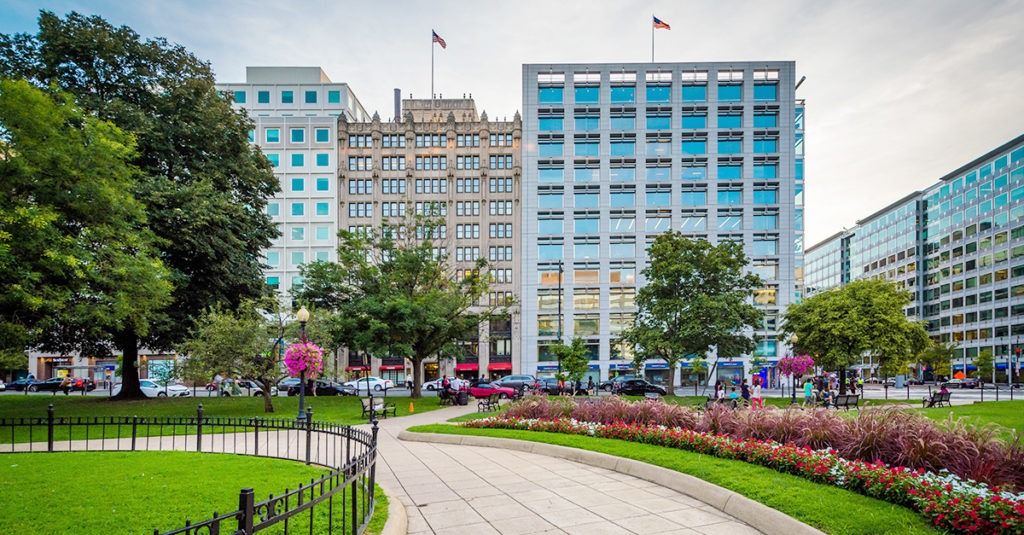
In Washington, DC, the address where you hold a meeting contributes directly to how it is perceived. Conference rooms in Washington, DC carry very different weight depending on where in the city they sit. This is more pronounced here than in most other cities because DC’s business landscape is built around proximity to power, government, and institutional authority.
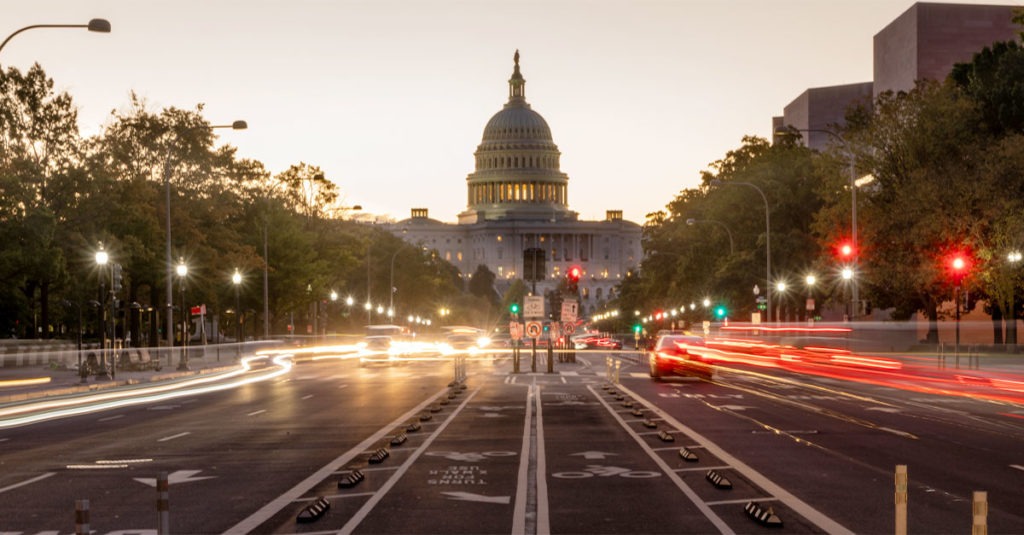
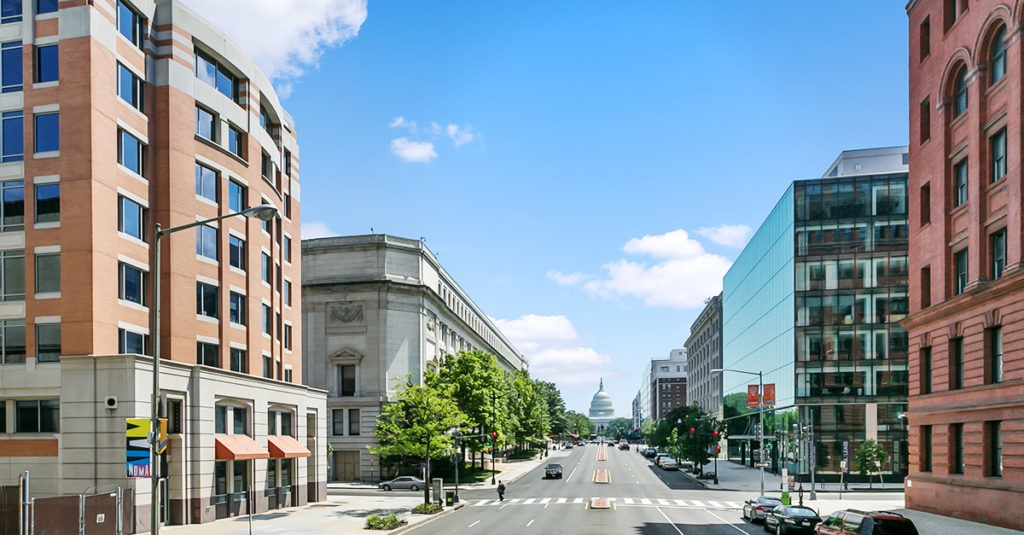
A board meeting held near Capitol Hill, on Pennsylvania Avenue, or in Farragut Square carries a different weight than one held in a generic office park on the outskirts of the city. External board members, investors, and advisors notice. It shapes their expectations before they sit down.
The conference rooms in Washington, DC that you choose for interviews say a great deal about how established and organized your business is. A candidate walking into a staffed reception at a recognized DC address engages differently than one navigating to an unmarked floor with no reception presence.
When it comes to conference rooms in Washington, DC, the address is always part of the message.
Why DC Professionals Choose District Offices for Conference Rooms
Finding conference rooms in Washington, DC that genuinely suit a board meeting or an interview is easier when the provider understands what those formats require. District Offices was built around exactly that. Every room is private, professionally equipped, and supported by an on-site team that handles the details so you can focus on the meeting itself.
Non-members can book by the hour or day. No contracts. No surprise charges. Just a professional space that is ready when you are.
Choose Your Workspace Type
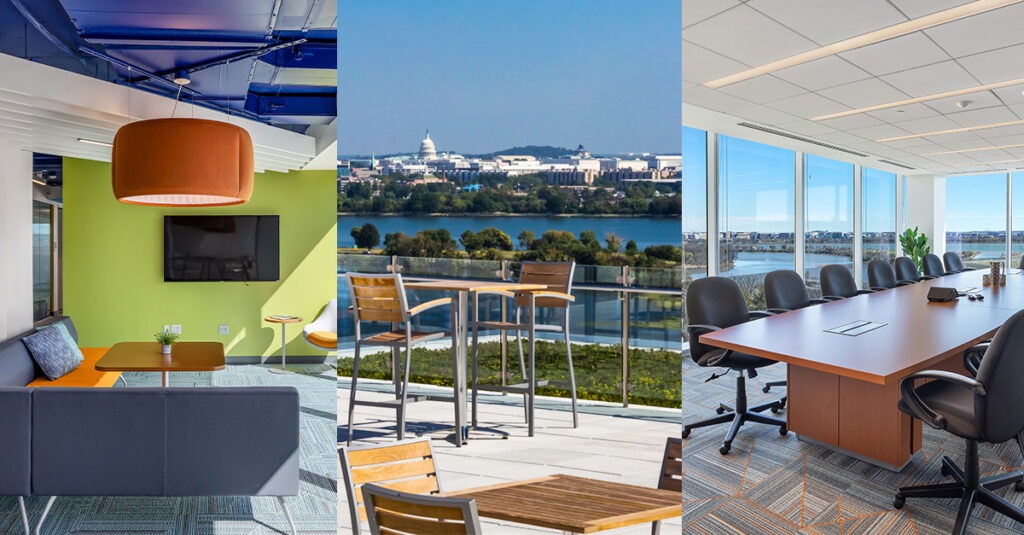
Conference and Meeting Rooms: Private, fully enclosed rooms for 2 to 66 people. Each room comes set up with plug-and-play AV technology, high-speed Wi-Fi, video conferencing hardware, whiteboard, and catering options on request. Open to non-members. Bookable by the hour or full day.
Event Spaces: Larger venues for full board sessions, all-hands presentations, and corporate gatherings. The Capitol Hill location holds up to 88 people in its dedicated training room, with a rooftop lounge available for receptions and informal sessions.
Private Offices: Move-in-ready offices for teams of any size. Month-to-month terms with no lengthy lease. Includes ergonomic furniture, 24/7 access, daily cleaning, and shared conference room use.
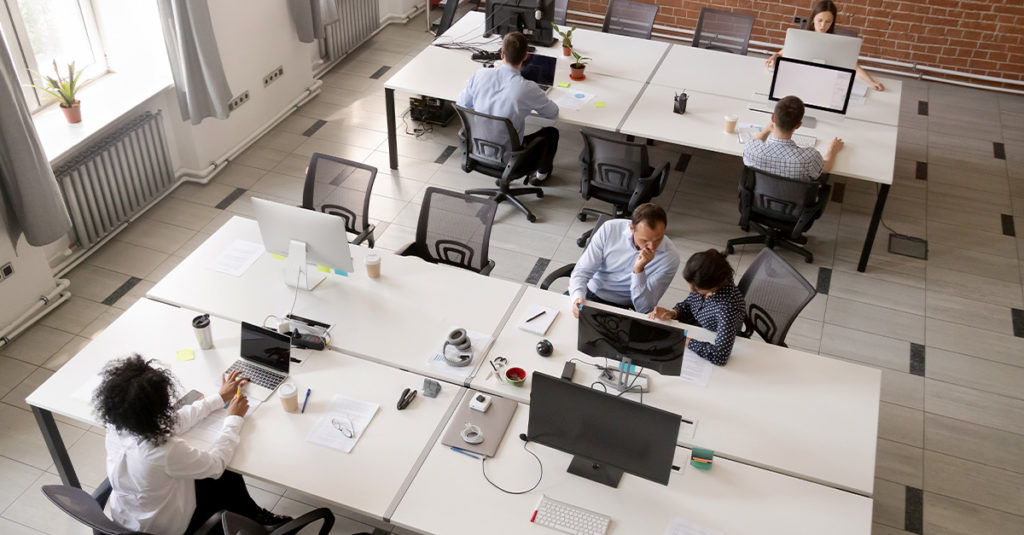
Coworking Spaces: A professional, shared environment for individuals and small teams. Includes hot desk access, fast internet, coffee and tea, and on-demand conference room booking when the team needs to gather.
Virtual Offices: A recognized Washington, DC business address without a physical office. Comes with mail and package management, a live receptionist answering calls under your company name, and the option to book a conference room whenever you need to meet in person.
Hybrid Offices: Designed for teams that split time between home and the office. Access a professional workspace on the days you need it without paying for a full-time office.
Four Prime Locations Across Washington, DC
Georgetown, 1101 30th Street NW, Fifth Floor, Washington, DC 20007
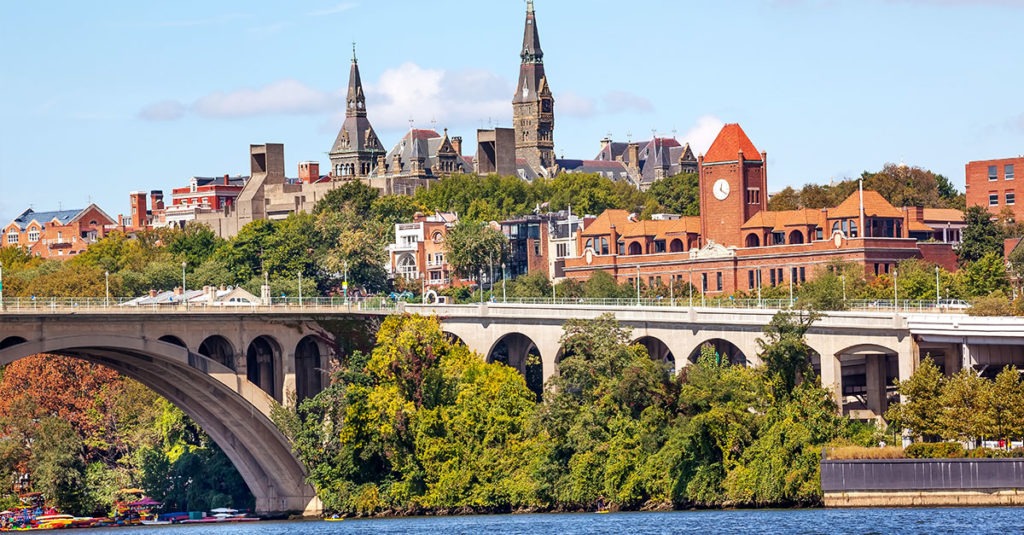
Overlooking the C&O Canal near Washington Harbor. One of DC’s most recognized addresses for legal, financial, and diplomatic organizations. The building offers on-site parking, a fitness center with private showers, 24/7 security, and two private conference rooms. Best suited for: board meetings and interviews where a prestigious, quiet address reinforces your organization’s standing.
Farragut Square, 1025 Connecticut Avenue NW, Suite 1000, Washington, DC 20036
Positioned at the core of DC’s Central Business District. Two Metro lines are a one-minute walk away. Eight conference rooms on-site, ranging from small interview rooms to a 25-person training room. Electric car charging in the building. Best suited for: multi-room interview days, board meetings with attendees arriving by Metro, and back-to-back executive sessions.
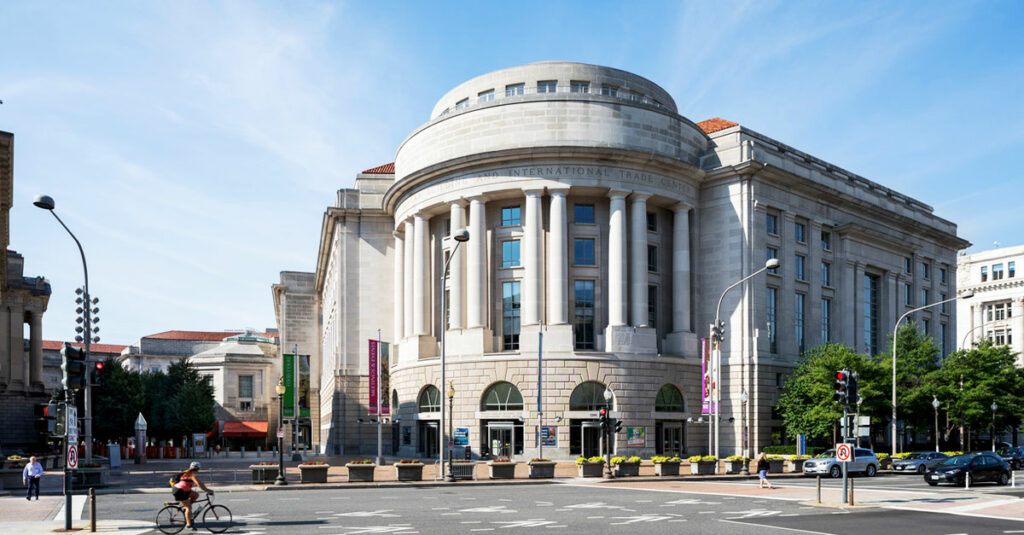
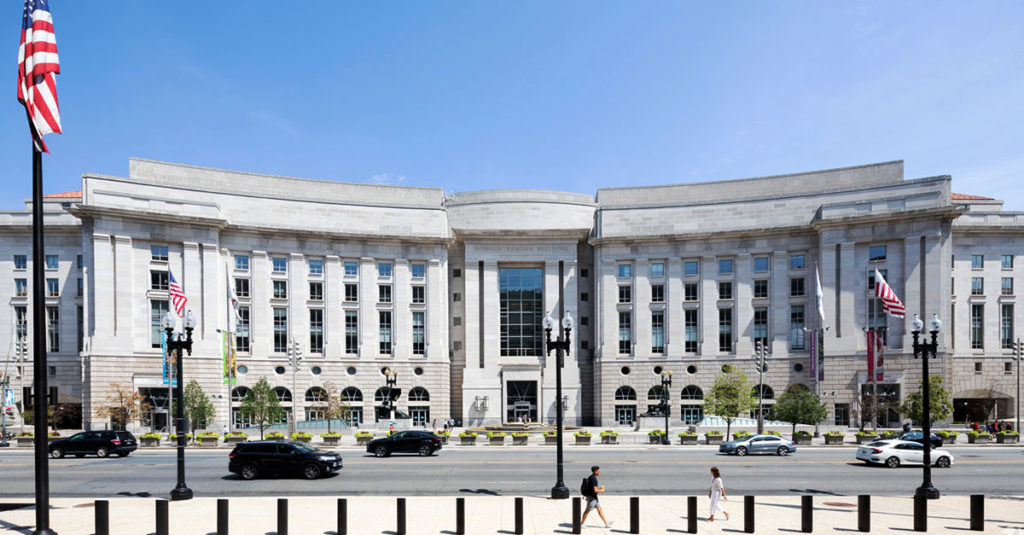
Pennsylvania Avenue, Ronald Reagan Building, 1300 Pennsylvania Avenue NW, Suite 700, Washington, DC 20004
Three blocks from the White House. The Federal Triangle Metro entrance is inside the building lobby. A 66-person training room for large board sessions, plus an on-site food court with over 20 dining options for catered meetings. Best suited for: government-adjacent board meetings, formal organizational gatherings, and high-profile interviews where the address carries weight.
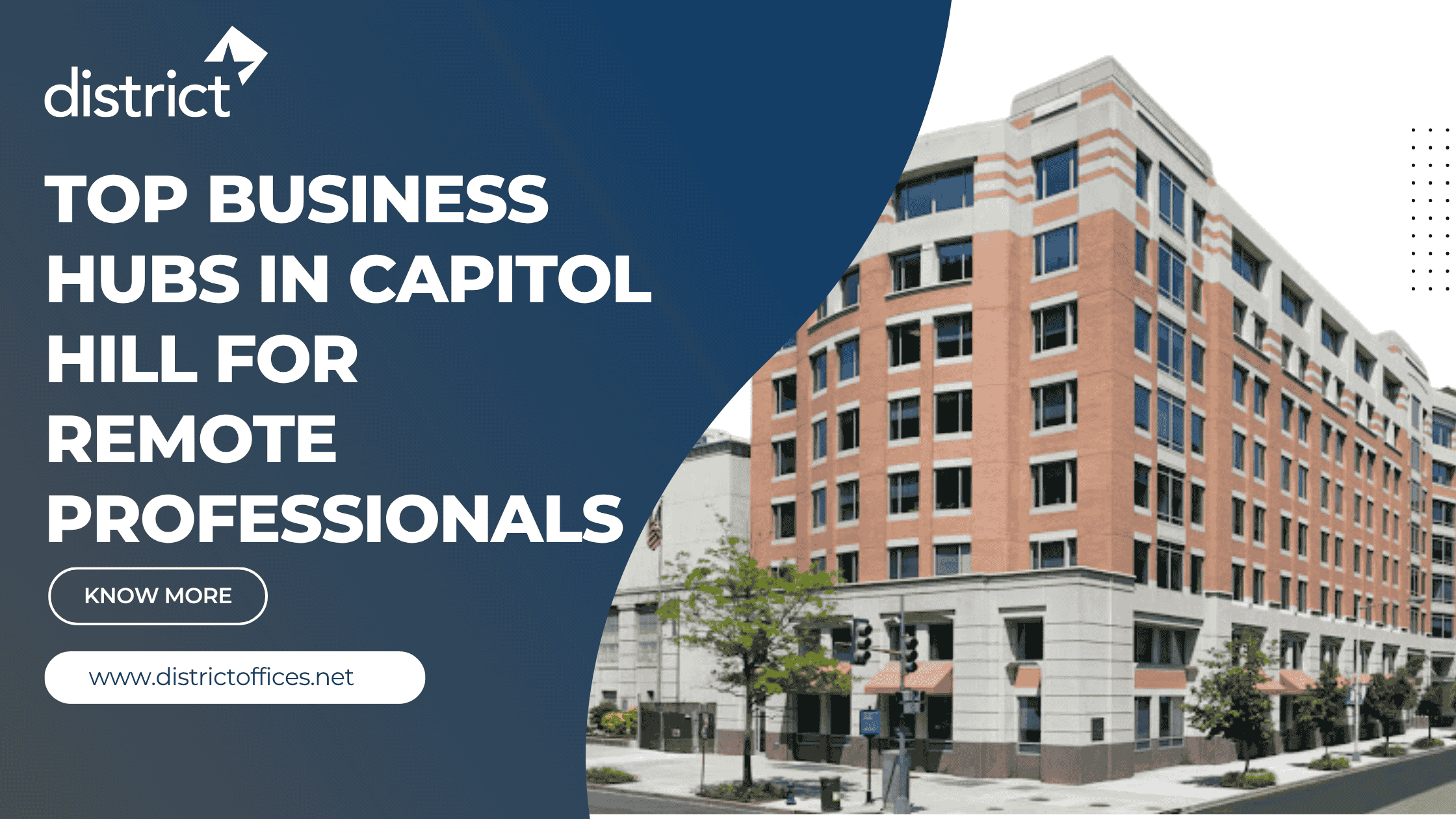
Capitol Hill, 10 G Street NE, Suite 600, Washington, DC 20002
Half a block from Union Station. Direct Amtrak, Metro, and commuter rail access makes it the easiest location for board members or candidates traveling from Maryland, Virginia, or other states. Five conference rooms seating 6 to 16 people, an 88-person training room, private call booths, a rooftop lounge, underground parking, and an on-site fitness center. Best suited for: policy-adjacent board meetings, organizations with board members traveling from outside DC, and interview days requiring multiple rooms running simultaneously.
To check availability or book a room, visit districtoffices.net/meeting-spaces-washington-dc or call 202.223.5200.
Frequently Asked Questions
Ans: Most board meetings need a room seating 8 to 20 people with a central oval or rectangular table. Give each person enough space for a laptop and materials without crowding. At District Offices, conference rooms at Farragut Square seat up to 25, while Capitol Hill and Pennsylvania Avenue offer rooms up to 88 people for larger sessions.
Ans: Yes. A small, fully enclosed room seating four to six people works best for most interview formats. District Offices conference rooms are private, staffed at reception, and available by the hour with no membership required, making them practical for single interviews or multi-day hiring sessions.
Ans: At minimum: a large display screen, wireless or cable connectivity, a speakerphone, and reliable Wi-Fi. For hybrid board meetings with remote participants, confirm the room has a dedicated camera and microphone. District Offices conference rooms include plug-and-play AV technology and video conferencing hardware as standard.
Ans: Two to four weeks ahead is sensible for standard board meetings, particularly for larger rooms during midweek hours. For interviews, same-day or next-day availability is often possible at District Offices. If you are running interviews across several days, block the room in advance to avoid gaps.
Ans: Significantly. In Washington, DC, where you meet shapes how the meeting is perceived before anyone sits down. A recognized address at Pennsylvania Avenue, Farragut Square, Georgetown, or Capitol Hill communicates organizational credibility to board members, investors, and candidates in a way that an off-center or generic space does not.
Book a Conference Room at District Offices
Whether you need conference rooms in Washington, DC for a board meeting, a full day of interviews, or any other high-stakes discussion, District Offices has the right conference rooms in Washington, DC at the right address. Four locations across Washington, DC. Available by the hour. No membership required.
Visit districtoffices.net or call 202.223.5200.