

Quick Summary: A virtual office address in Washington, DC is a real commercial street address your business uses for mail, registration, and correspondence without renting physical space full-time. Plans start at around $30 per month for address-only services and go up to $150 per month for packages that include live phone answering and on-demand access to meeting rooms.
You need a Washington, DC business address, but you do not need to pay thousands of dollars a month for one.
Maybe your team works remotely. Maybe you are an out-of-state consultant bidding on federal contracts. Maybe you are a founder building a business from home, and your home address is on every public filing you have ever submitted. Whatever the situation, a virtual office in Washington, DC gives you a real, recognized street address at a fraction of the cost of traditional office space.
This guide covers exactly what you get, what it costs, who it makes sense for, and what to watch out for before you sign up.
What Is a Virtual Office Address and What Does It Give You?
A virtual office gives your business a permanent, recognizable street address at a real commercial building in Washington, DC, without you occupying that space day to day.
In plain terms, think of it as a professional home base for your business on paper. Your mail goes there. Your business is registered there. When a client, agency, or partner looks up your company details, they see a DC street address instead of a home address or a P.O. box. And when you need a physical room for a meeting or an interview, you can book one at the same address by the hour.
What is typically included depends on the plan tier you choose:
- At the base level, most virtual office plans give you a street address, mail receipt, and a directory listing in the building.
- Higher-tier plans include mail forwarding, a dedicated DC phone number, live call answering under your company name, and on-demand access to conference rooms or day offices.
Note: A virtual office address is not a P.O. box. A P.O. box is a numbered slot at a post office. It cannot be used as a registered business address for DC LLC formation, business licensing, or government contracting registrations. A virtual office address at a recognized commercial building can be used for all of these.
Also Read: What is Virtual Office Receptionist Service & How Does It Work?
Why Does a Washington, DC Address Carry More Weight Than Other Cities?
A DC address does more work for your business than an equivalent address in most other American cities.
Washington, DC, is the center of the federal government, policymaking, international affairs, and government contracting in the US. The organizations that make decisions here- federal agencies, Congressional offices, lobbying firms, law practices, trade associations, and government contractors- operate in a world where address signals credibility. A Pennsylvania Avenue or K Street address tells a federal procurement officer, a policy director, or an international partner something about your organization before you have said a word.
Take a specific example. A government contractor based in Virginia that is bidding on a federal contract lists its address on its SAM.gov registration. A recognized Washington, DC address on that registration positions the company as embedded in the federal ecosystem. A Fairfax County suburb address on the same registration does not read the same way, even if the work quality is identical.
This is the practical value of a virtual office address in Washington, DC. It is not about vanity. It is about the signal your address sends to the people who evaluate your business.
Pro Tip: If your business involves government contracting, confirm that your chosen virtual office provider’s address has been accepted for SAM.gov registration and DC business licensing before you sign up. Not every mailbox or coworking address meets the requirements for use as a registered agent or for federal contracting verification.
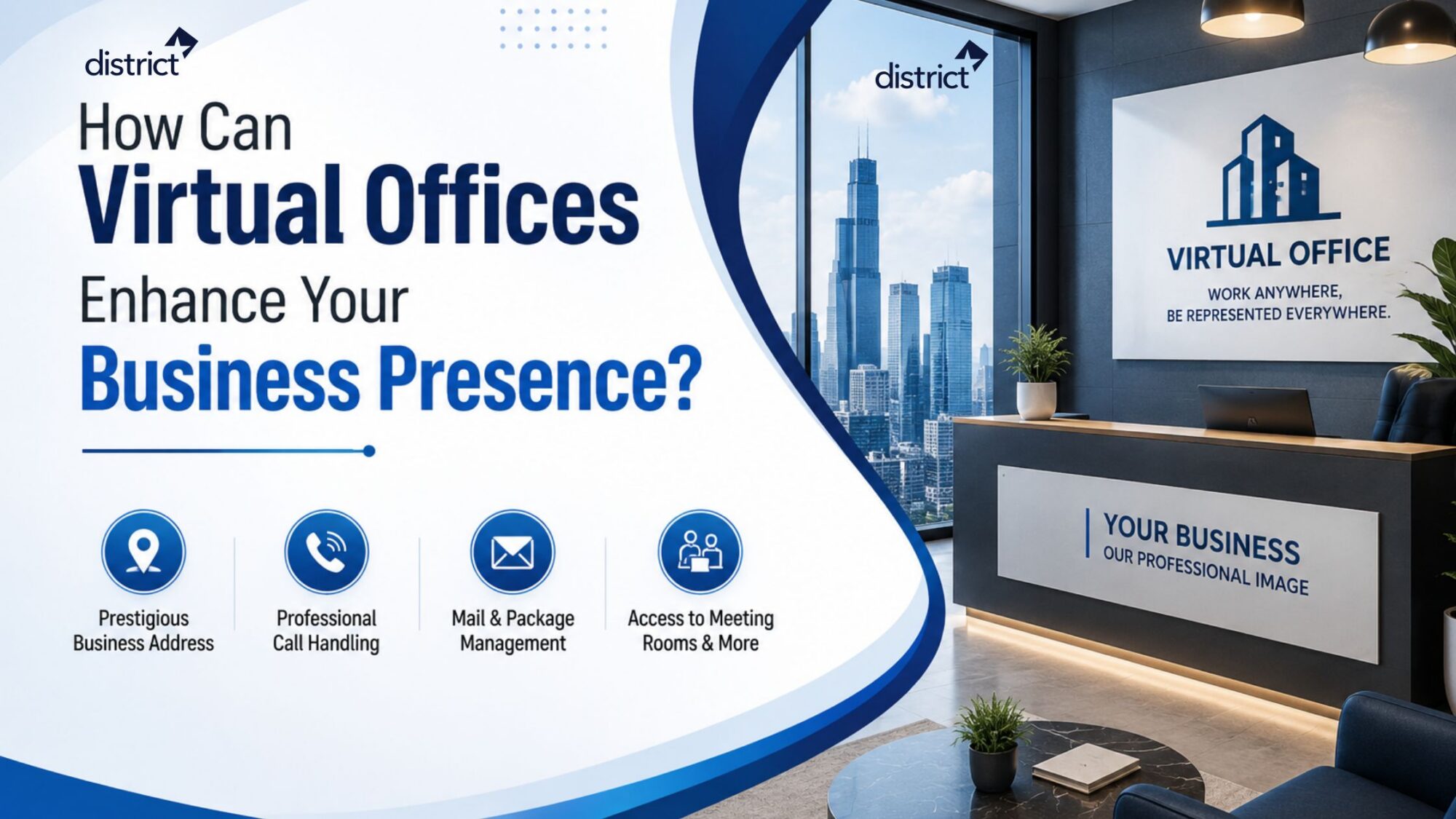
Also: How Can Virtual Offices Enhance Your Business Presence?
Who Benefits Most from a Virtual Office Address in Washington, DC?

A virtual office in Washington, DC is not just for one type of business. Here is who genuinely gets value from one and why.
1. Remote-first businesses entering the DC market:
If your company is based in another state but pursues federal contracts, works with DC-based clients, or needs a presence near government agencies, a DC virtual address plants your flag here without the overhead of opening a physical office. A marketing agency in Chicago that wins a federal communications contract can operate from Chicago while maintaining a credible DC address for all official correspondence.
2. Independent consultants and freelancers:
A policy advisor, government affairs consultant, or communications strategist working from home needs separation between their personal and professional address. Every business registration, every client proposal, and every invoice that carries a home address is an opportunity for that address to appear on a public record. A virtual office address in Washington, DC gives you that separation cleanly.
3. Startups and early-stage companies:
Before your company is ready to commit to office rent, you still need a professional address for LLC registration, contracts, and client-facing materials. A DC virtual address lets you establish that presence from day one without tying cash to a lease.
4. Law firms and advocacy organizations:
Organizations headquartered in other states that maintain a Washington, DC practice or policy function use a virtual DC address to hold their presence between physical visits. It keeps a recognizable address on official correspondence and filings without requiring a full-time DC office.
5. International organizations:
For companies and nonprofits based outside the US that need an American business address, Washington, DC carries institutional weight that few other cities can match. A DC address signals direct engagement with the US policy and government environment.
Still using your home address for business?
Get Your Virtual Office →
What Does a Virtual Office Address in Washington, DC Cost?

Prices vary based on what the plan includes, where the address is located, and which provider you choose.
| Plan Type | Monthly Cost | What You Typically Get |
| Address only | $30 to $60 | Street address, mail receipt, directory listing |
| Address and mail forwarding | $50 to $80 | Above, plus mail forwarding to any location |
| Full-service | $80 to $150 | Address, mail, live phone answering, DC phone number |
| Premium with workspace | $100 to $200+ | All of the above, plus meeting room or coworking hours |
Entry-level plans that cover only an address and mail receipt start at $30 to $60 per month. Full-service plans that bundle a DC address, live receptionist, call forwarding, and mail handling typically run between $80 and $150 per month. Plans that include physical workspace access start around $100 and scale upward.
Pro Tip: A $35-per-month plan and a $150-per-month plan can both describe themselves as “virtual office” services. The difference in what they deliver is significant. Always read the full list of inclusions, not just the headline price, before comparing providers.
The wide price range also reflects address location. A Pennsylvania Avenue or Georgetown address sits at the premium end. Addresses further from the Central Business District tend to come in lower. Consider whether the address location itself matters for your clients and registrations, then match accordingly.
What Is Included and What Will Cost You Extra?
This is where most businesses get caught out. The monthly rate on a virtual office plan rarely covers everything you will need.
What most base plans include:
- A commercial street address for business use
- Mail receipt and secure holding
- Building directory listing
What is commonly charged as an add-on:
- Mail forwarding (charged per item or as a monthly flat fee)
- Digital mail scanning so you can view correspondence online
- A dedicated local DC phone number
- Live receptionist answering calls in your company name
- Conference room or day office access (per hour or per day)
- Package handling for larger deliveries
Before you confirm a plan, ask the provider two direct questions. First: if a package arrives that is too large for standard mail handling, what happens and what does it cost? Second: How far in advance must you book a physical room at the address, and what are the hourly or daily rates?
These two questions surface the hidden costs that surprise most new virtual office customers.
Note: If you plan to use your virtual office address for DC LLC registration or for filing as a registered agent, the address must be at a real commercial building that can physically receive legal documents during business hours. Confirm this with the provider before using the address for official registrations. A mailbox service at a shipping store does not meet this requirement in most DC jurisdictions.
How Do You Choose the Right Virtual Office Address in DC?
Follow these four steps before you sign up with any provider.
Step 1: Match the address to your work.
Think about who your clients, partners, or agency contacts are and where they operate. A government contractor fits best near Pennsylvania Avenue or Capitol Hill. A law firm or financial consultant suits Georgetown or the K Street corridor. Pick the neighborhood that makes sense for the people you are trying to impress.
Step 2: Confirm the address works for registration.
Ask the provider one direct question: can this address be used for DC LLC registration and business licensing? If you are a government contractor, also ask whether it is accepted for SAM.gov registration. If they cannot give you a clear yes, move on.
Step 3: Check how you access a physical room.
Find out whether you can book a conference room at the same address, how far in advance you need to book, and what the hourly rate is for non-members. If you expect to meet clients or candidates in person even occasionally, this matters more than most people realize before they sign up.
Step 4: Read the cancellation terms.
Look for a month-to-month plan with no setup fee and no minimum contract. Some providers lock you into three- or six-month plans. For a business that is new to the DC market, flexible exit terms protect you if your needs change.
District Offices: Virtual Office Address in Washington, DC
District Offices provides virtual office services in Washington, DC at four prime locations. Each plan includes a recognized DC business address, professional mail and package handling, live call answering under your company name, on-demand access to conference rooms by the hour, and full administrative support. No long-term commitment required.
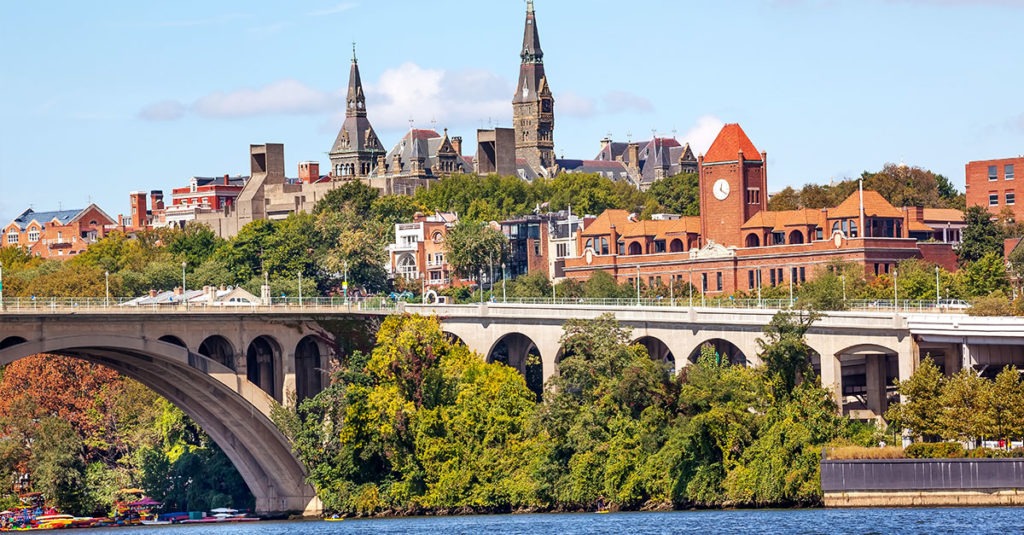
- Georgetown: 1101 30th Street NW, Fifth Floor, DC 20007. Steps from Washington Harbor. On-site parking, fitness center, and 24/7 security. Suited to legal, financial, and professional services organizations.
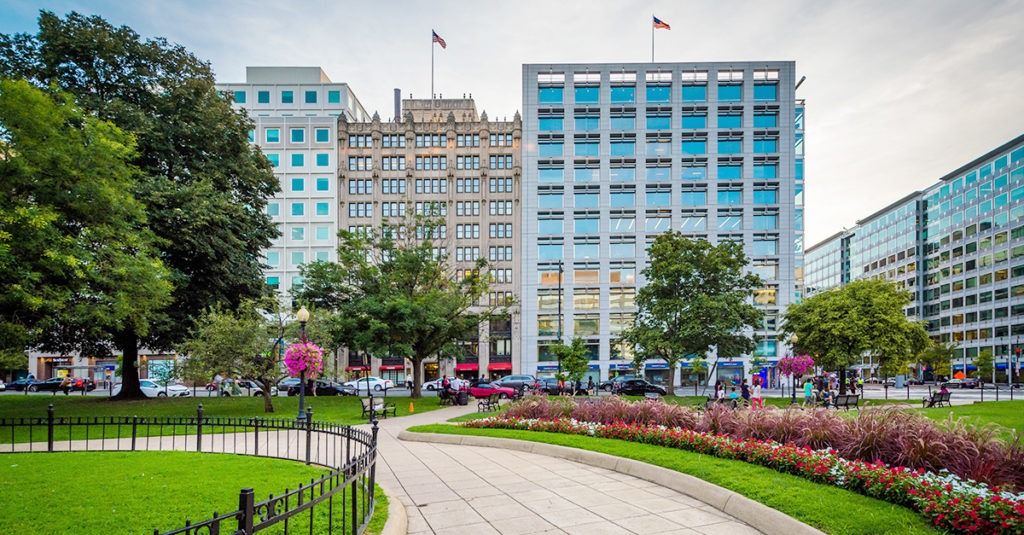
- Farragut Square: 1025 Connecticut Avenue NW, Suite 1000, DC 20036. Two Metro lines one minute away. Eight on-site conference rooms. Ideal for government affairs teams and consultants with DC-based clients.
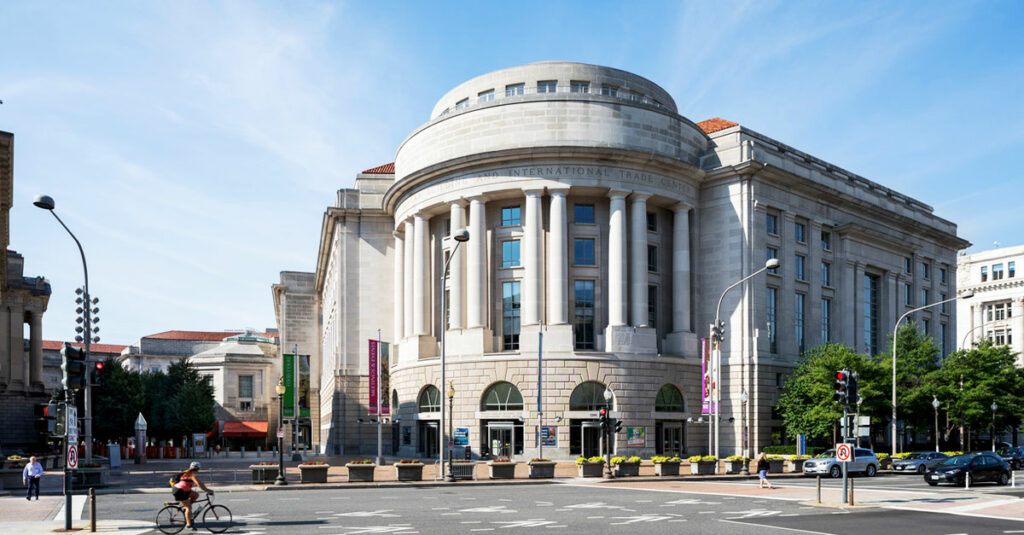
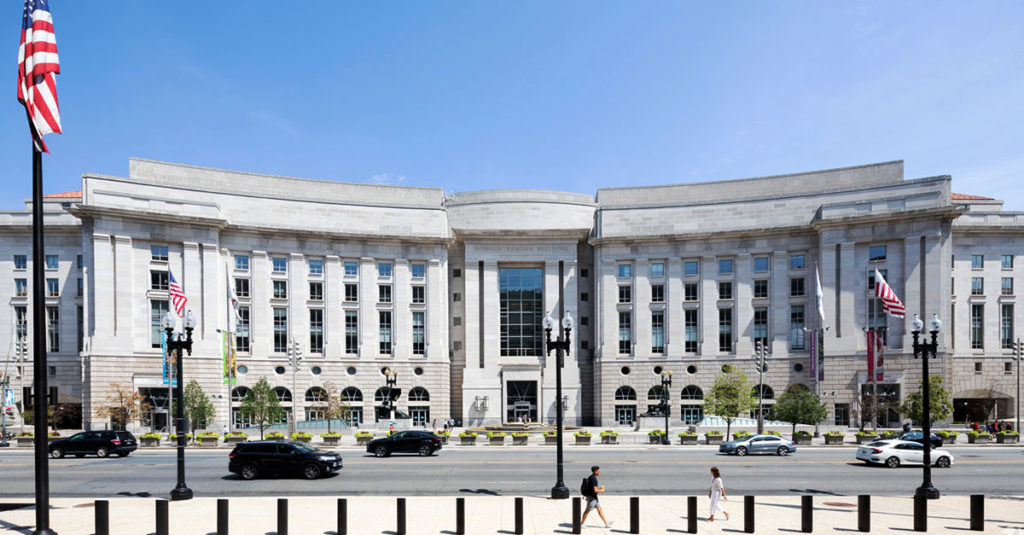
- Pennsylvania Avenue: Ronald Reagan Building, 1300 Pennsylvania Avenue NW, Suite 700, DC 20004. Three blocks from the White House with Federal Triangle Metro inside the lobby. Best suited to government contractors and federal-facing organizations.
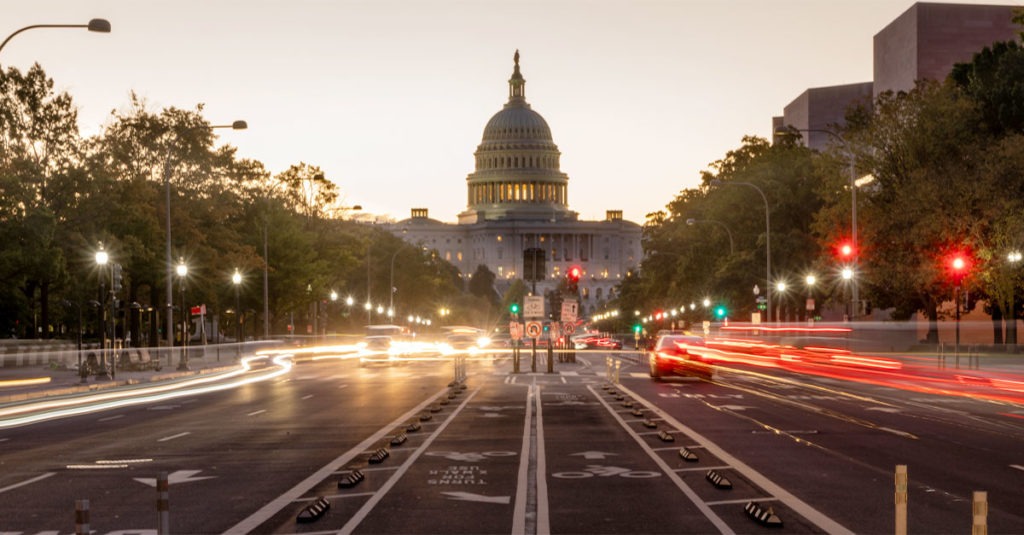
- Capitol Hill: 10 G Street NE, Suite 600, DC 20002. Half a block from Union Station with Amtrak, Metro, and commuter rail access. Five conference rooms, a rooftop lounge, and an 88-person training room on site.
Visit districtoffices.net/virtual-offices-washington-dc or call 202.223.5200 to get started.
Frequently Asked Questions
Ans: A virtual office address in Washington, DC is a real commercial street address at a recognized building that your business uses for mail, registration, and professional correspondence, without renting physical space full-time. It gives your business a credible DC presence, handles your mail, and in most cases includes a live receptionist and on-demand access to meeting rooms.
Ans: Yes, provided the address is at a real commercial building that can receive legal documents during business hours. A proper virtual office address qualifies for DC LLC formation, DC business licensing, and in most cases SAM.gov government contracting registration. A P.O. box or mailbox at a shipping store does not meet these requirements.
Ans: Entry-level address-only plans start around $30 to $60 per month. Full-service plans that include mail handling and live phone answering run between $80 and $150 per month. Plans that add meeting room or coworking access start around $100 per month and increase based on usage. District Offices offers flexible monthly plans with no long-term commitment at four DC locations.
Ans: Yes. This is one of the most common use cases. Out-of-state companies, remote teams, and international organizations all use a virtual office address in Washington, DC to establish a professional presence near federal agencies, government clients, and policy organizations without relocating.
Ans: A P.O. box is a numbered slot at a post office. It cannot be used as a business registration address for DC LLC formation or government contracting purposes. A virtual office address is a real street address at a commercial building, usable for business registration, client-facing materials, and official filings. The two serve completely different functions.
Ans: If you work remotely but need a credible DC address for client correspondence, business registration, or government contracting, a virtual office plan is the practical starting point. If your team needs a dedicated workspace daily, a private office or a coworking plan is the better fit. Many businesses at District Offices begin with a virtual office and expand into physical workspace as their DC presence grows.
Book Your Virtual Office Address at District Offices
District Offices has four prime Washington, DC locations where you can set up a virtual office address today: Georgetown, Farragut Square, Pennsylvania Avenue, and Capitol Hill, each with full administrative support and no long-term contract. Mail handling, live phone answering, and on-demand conference rooms are all included. No long-term contract required.
Visit districtoffices.net or call 202.223.5200 to get started today.