

Quick Overview: Startups and small teams in Washington, DC, need workspace that moves with them, not against them. This guide explains every workspace option available in DC today, who each one is right for, and what to look for so you can choose with confidence and avoid a costly mistake.
You just landed your first real client meeting. The prospect is a senior director at a federal agency two blocks from the Capitol. You are confident in your pitch. Then they ask for your office address, and you send them a residential street in Silver Spring.
That gap between where you are and where your clients expect you to be is exactly what the right workspace solutions in Washington, DC, close. In a city where your address, your building lobby, and the neighborhood you operate from all carry professional weight, workspace is not a back-office decision. It is a front-line business tool.
This guide covers every workspace option available to startups and small teams in DC today, which one is right for you, and three expensive mistakes to avoid before you sign anything.
Table of Contents
ToggleWhy Workspace Choice Is Different for Startups
For an established business with a stable team and steady revenue, the workspace decision is simple. For a startup, it is far harder.
- Your team size can change multiple times in a single year.
- Your cash flow needs to support growth, not drain it.
- And your workspace needs to make your business look credible to clients and investors, even in the early stages.
This is why a traditional long-term lease is the wrong starting point for most startups in DC. You are fixing your cost, size, and location before knowing where the business is headed. The right workspace solutions in Washington, DC give startups a professional environment, a credible address, and room to grow without penalty.
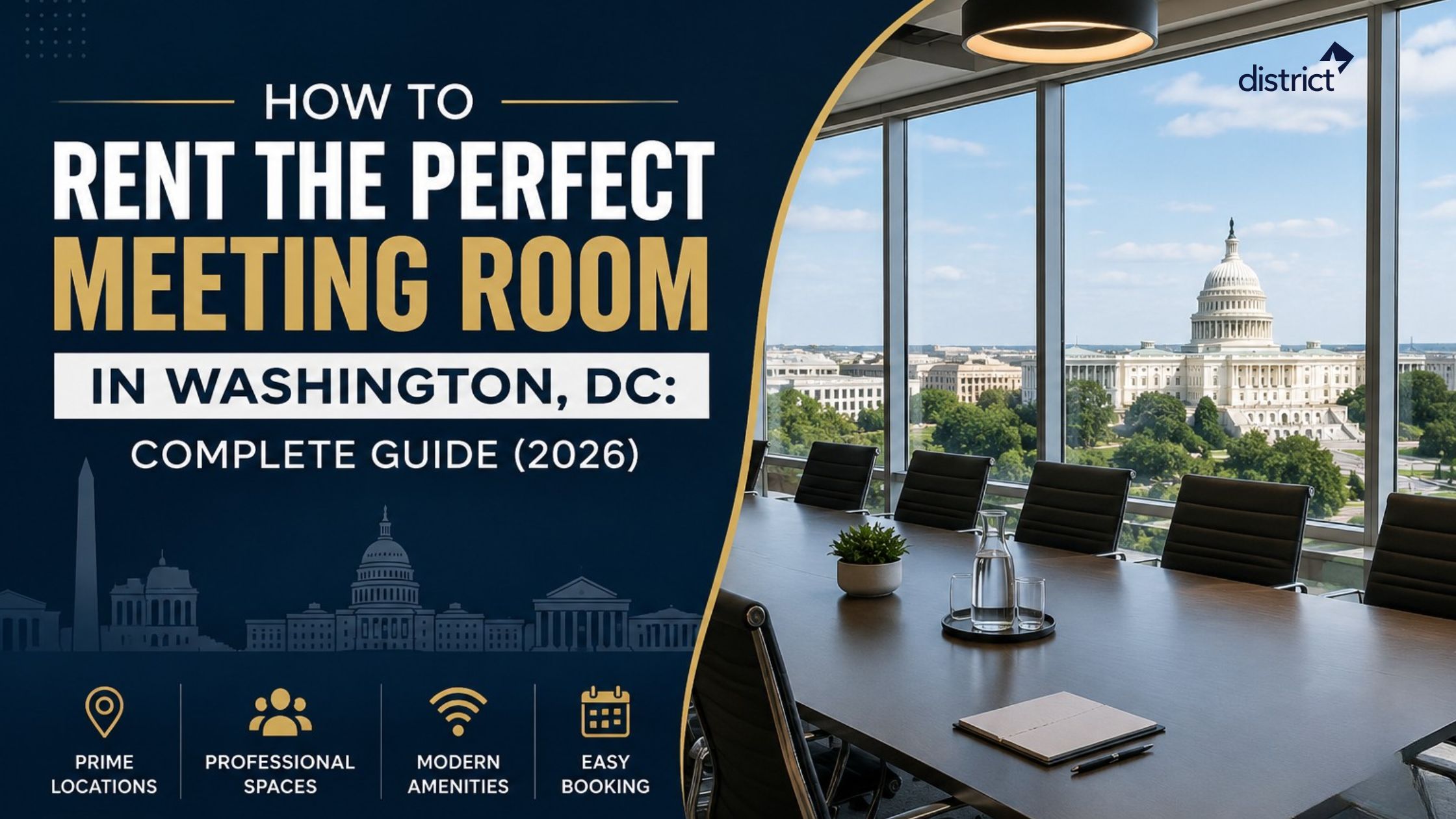
Also Read: How to Rent the Perfect Meeting Room in Washington, DC: Complete Guide (2026)
Three Questions to Ask Before Choosing Workspace Solutions in Washington, DC
1 Question: How many people need the office, and how often? – A solo founder has very different needs from a team of eight who collaborate daily.
2 Question: What does your address need to communicate? – A recognized address in the Central Business District or on Pennsylvania Avenue signals something very different from a home or suburban address.
3 Question: How predictable is your team size over the next six to twelve months? – If you are growing fast, prioritize space to expand without renegotiating. If you are uncertain, flexibility matters more than price per square foot.
Also Read: Virtual Office Address in Washington, DC: Benefits, Costs, and Use Cases
The Main Workspace Options for Startups and Small Teams
1. Private Offices on Flexible Terms
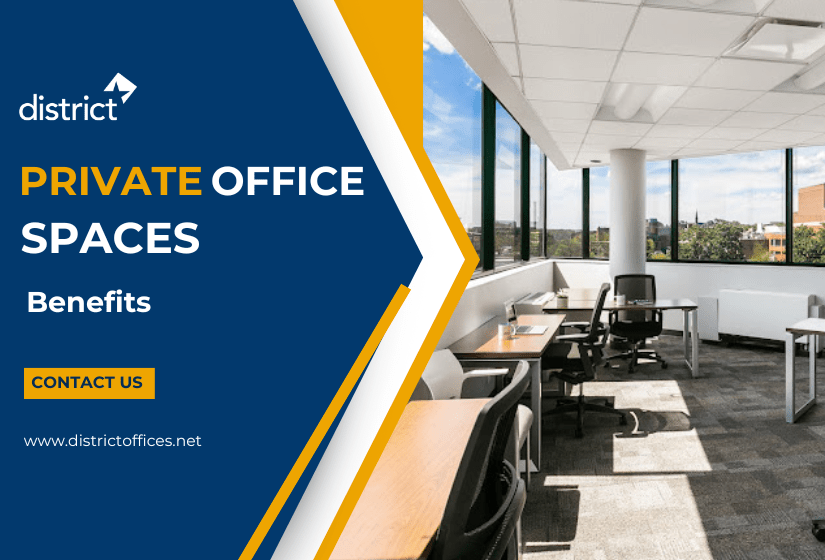
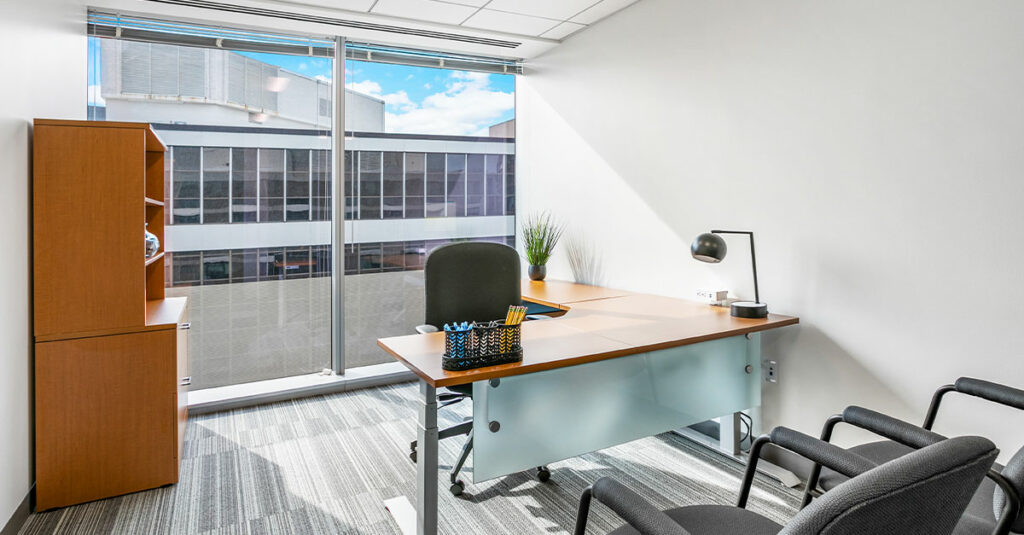
A private office is a dedicated, enclosed workspace used only by your business. Your team gets a quiet, consistent place to work, a secure environment for client calls, and a fixed business address to use on proposals and correspondence.
For small teams, a private office builds culture. When your team has a daily shared space, it creates structure and helps new hires feel they have joined something real. Serviced private offices come on short-term or monthly agreements, so you can upgrade as you grow without a long contract.
Best for: Teams of two or more who work together regularly and need privacy, structure, and a professional environment.
2. Coworking Spaces
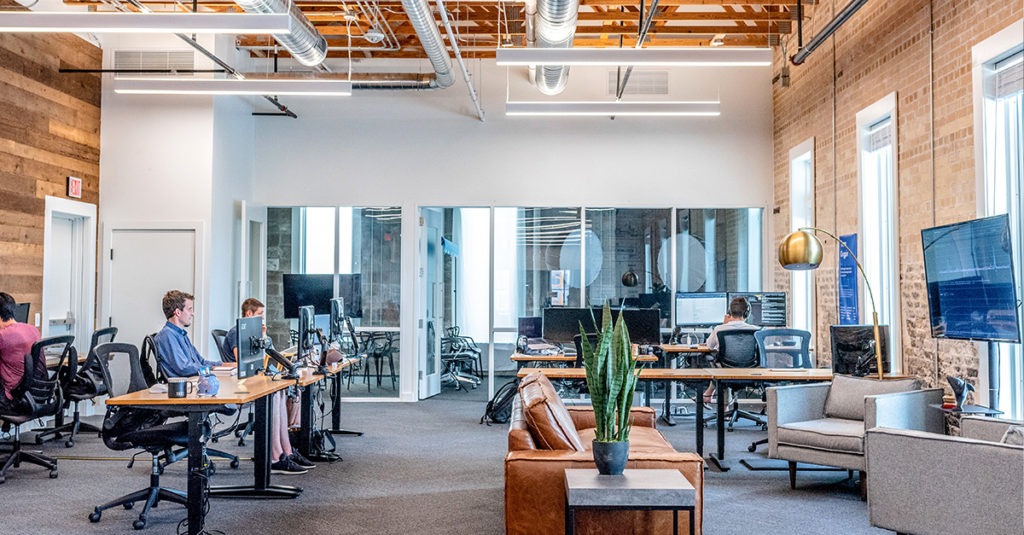
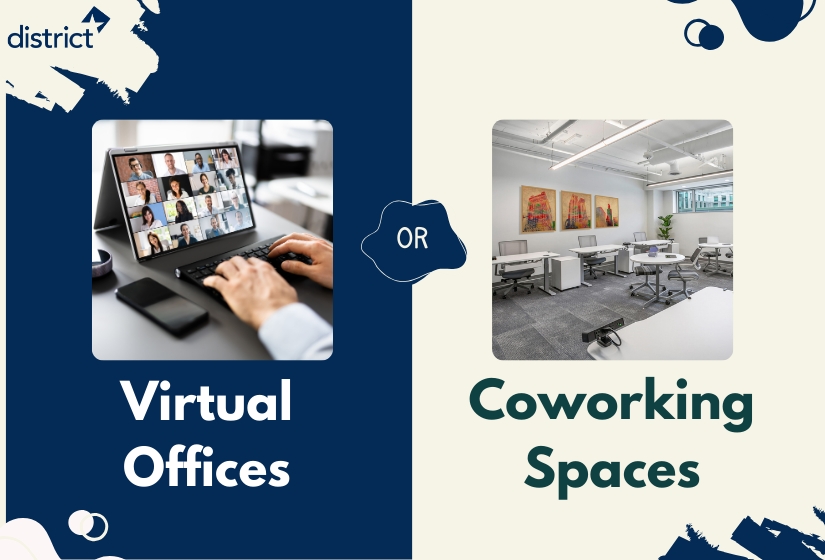
A coworking space is a shared professional environment where individuals and small teams work alongside others. Memberships include a desk, high-speed internet, meeting room access, and shared amenities like coffee and reception.
Among workspace solutions in Washington, DC, coworking suits solo founders and freelancers who want a professional base without the overhead of a private office. It also gives you a community of fellow professionals, which matters more than most expect when building from scratch.
Best for: Solo founders, freelancers, and early-stage teams who work most of the time independently.
3. Virtual Office Solutions
A virtual office gives your business a professional Washington, DC mailing address and associated services without requiring daily physical presence. Plans include a recognized business address, mail handling, and optional call answering.
For remote-first startups, virtual workspace solutions in Washington, DC are one of the most cost-effective moves you can make. A DC business address separates your company from a home address, which matters when building relationships with government agencies, corporate clients, or policy organizations.
Best for: Remote-first startups seeking workspace solutions in Washington, DC without paying for daily office space.
4. Hybrid Office Spaces
Hybrid office spaces give your team professional access on the days they need it, without the cost of a full-time private office. For teams splitting time between home and the office, hybrid workspace solutions in Washington, DC, reduce overhead while maintaining a consistent professional base.
Best for: Small teams with a mix of remote and in-person workers who need flexibility without a full-time office commitment.
5. On-Demand Meeting Rooms
Even remote teams sometimes need a proper room. Investor pitches, client presentations, and strategy days benefit from a professional space. On-demand meeting rooms let you book by the hour or day, no membership needed.
Best for: Remote teams using workspace solutions in Washington, DC who need occasional meeting space without monthly overhead.
Also Read: Private Office Space for Rent in Washington, D.C.: Cost, Locations, and What to Expect
Three Mistakes Startups Make When Choosing Workspace in DC
1st Mistake: Committing to a long-term lease too early:
A multi-year lease locks you in before you have enough information. Short-term agreements protect you from both overpaying and outgrowing your space.
2nd Mistake: Prioritizing price over address:
When evaluating workspace solutions in Washington, DC, the cheapest option is rarely the best value. A home address or obscure location costs you credibility with the clients and agencies you are trying to reach. A recognized address in Farragut Square, Capitol Hill, Georgetown, or Pennsylvania Avenue pays for itself quickly.
3rd Mistake: Underestimating the true cost of a traditional lease:
Startup founders often compare headline rent to a serviced office price and assume the lease is cheaper. It rarely is. In addition to rent, a traditional lease requires furniture, IT setup, internet, utilities, cleaning, and a security deposit. A serviced office rolls all of this into one predictable monthly fee.
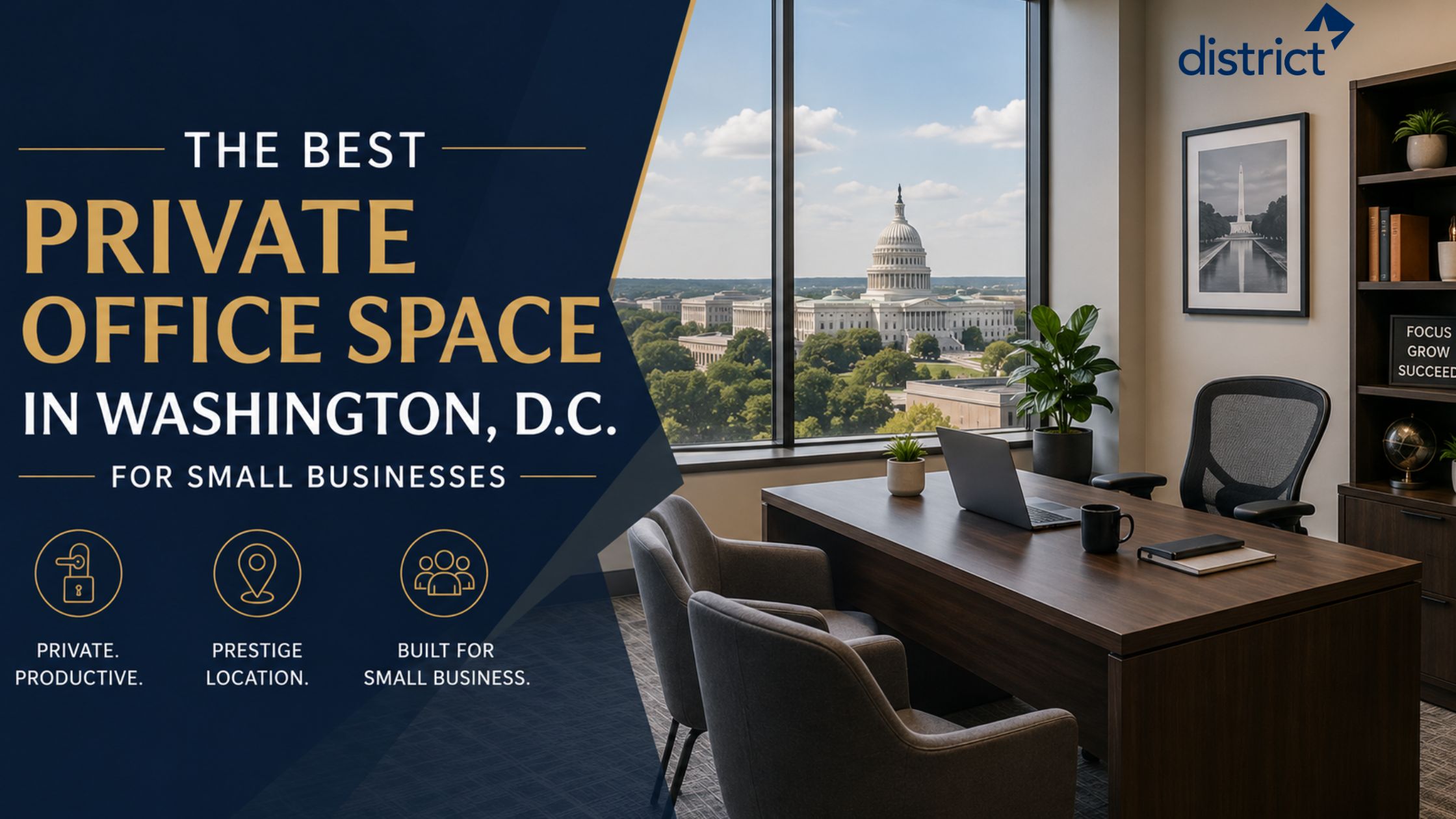
Also Read: Best Private Office Space in Washington, D.C. for Small Businesses
District Offices: Workspace Solutions for Startups in Washington, DC
District Offices offers professional workspace solutions in Washington, DC, across four prime locations, fully set up from day one, with flexible agreements and no high upfront costs.
Services Available at Every Location
- Private Offices: Fully furnished offices on flexible monthly terms with 24/7 access, Wi-Fi, daily cleaning, and conference rooms.
- Coworking Spaces: Shared professional workspaces with hot desk access, internet, complimentary coffee, and meeting room access.
- Virtual Offices: A prestigious DC business address with mail handling and optional call answering for remote-first startups.
- Hybrid Offices: Flexible access for teams that split time between remote and in-person work.
- Meeting Rooms: Fully equipped conference rooms by the hour or day, open to members and non-members.
All locations include fully furnished workstations, high-speed Wi-Fi, 24/7 access, conference rooms, on-site admin support, daily cleaning, complimentary coffee and tea, kitchen access, security, and renovated lobbies. Optional add-ons include dedicated bandwidth, call answering, and extra admin support.
District Offices Locations in Washington, DC
Farragut Square – Central Business District
Located in DC’s Central Business District, the property is one minute from two Metro lines. Best for corporate-facing startups, consulting firms, and government contractors.
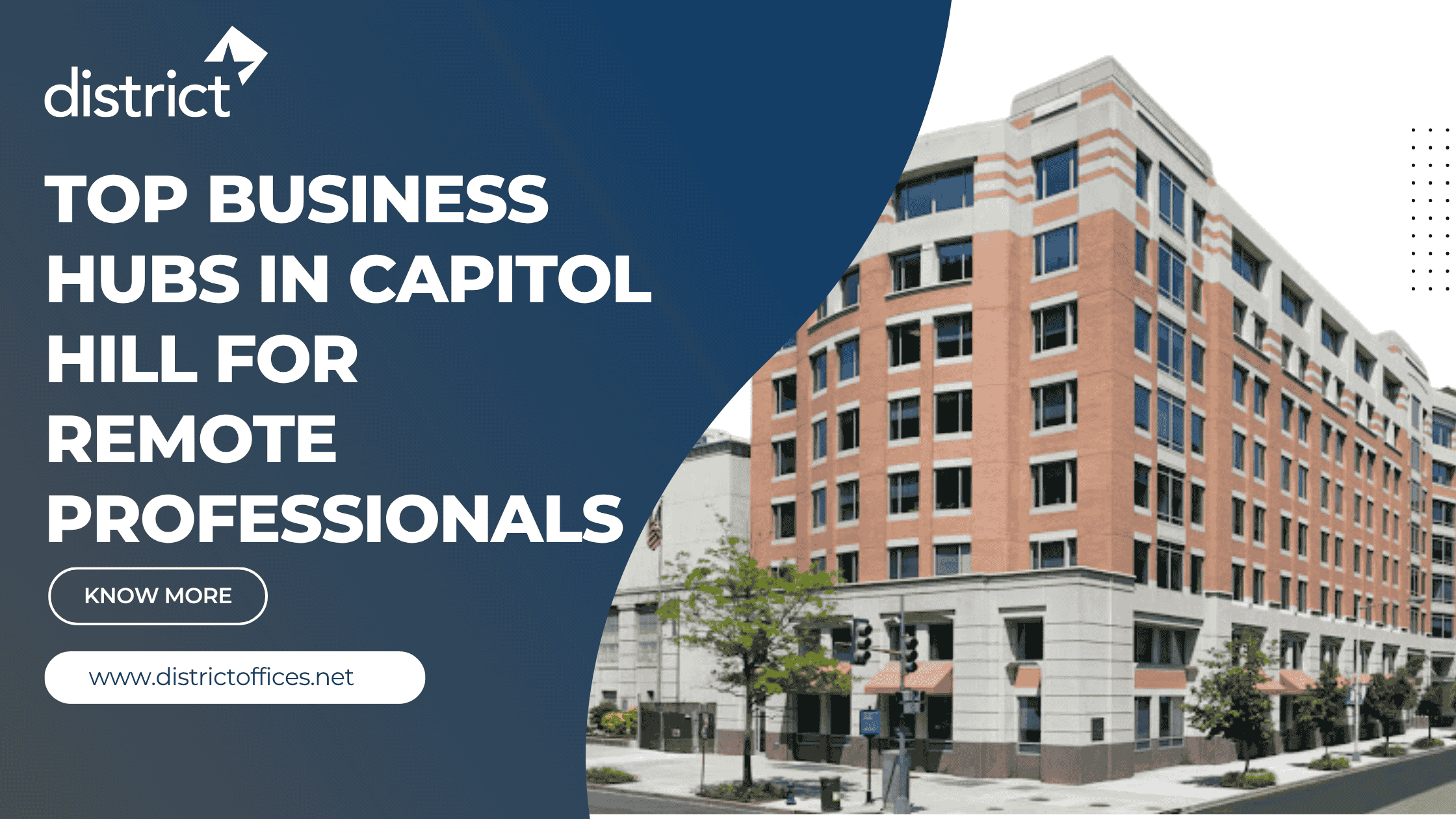
Capitol Hill
Just 300 steps from Union Station. Best for policy-focused startups, advocacy organizations, and nonprofits near congressional offices.
Georgetown
One of DC’s most recognized business neighborhoods, near the Four Seasons Hotel. Best for professional services firms, creative agencies, and businesses where brand image carries weight.
Pennsylvania Avenue
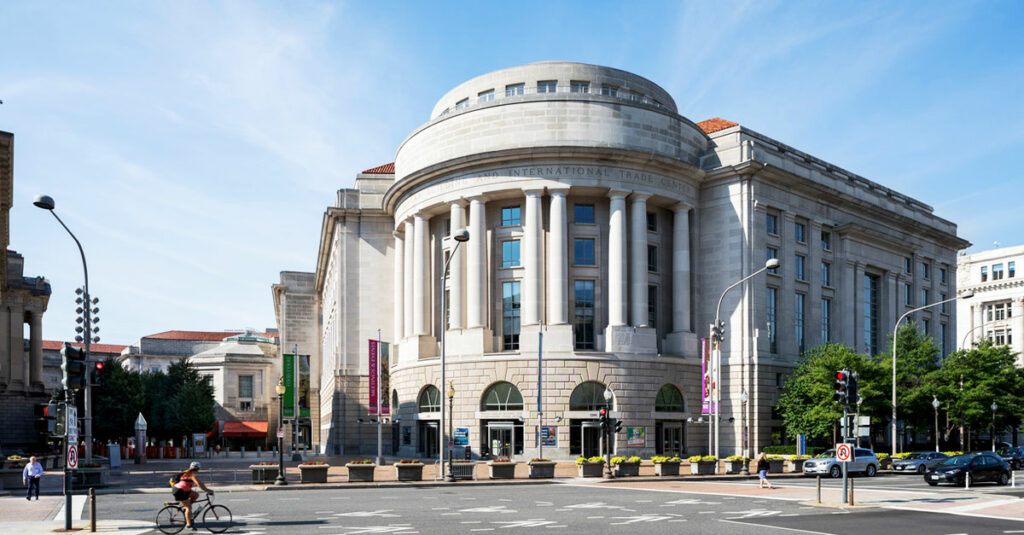
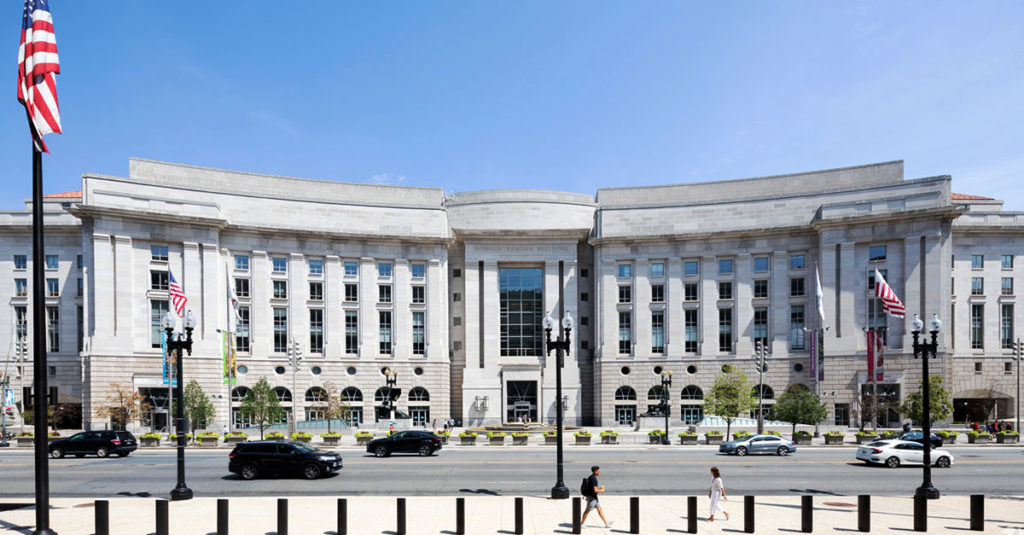
Three blocks from the White House with Metro access inside the Ronald Reagan Building. Best for government contractors, international organizations, and startups that need a premier DC address.
To arrange a tour, visit districtoffices.net, call 202-223-5200, or email sales@districtoffices.net. Available Monday to Friday, 8:30 am to 5:30 pm.
Final Thoughts
Most startups in Washington, DC spend more time choosing a logo than choosing a workspace. That costs real money and real credibility.
Your workspace is the address on every proposal you send, the lobby a new client walks into, and the environment your team shows up to every day. Getting it right means spending smarter on a workspace that fits where you are now and grows with you.
Solo founder just getting started? A virtual office or coworking membership makes sense. Team that works together daily? A flexible private office beats any lease. Somewhere in between? A hybrid plan gives you the professional base without the full-time cost.
The workspace solutions in Washington, DC, available today are genuinely built for startups. The only question is which one fits yours.
Frequently Asked Questions
Ans: The best workspace solutions in Washington, DC for startups are flexible private offices, coworking spaces, and virtual offices. Each gives you a professional environment and a credible address without a long-term lease. The right choice depends on your team size, how often you work in person, and budget.
Ans: Serviced offices use all-inclusive monthly pricing covering furniture, internet, utilities, and cleaning. This makes budgeting more predictable than a traditional lease, which has separate costs for everything.
Ans: No. Most providers of workspace solutions in Washington, DC offer short-term or monthly agreements, far more practical than a two or three-year lease when you are still figuring out your growth path.
Ans: A virtual office provides your business with a Washington, DC mailing address, mail handling, and optional call answering, without a daily office presence. It suits remote-first startups that want a credible DC presence at low cost.
Ans: Many serviced office providers offer no-deposit, no-long-term-commitment plans, unlike traditional leases that require a security deposit plus first and last month’s rent.