

Walk into any major city today and you’ll find them tucked above coffee shops, sprawling across converted warehouses, and gleaming inside skyscrapers: coworking spaces. They are neither a traditional office nor someone’s living room, but something entirely new — a shared professional environment where strangers with different employers, different goals, and different industries work side by side under one roof.
The concept sounds simple, but coworking has quietly reshaped how the world thinks about work. From a single space opened in San Francisco in 2005 by software engineer Brad Neuberg, the industry has expanded to over 42,000 locations worldwide by the end of 2024, and the global market is valued at over $22 billion. It is one of the fastest-growing segments in commercial real estate, and it is nowhere close to slowing down.
This article explains what coworking spaces are, how they work, who uses them, what they cost, and why they have become a defining feature of 21st-century professional life.
Table of Contents
ToggleWhat is a Coworking Space?
A coworking space is a shared work environment where individuals and teams from different companies — or no company at all — rent desk space, private offices, or meeting rooms, typically under flexible, short-term agreements.
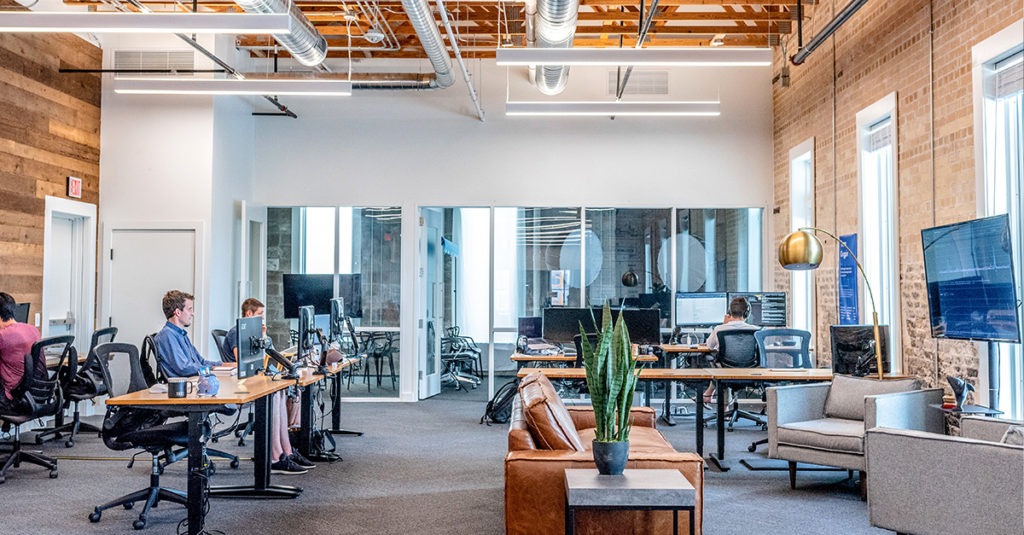
Unlike a traditional office, which serves one organization, a coworking space hosts many. A freelance graphic designer might sit beside a startup’s three-person engineering team, who sit beside a remote employee of a Fortune 500 company, who sit beside a consultant between projects. What they share is infrastructure: high-speed internet, printers, kitchens, conference rooms, and a professional atmosphere.
Coworking is distinct from two things it is sometimes confused with:
Serviced offices provide private, fully furnished offices to a single business, with minimal communal interaction. They are more like a hotel for companies.
Coffee shops offer atmosphere and caffeine but no professional infrastructure, no privacy, no reliability, and no community designed around work.
Also Read: Virtual Office or Coworking Space: How to Choose?
A Brief History: From Counterculture Experiment to Global Industry
The word “coworking” was coined by Brad Neuberg in 2005 when he opened the Spiral Muse in San Francisco — a space he described as combining the freedom of freelance work with the structure and community of an office. He rented a desk in a feminist collective two days a week and offered it to others. Eleven people came the first day.
The idea spread slowly, then explosively. Early adopters were mostly tech freelancers and startup founders in cities like San Francisco, Berlin, and New York. By 2010, the global coworking market was growing at roughly 23% annually, and the concept had taken on a cultural dimension — many early spaces emphasized community, collaboration, and a kind of anti-corporate ethos.
The real turning point came in 2010 when WeWork was founded in New York. Within a decade, it became the largest coworking operator in the world, raised billions in venture capital, and put coworking on the front pages of business publications globally. WeWork’s subsequent implosion — a failed IPO in 2019 and a Chapter 11 bankruptcy filing in 2023 — dominated headlines, but the underlying industry it helped build continued to grow. In 2024, WeWork still operated 148 U.S. locations and was restructuring under new management.
The COVID-19 pandemic, rather than killing coworking, transformed it. When traditional offices closed and remote work surged, millions of professionals discovered they needed a third option — neither the rigid office nor the isolation of home. By Q3 2024, the U.S. alone had added 444 new coworking locations in a single quarter.
How Coworking Spaces Work
Membership Models
Most coworking spaces offer tiered memberships:
Hot Desk (Open Workspace): The most affordable option. Members can sit at any available desk on a first-come, first-served basis. No guaranteed spot, but full access to amenities. Typically costs $100–$300/month in the U.S., with a national median of $225/month as of Q3 2025.
Dedicated Desk: A reserved workstation that belongs to the member. Colleagues know where to find you. Everything can be left set up. Usually costs $200–$500/month.
Private Office: A lockable room for a team or individual. Full privacy, branded space, dedicated address. Ranges from $500 to several thousand dollars per month depending on size and city.
Day Pass: For occasional visitors. The U.S. national median is $30/day, useful for travelers or those who need a professional setting once in a while.
Virtual Office: A professional business address, mail handling, and sometimes phone answering, without a physical desk. National median: $159/month. Popular with remote-first companies that need a corporate address.
Meeting Rooms
Nearly all coworking spaces offer meeting rooms bookable by the hour. The U.S. national median is $45/hour. In 2024, meeting room bookings surged by 21.3% year-over-year, reflecting the growing need for private collaboration space in open-plan environments.
What’s Typically Included
Standard amenities across most spaces include: high-speed Wi-Fi, printing and scanning, shared kitchens, coffee and tea, lounge areas, and on-site staff. Premium spaces add podcast studios, phone booths, wellness rooms, gyms, rooftop terraces, event spaces, and hospitality-grade service.
Who Uses Coworking Spaces?
The stereotype of coworking as a freelancer phenomenon is outdated. Today, the user base is broad and corporate adoption is one of the fastest-growing segments.
The User Breakdown
Freelancers and Independent Contractors remain a significant constituency, drawn by the professional environment and community they would otherwise lack working from home or a café.
Startups and Small Teams use coworking to avoid long-term lease commitments, project a professional image to clients, and tap into communities of other founders.
Remote Employees of Large Companies are an increasingly common presence. In 2024, enterprises led the U.S. market with a 31% revenue share. Companies like Amazon, Google, and IBM are providing coworking allowances to employees who live far from headquarters.
Corporate Teams represented 27.6% of the global coworking market in 2023, using these spaces for satellite offices, project teams, and market-expansion footholds without capital expenditure.
In a 2024 WeWork survey, 59% of companies planning to increase workspace in the next two years said they would choose flexible space over traditional offices.
The Demographics
The average coworking member is approximately 36 years old. Millennials make up roughly 61% of users — a generation that entered the workforce during the rise of the gig economy and has never fully embraced rigid office culture. Women now make up nearly half of all coworking users, a share that has grown steadily, and approximately 80% of members hold a college degree, though this figure is declining as coworking becomes more mainstream and accessible.
The Top Industries
The sectors most commonly seen in coworking spaces include:
- Information technology and software
- Marketing and creative services
- Consulting and professional services
- Media and publishing
- Finance and fintech
- Healthcare and biotechnology
- Legal services
- Education and e-learning
IT/ITES alone commanded 51% of the U.S. coworking market by sector in 2024.
The Business Case: Why Coworking Makes Financial Sense
For Individuals
The math is straightforward. A private office lease in a major city can run $2,000–$5,000/month before buildout, furniture, utilities, internet, or administrative costs. A coworking membership at a premium space might be $400–$700/month, all-inclusive, with the flexibility to upgrade, downgrade, or leave with 30 days’ notice.
Beyond cost, there is the productivity argument. Research consistently shows that social isolation is one of the main challenges of remote work. Coworking spaces address this directly — providing ambient social energy, serendipitous conversations, and the psychological cues that signal “work mode.”
For Companies
Cushman & Wakefield found that companies replacing overflow swing space with coworking saved more than 5% in occupancy costs. More significantly, flexible space allows companies to scale headcount without committing to leased square footage. A company hiring aggressively in a new city can take 10 desks at a coworking space on a three-month contract, then decide whether to sign a traditional lease once growth is confirmed.
In January 2025, CBRE acquired coworking operator Industrious for $400 million, signaling that commercial real estate’s most sophisticated players now consider coworking a core part of their portfolio strategy, not an experiment.
Amazon’s decision in late 2024 to execute one of Manhattan’s largest office leases inside a WeWork facility underlines that even the world’s largest companies are choosing flexible over fixed.
Types of Coworking Spaces
The industry has diversified significantly from its one-size-fits-all origins.
Open/Conventional Coworking
The classic model. Large open floor plans, hot desks, communal tables. Energetic, buzzy atmosphere. Ideal for freelancers, creatives, and people who enjoy ambient social activity.
Managed/Enterprise Coworking
Dedicated floors or buildings servicing a single corporate client under a flexible agreement. Essentially a traditional office managed by a coworking operator. IWG and Industrious have built major businesses here.
Industry-Specific Coworking
A fast-growing niche. Biotech coworking spaces (like LabCentral in Cambridge, MA) offer wet labs and specialized equipment. Legal coworking spaces provide conference rooms equipped for client meetings. Healthcare coworking offers HIPAA-compliant private consultation rooms. Creative coworking spaces offer podcast studios, video production suites, and photography backdrops.
Suburban and Neighborhood Coworking
One of the most significant trends of the post-pandemic era. Rather than commuting to a downtown location, workers want a professional space 15 minutes from home. Small-town coworking spaces average just 2,900 sq ft — intimate, community-focused, often run by a local entrepreneur. Regus projects that decentralized coworking could generate 1.635 million jobs and $197 billion in annual economic value by 2029.
Hospitality-Integrated Coworking
Hotels, airports, and resorts increasingly incorporate professional workspaces. Marriott’s coworking partnership and Lufthansa’s airport workspaces exemplify a trend toward work-anywhere infrastructure.
Wellness-First Coworking
Spaces built around health. Standing desks, meditation rooms, on-site yoga, natural light optimization, plant-forward design. Appeals to a health-conscious professional class that refuses to sacrifice wellbeing for productivity.
Niche and Identity-Based Coworking
Women-only spaces (like The Wing, before its closure, and its successors), spaces for people of color, LGBTQ+-focused environments, parents-with-children spaces. HomeDog, which opened Denver’s first dog-friendly coworking space in May 2025, offers memberships at $95/month and $25 day passes — with dog daycare included.
The Real Benefits of Coworking
Community and Belonging
Isolation is the silent epidemic of remote work. A 2023 Gallup survey found that remote workers are significantly more likely to report feeling lonely than office workers. Coworking spaces are designed to counter this. Events, community managers, Slack channels, member introductions, and shared kitchens all create the low-pressure social connectivity that humans need but that pure remote work eliminates.
Flexibility
No landlord requires a ten-year lease. No massive upfront investment in furniture and IT infrastructure. A member can scale from a hot desk to a private suite as the team grows, or downsize when a project ends. This elasticity is genuinely transformative for businesses operating in uncertain economic conditions.
Networking and Serendipity
The person sitting next to you might be your next client, business partner, or investor. Some of the most celebrated startup stories of the past decade involve partnerships that began in a coworking space. This serendipitous networking is structurally impossible in a traditional single-company office.
Professional Infrastructure on Day One
A startup with three employees can have a professional business address, a staffed reception, a conference room for client meetings, and a fast internet connection from day one, for a fraction of what a traditional office would cost.
Productivity Signal
Home carries the psychological weight of rest, family, and domestic life. Coworking spaces are unambiguously professional environments. Many members report significantly improved focus and output simply from the change of setting — the “commute” to a coworking space creates a mental transition into work mode.
Access to a Global Network
Members of large coworking networks like IWG or WeWork can access locations in dozens of countries on a single membership. A consultant flying from Chicago to London can work from a professional space on arrival rather than finding a café or sitting in a hotel room.
Coworking and the Future of Work
The future of coworking is inseparable from the future of work itself. Several structural forces ensure the industry’s continued expansion.
Hybrid Work Is Now Permanent
Ninety-two percent of corporate real estate leaders surveyed in 2024 confirmed that hybrid attendance policies are already in force, with the three-days-in-office rhythm as the dominant pattern. Companies now need only about two-thirds of their pre-pandemic desk capacity on average, yet must accommodate surges during team meetings or client events. Coworking is the natural solution to this elasticity problem.
JLL predicts that 30% of all global office space will be flexible by 2030 — up from roughly 2.1% in the U.S. today. That is not incremental growth; it is a structural transformation of commercial real estate.
The Freelance Economy Continues to Expand
The global freelance workforce is projected to reach 540 million people by 2027 (World Bank/Statista). Every one of these workers is a potential coworking member. As corporations outsource more functions, as platforms like Upwork and Toptal normalize project-based work, the pool of people without a traditional employer-provided office grows continuously.
Suburban and Rural Expansion
The pandemic proved that knowledge workers do not need to live near a major city. As they spread to smaller cities and suburban communities, demand for professional workspace outside urban cores is rising. This is one of the most significant growth stories in coworking — spaces in communities of fewer than 20,000 people are now a legitimate market segment.
Sustainability as Competitive Advantage
The emergence of eco-friendly coworking facilities — those built with sustainable materials, net-zero energy targets, and green certification — is capturing a growing share of environmentally conscious members and corporate clients with ESG commitments. Buildings designed for multiple tenants are inherently more resource-efficient than single-tenant offices, making coworking a genuinely greener option at the portfolio level.
The Niche Proliferation
As the market matures, spaces that serve a specific community exceptionally well will outperform generic alternatives. Industry-specific spaces, identity-based spaces, wellness-first spaces, and hospitality-integrated spaces are all growing faster than the overall market. The era of generic hot desks as a differentiator is over.
How to Choose a Coworking Space
If you are considering a coworking membership, here is what to evaluate:
Location and commute: The space should genuinely be closer to where you live or your clients than your alternatives. A coworking space 45 minutes away defeats its own purpose.
Noise levels and work style fit: Visit in person at the time of day you plan to work most. Open spaces at 10 AM Monday feel very different from the same room at 3 PM Friday. Ask about quiet zones and phone booths.
Internet reliability: Request a speed test. Ask whether bandwidth is shared across all members or dedicated. For video calls and large file transfers, 50+ Mbps upload is a minimum.
Membership flexibility: How much notice is required to cancel or change your plan? Month-to-month is ideal; anything longer than three months requires serious justification.
Community and culture: Who are the other members? Does the space host events? Does a community manager actively facilitate introductions and connections? The community is often the most valuable part of a coworking membership — do not overlook it.
The operator’s financial stability: Is this space part of a large, established network, or a small independent? Both can be excellent, but understand the risk profile. Ask how long the space has been open and whether the operator owns or leases the building.
Amenities versus price: Do not pay for amenities you will never use. A podcast studio is wonderful if you produce a podcast. It is irrelevant if you do not.
Find Your Perfect Workspace
Scale Your Team Without Long-Term Leases
Conclusion
A coworking space is far more than a desk and a Wi-Fi password. At its best, it is a curated environment designed to make professional life more flexible, more social, and more productive — without the financial and bureaucratic weight of a traditional office.
The numbers confirm that this is not a passing trend. With over 42,000 spaces worldwide, a market approaching $25 billion, and structural forces like hybrid work and freelance expansion ensuring long-term demand, coworking has established itself as a permanent feature of the professional landscape.
Whether you are a solo consultant looking for a professional home, a startup trying to look bigger than you are, or a multinational corporation seeking flexibility across twenty cities, there is a coworking space designed for you.
Frequently Asked Questions:
A coworking space is a shared workspace among different individuals of diverse backgrounds. The idea of a coworking space differs from a traditional working environment. The nature of coworking space offers shared amenities, various networking opportunities, and much more.
Higher productivity, access to a community, cost savings over traditional office space, networking opportunities for skill development, and a more flexible work environment that promotes work-life balance.
The location and accessibility of the coworking space, the amenities, and facilities provided (such as meeting rooms and high-speed internet), the community vibe and culture, the cost and membership options, and any needs or preferences you may have for your work environment should all be considered when choosing one.
Absolutely! Coworking spaces are designed to support different induvial working in various environments. The diversity available in a coworking space helps remote workers, freelancers, and businesses function in the best possible manner.
It is important to keep in mind that all working or public space must be kept and maintained in the best possible manner. In the same way, coworking space include shared resources and amenities that one must keep in mind to use mindfully, and also cleanliness should be kept. Also, noise can be a challenging factor, one must adhere to the rules in a polite and respectful manner.